
Lerner Child Development Blog
Open access to my full library of over 150 blogs is now available by becoming a member of Lerner Child Development (LCD). Scroll through thumbnails below or see the button to explore all the blogs by topic.
This subscription service enables me to continue to provide in-depth, reality-based content drawn from more than three decades of helping families solve their most vexing childrearing challenges.
In addition to access to my blogs, subscription to LCD includes several new interactive learning opportunities with me each month: a live, open Q&A and quarterly webinars on key topics. Members are also entered for two monthly drawings for a free 30-min consultation.
Note that I have made some of my most popular blogs available for free.
Blogs By Categories
- All Most Popular Blogs
- Big Reactors
- Building Resilience
- Challenging behaviors
- Cooperation
- Emotional Regulation
- Food Challenges
- Highly Sensitive Children
- Limit-Setting With Love
- Low Frustration Tolerance
- Mealtime
- No Power Struggles
- Parental Self Awareness
- Parental Self Regulation
- Physical Aggression
- Positive Discipline
- Potty Learning
- Regression
- School Related Issues
- Separation and Divorce
- Sibling Issues
- Sleep
- Social challenges
- challenging behaviors
- lying
- masking
- positive parenting
- separation anxiety
- social emotional development
- stress
Highly Sensitive Children: Perfectionists
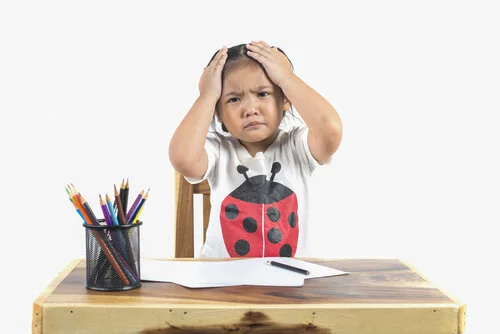
Gabriel (6) and I were working on writing letters together. When he couldn’t make his “O” look exactly like mine, he had a total meltdown. The more I tried to tell him what a good job he was doing, the more agitated he became.
When Serena (5) messes something up, her reaction is very disproportionate and she is incredibly hard on herself - saying she will never draw again, tearing up the paper, crying, hitting herself on the head, throwing herself on the floor. We try to model losing/not being perfect and taking it in stride - we emphasize that, but it doesn't seem to help.
Highly sensitive (HS) children have a tendency to be perfectionists. When they can’t do something exactly as their brain is telling them it should be, they experience it as a loss of control which is very uncomfortable and hard to tolerate. Hence, the meltdowns. This can be very frustrating for parents who see the irrationality in their children’s thinking but find that using logic to help them be more self-accepting backfires.
What you can do:

How to Help Highly Sensitive Children Be More Adaptable and Flexible
This article is part of a series on understanding and supporting highly sensitive children. You can check out other installments in this series, here.
Flexibility is one of the most important assets for functioning well in this world. It is an essential ingredient for adapting to the countless events in life that we can’t predict or control. It also helps us work effectively in groups and develop healthy relationships because it enables us to take into consideration the perspectives and needs of others.
It’s important to keep in mind that learning to be flexible is harder for some children than others, largely due to their temperament. Go-with-the-flow kids, those "dandelions"* who are more adaptable by nature, are naturally more flexible. "Orchids"*--who are wired to be more sensitive—tend to be more inflexible. They often have intense responses to seemingly minor stressors, as illustrated by these typical examples:

Slow-to-Warm-Up Kids: How to Support Children Who are Cautious About New People and Experiences
Stephanie takes her five-year-old, Jonah, to swim class for the first time. He refuses to get off of her lap and go into the water. The teacher and the other kids are very encouraging, trying to get Jonah to join them. The more they try to woo him, the more uncomfortable Jonah becomes. He starts curling up into a ball and uses baby talk. When he gets home, his grandmother asks him about the class. He doesn’t respond and runs into his room. Stephanie has a strong sense that Jonah is feeling very ashamed about the whole experience. Her heart breaks for him.
Children who are more fearful and cautious by nature are often highly sensitive (HS). When they enter a new situation—be it a classroom, a birthday party, or swim class—their wheels are turning. They wonder: What is this place? What will happen here? Who are these people? What can I expect from them? Will they like me? Will I be safe? Will I be good at whatever is expected of me here? This deep thinking and constant analysis of their environment makes HS children extremely bright and insightful. But it can also be overwhelming and make them more prone to anxiety. To cope, they fiercely cling to their comfort zone, which means they often resist anything new. They tend to have a harder time separating from their parents. It takes them longer to adapt when they start childcare or preschool. They refuse to go to soccer or swimming, even when they love these activities.
What you can do:

Highly Sensitive Children: How to help them manage their big emotions
Natalia reminds her daughter, Olivia (4), that her dad, Luis, is leaving in a few days to go away for the weekend. Olivia starts physically pushing her mom as she blurts out, “Don’t say that mommy!” She then turns to her dad and shouts at him: “Go away right now! It’s time for you to leave this house!”
Olivia's reaction is confounding to Natalia and Luis. Why would she be telling Luis to leave--early no less--when she is so distressed at the thought of being separated from him? Wouldn’t Olivia want to keep dad close? While seemingly irrational, looking at it from Olivia’s perspective, her rejection of Luis is a way to gain control of a situation that she has no control over. The old, “I’ll reject him before he rejects me” defense mechanism at work. Olivia is not being mean or hurtful on purpose. She is trying to cope with a stressful situation in the only way she knows how.
Olivia’s reaction upon Luis’ return from his trips away from home is also confusing when taken at face value: Olivia ghosts him. She is cold and refuses to engage with him for a full day or two. This, again, is a common reaction in highly sensitive (HS) children. It takes a lot of psychic energy to adapt to a separation from a loved one. When mom or dad returns, the child needs time to let that person back in and feel safe to reconnect.
What you can do:


How to Help Kids Who Wake Up on the Wrong Side of the Bed
A spate of parents have recently sought my help for how to deal with their kids who wake up super cranky, both in the mornings and after naps. The minute mom or dad enters their child’s room, she is shouting at them to go away. Then, as soon as they leave, she is screaming for them to come back. This cycle can continue for half an hour. The more they try to coax or cajole their child into a better mood, the more irritable she becomes. Once parents have forced their cranky child out of bed, the morning is fraught with incessant whining and turns into a cascade of breakdowns about seemingly minor issues.
While this is the last thing you need when you are trying to get a positive start to your day, it’s important to keep in mind that your child is not making mornings miserable on purpose. Some children (and adults) have a harder time making what are called “state changes”: going from awake to asleep and asleep to awake. Their bodies are more reactive. These physiological transitions are uncomfortable for them. It takes them more time to settle their bodies to sleep and feel clear-headed and calm upon awakening.
Here are some strategies families have found useful for helping their children adjust to the new day in a loving way:

How to Be Responsive and Effective Versus Reactive and Frustrated When It Comes to Getting Your Kids to Cooperate
One of the most pervasive pitfalls that result in parents feeling out of control and ineffective in getting their kids to "listen", aka, cooperate, with a rule or limit: REACTIVITY. Your child refuses to hand over the tablet when screen time is over. You get triggered by your child's refusal to comply and launch into an array of threats, bribes, or rewards to convince your child to get with the program. An ugly power struggle ensues. The more you feel yourself losing this battle, the more frustrated and angry you become at your child for creating this highly unpleasant situation. It ends with everybody miserable.
The inherent problem in resorting to threats, bribery and rewards is that these tactics are all dependent on your child being swayed by your threat, bribe or reward, which means he is in total control of the situation and is the decider about how this encounter will unfold. What if your bribe or threat doesn't work? Your child doesn't care (or feigns not to care) about getting extra books at bedtime if he cooperates; or, alternatively, about having books taken away at bedtime. Where does that leave you? Feeling more exasperated and out of control.
When you are in reactive mode, it is very hard to think clearly and plan your response. To help parents with this perennial challenge, I have come up with a simple strategy to prevent reactivity: taking a mommy/daddy moment to give yourself a chance to think about how to respond in a way that is calm and loving and that leads to greater cooperation from your children.

It's Time to Stop Choosing Your Battles: No need to be at war with your child
The mom of a feisty four-year-old was recently on a Facebook group for parents of “spirited” children to seek guidance on setting limits. The overwhelming response she received was to “choose your battles.” Of course, this concept is not new to me, but for some reason on this occasion it gave me pause. It struck me as so unfortunate to frame the problem of how to deal with the sometimes incessant and often irrational toddler demands and defiance in this combative way.
The concept of “choosing battles” puts parents in a defensive mindset—that you are in for a fight. This results in approaching these moments when your kids are doing exactly what their DNA dictate they do—advocate for something they want or refuse to cooperate with a limit—with your haunches up. This parental state of mind only leads to exactly what you are trying to avoid: a power struggle.
Further, “choosing battles” implies that you are opting to give in to your toddler’s demands or defiance because it’s one too many battles for your or your child to handle. In practice, what this means is that you are setting up a dynamic in which your child learns that if she pushes hard enough, she will eventually wear you down and get her way. This handy strategy is proven effective and is thus relied on for future use, which only increases power struggles. It also leaves most parents feeling angry and resentful toward their children for pushing them to the limit and forcing them to cave when they really don’t want to.

Low Frustration Tolerance: What to do When Your Child Gives Up Easily
Three-year-old Marcus is trying to find where the pieces fit in a challenging puzzle. Four-year-old Ruby is working on how to keep her block tower from falling down. Omar and Zoey are looking for what they can use as superhero capes when Omar’s mom won’t let them use her scarves. These are all examples of kids hard at work solving problems.
This ability—to face a challenge and come up with effective solutions—is the key to developing resilience and is one of the most important skills for success in school, in relationships, and in navigating life. It is also an important component of building strong “executive functioning”, which is a child’s ability to manage his emotions and control his impulses so he can focus and maintain attention on the task at hand, draw on knowledge gained from past experiences, and to think creatively—to fix mistakes and try another strategy when the one he is using is not working.
You see this in real life when a child faces an obstacle, like not being able to fit the square block in the round space on the shape-sorter. Despite his frustration, he does not give up and toss the block across the room. Instead, he is able to stay calm enough to keep focusing on the task. He has done shape-sorters before and knows that he has to keep trying different spaces until he finds the correct one. Through this process of trial-and-error he successfully finds the right space for all the shapes. Solving the problem results in a powerful sense of mastery.
Here’s how you can support your child’s ability to become a master problem-solver:

Eight Strategies for Working at Home While Caring for Kids
The pandemic led to many seismic shifts in our world, including the advent of parents working at home. As if parenting isn’t stressful enough, the complexity of managing work/life balance became much more challenging. This blog provides guidance on how to set and enforce healthy expectations and boundaries when you are working at home.

Regression: Why children take steps backwards in their development and what you can do
Madison used to be a great sleeper. Over the past few weeks, as the coronavirus lockdown has persisted, bedtime has deteriorated. It started with Madison insisting that I stay with her until she falls asleep. Now she insists on sleeping in our bed all night. –Father of a four-year-old
Jackson had been fully potty trained and was a “big boy” in so many ways. Since his little brother was born, he has started to have a lot of accidents. He is demanding a bottle and wants to be carried 24/7. This is driving us crazy. We don’t need two babies in this household! —Mom of a three-year-old
Kids regressing—moving backwards in their development—is a common phenomenon. It is usually in reaction to a stressor: a move, a new baby in the family, a change in schools or caregivers, or…a global pandemic, to name a few. Any change or disruption in children’s daily routines is stressful.
When we, children and adults alike, experience shifts in our worlds (especially when they are unexpected or seismic, like COVID), our psychic energy gets diverted from higher level brain functions to just trying to cope day to day. (Few people I know would say they are at the top of their game right now. Just like many of us are having a harder time managing everyday tasks and challenges, so are our kids.) This can result in more challenging behaviors and regression to less mature levels of functioning. When a child’s system is stressed, she may get frustrated more easily, become more clingy, have more potty accidents, experience sleep disruption, or, have a change in her eating patterns. Keep in mind that highly sensitive (HS) children are more prone to regression as they are more vulnerable and reactive to changes in their world.
That’s not to say that all stress is harmful to kids. For example, starting preschool is a major shift. Most children go through a period of discomfort as they learn to adapt to this new experience—managing the separation from parents/caregivers, figuring out the rules of the classroom and how to get along with peers. This is positive stress because it leads to growth and the development of new skills. But during this adaptation process, some regression is to be expected. In the preschools where I consult, there are always some children who in the first month of school won’t eat snack or use the toilet, and may not do a lot of talking or interacting with their peers or teachers. Once they adapt, they feel comfortable and their stress is reduced, they have access to all of their skills—their full range of functioning—and thrive.
Also keep in mind that highly sensitive (HS) children are more prone to regression as they are more vulnerable and reactive to changes in their world.
RESPONDING TO REGRESSION: WHAT NOT TO DO
Why Can't You All Just Get Along?
“Haha—you lost!”
“Stop singing that stupid song. You’re hurting my ears!”
“YOU CANNOT PLAY THIS GAME. YOU DO NOT KNOW HOW TO PLAY!”
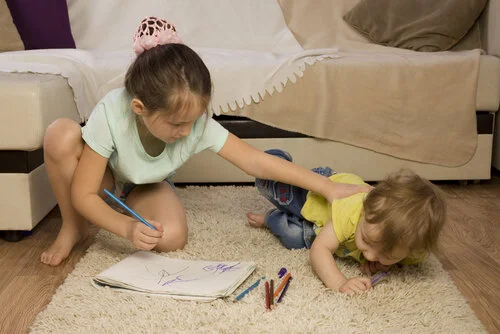
The sibling relationship is about as complex as it gets. Talk about the confluence of emotions that run the gamut from the extremes of love and hate. The natural conflict that arises as siblings navigate their relationship ranks as one of the most vexing challenges for parents, often sending them into reactive-mode which tends to exacerbate, not eliminate, sibling squabbles.
Since every family dynamic is different, there is no prescriptive approach to effectively addressing sibling rivalry. Instead, I offer some key guiding principles to help you avoid common pitfalls, as well as some actionable strategies for responding supportively and effectively when your kids are causing chaos, that you can tailor to your unique situation.
GUIDING PRINCIPLES

How to Support Kids Spiraling Out of Control
Janelle starts reading a bedtime book to her three-year-old, Sam. One page in, he starts screaming that she isn’t reading the book the right way and insists that daddy (Brent) take over. This flip-flopping goes on for several more rounds until both Janelle and Brent are at their wits end and Sam wears himself out sobbing and falls asleep.
Lucy (4) asks for toast for breakfast. Bernard, one of her dads, presents it to her; but, uh-oh, he has cut it on the diagonal when she wanted it halved down the middle! Lucy insists that he must make a new piece of toast. Bernard sighs heavily—they’ve been around this block before—and looks at his husband, Josh, with that “what to do?” hunch of the shoulders. They know Lucy is having a hard time these days with all the changes in her world. So, they decide they will ease her stress by meeting her demand. Josh pops another piece of bread into the toaster. When he hands it to her, Lucy announces that what she really wants is a scrambled egg. Josh gets visibly annoyed with Lucy—telling her to make up her mind. She starts to pout and tells Josh to stop yelling at her. Josh feels bad for losing it with her and proceeds to whip up an egg. Spoiler alert: Lucy proclaims that the egg is too yellow, and the crazy-making cycle continues.
When children feel out of control on the inside, they act out of control on the outside, which results in situations like those described above. And, those “orchids”—the kids who are more sensitive and reactive by nature—are even more likely to struggle during this time of major change.
How do you respond to children who are spiraling out of control and getting themselves into complete tizzies, driving themselves, and everyone around them, mad?

How to Balance Working From Home While Caring for Kids
As if being a working parent wasn’t stressful enough, what do you do when suddenly you are expected to work at home and take care of your kids at the same time? If you are in this predicament, here are some ideas for how to manage the seemingly unmanageable. Of course, you will need to adapt and apply these based on the age of your child and your unique situation.
How to Balance the Need for Routines with Helping Kids Be Flexible
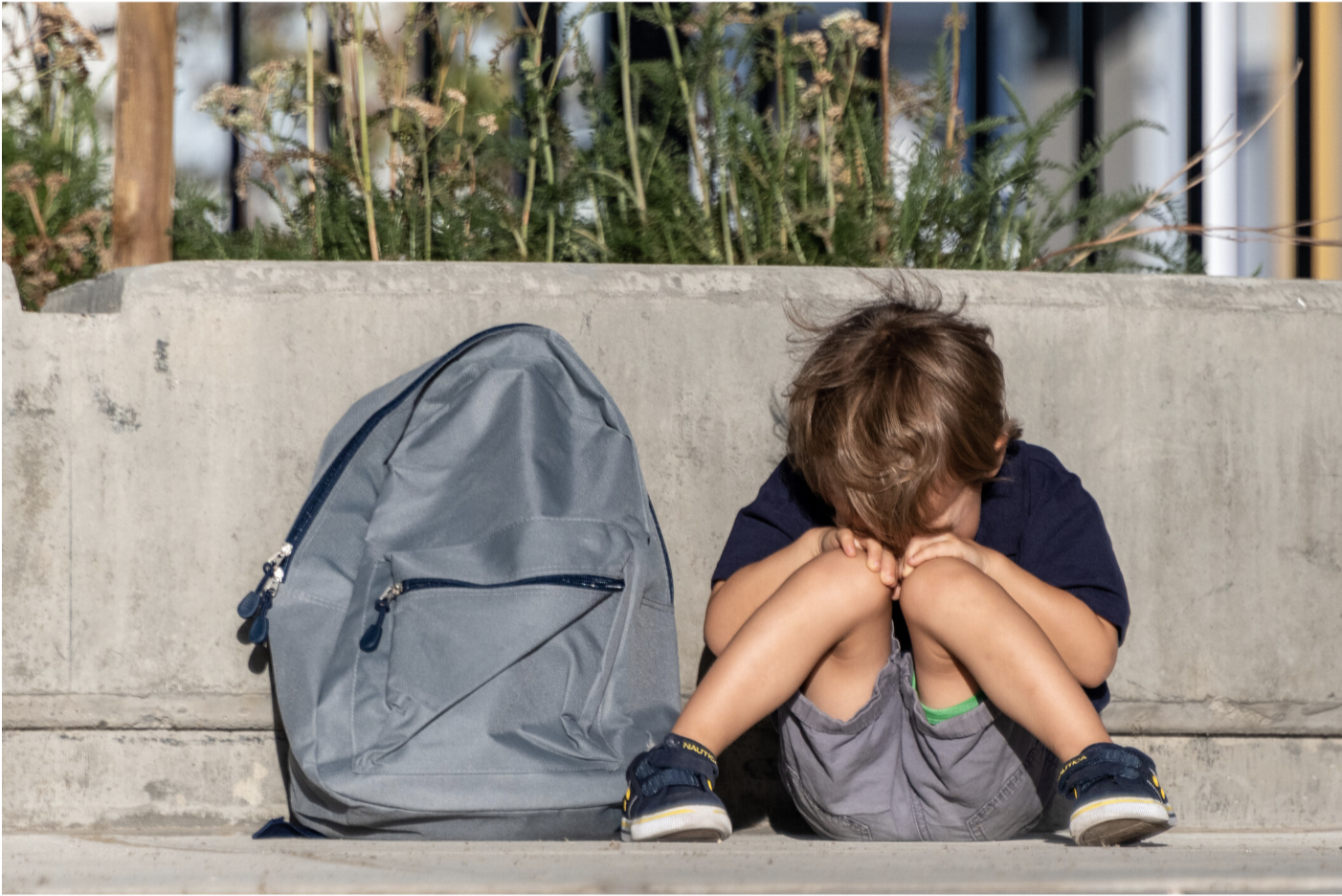
What happens when you have done such a good job establishing routines and making sure your child knows what to expect that they fall apart when there is a break in the plan? Or when something unexpected happens? Read on. . .

Happy Children Aren’t Always Happy: Eight Pivotal Parenting Pitfalls and How to Prevent Them
The obstacle to parents being the loving limit setters their children need (but don’t want) them to be is often the false notion that happy children are always happy; that it is your job to keep your child happy. In fact, it is working through the frustration and disappointment of not always getting what they want when they want it that builds resilience and makes children happy. This blog addresses how to do just that.

Safe Space Breaks: When Giving Your Child (And Yourself!) A Break Can Be Helpful, Not Harmful
One of the most challenging situations families of big reactors face is what to do when their children are so out of control that they are destructive. They are "going to a category five in a nanosecond" and there is no calming them once they are triggered. Their meltdowns are frequent and intense. In the heat of these "red-zone" moments—when their children are hurling objects, kicking, hitting, biting, scratching and spitting—these parents are pushed to their emotional, and physical, limit. They instinctively know that a break is necessary—for themselves and their children.
The problem is that most have spent a fair amount of time on social media and have been barraged with the message that time-out is not developmentally appropriate and can be detrimental to their child; that it is negating children's feelings and tantamount to traumatizing them by abandoning them when they are in distress. What loving parent would do something that could be so harmful to their child?
This leaves these parents in despair, feeling like their hands are tied, totally helpless. It is an awful feeling that is not good for them or their kids.
The frequency of these stories led to my decision to start incorporating home visits into my practice so I could observe first-hand how these encounters unfold and provide more relevant and targeted support to parents—that meets them in their realities. What I saw was that when emotions (and cortisol levels in the brain) are sky-high, a break for both parent and child can be a healthier approach than the tense, often aggressive, back-and-forth (physical and emotional) that ensues in red-zone moments when parents are trying to physically restrain children and losing control themselves. While remaining with their child in these moments feels like the more loving thing to do, this dynamic is much more harmful to children than providing them (and their parents!) some space in a safe and loving way. What's the parent of a big reactor to do?
So, in this blog I am revisiting this whole controversy about time-out because it continues to vex many families who come to see me. And, because I want to spread the very important word that two highly respected colleagues have recently reviewed the actual research on time-out and both have concluded that not only isn't it harmful, but can be a helpful, positive parenting strategy. It's all abut how it is implemented.
The Controversy Around Time-Out
There is broad agreement that the use of time-out as punishment for “misbehavior” is both developmentally inappropriate and ineffective. A robust body of research clearly shows that the part of the brain that controls the ability to think about and manage feelings and actions is not well-developed in young children. They are driven by their emotions and impulses. They are not misbehaving on purpose, so they don’t learn anything from time-outs. Further, punitive approaches tend to increase challenging behaviors. They exacerbate the distress children are already experiencing as they struggle to cope with life’s myriad frustrations and disappointments. They need our empathy and support, not anger and rejection.
The problem is that now time-out has become a catchall. Any type of break a child might need is seen as punitive and detrimental to children. The antidote to time-out has become time-in, which entails staying with the child throughout the meltdown, no matter what. Parents act as “co-regulators”, providing the support young children need to soothe themselves given that they have very limited ability to self-regulate.
This makes all the sense in the world, in theory. But for many families, the reality is that their presence in these moments is not calming or regulating for their child who is so out of control that they cannot accept comfort. The more these moms and dads try to calm their kids, the more out of control they get. In these situations, time-in is not helping soothe their child’s stress response. Being in the room with their child is a stimulant, even when parents are staying calm and quiet. They become an available target for continued aggressive behavior, keeping their child revved up and reactive.
Not to mention that parents are also human, and as hard as we may work on controlling our emotions, there are times when children are so out-of-control and destructive that the only way to cool things down is to take a break from the intensity of the moment.
Consequently, I have come to believe that it is a disservice to parents to tell them that the only acceptable option when their child is spiraling out of control is time-in. They already feel like failures for having a child who can get so out-of-control and destructive. When time-ins only extend and exacerbate these red-zone moments, parents despair that they have no tool that enables them to maintain some sense of control over their child’s behavior. They are physically and emotionally “burnt-out,” as one parent recently put it, from all the knock-down, drag-out battles they experience—sometimes on a daily basis. And, sadly, these parents spend a lot of time feeling angry at their children for making them feel so out of control.
The Research On Time-Out Does Not Show Harmful Effects and Confirms It Can Be a Helpful, Loving Strategy
Science journalist, Melinda Wenner Moyer recently did a review of all the research on time-outs and reports: “In the parenting advice world, the big concerns about time-outs are that they are emotionally damaging and that they erode the quality of the parent-child relationship. Yet I couldn’t find evidence to suggest they do either of these things, and found plenty of research suggesting the opposite." She continues: "Clinical psychologists evaluated the vast published research on time-outs, concluding that ‘time-out represents a safe, effective form of discipline which, in the context of a larger environment dominated by positivity, consistency, and predictability, has been shown across hundreds of research studies to be beneficial to the overall emotional and developmental functioning of young children.'"
Psychologist Cara Goodwin did a deep-dive into the genesis of Time-Out, and it's impact on parent-child attachment (I assume because parents are bombarded with claims on social media about time-out eroding a secure attachment.) She found that time-out has no negative impact on attachment, and that "Temporary and predictable separations with positive reunions are an important part of secure attachment." It's all about how parents provide this break. I strongly recommend you read her excellent article, highlighted above.
How to Implement the "Safe-Space Break" in a Loving and Supportive Way
The breaks I suggest parents give themselves and their children in these most challenging moments are not punitive but loving and supportive. I don’t call them “time-out” because this term has become synonymous with punishment. I call them “safe-space breaks." Breaks are not inherently or necessarily harmful to young children: it’s all in the way they are executed. When parents approach the break calmly and lovingly—not punitively ("Go to your room right now!”)—this tool can be caring, not callous. It creates the space parents and children need to prevent further escalation, and to come back together to solve the problem when they are both calm.
Let your child know what the plan will be when they are in the red-zone. In a quiet moment (not during a tantrum), acknowledge that meltdowns will happen. Everyone experiences times when they are so upset that they lose control of their minds and bodies. Explain to your child that when they are in that state, your job is to be their helper. You will always first try to help them get calm by using a range of tools you come up with together, such as giving them a bear hug, or taking deep belly breaths.
But in situations in which they are having a hard time controlling their body, you will take them to their safe space. Make the focus keeping them safe, not that you are protecting other people from them. (If you make the focus on how they are being harmful to others, it is likely to be more triggering to them and result in further dysregulation.) Once they are calm, you can talk about the incident—depending on their age—and help them begin to understand how their behavior impacts both themselves and others.
Show them that you have a safe-space break, too. This could simply be your room. Place some calming tools in there—like stress balls, exercise bands you can snap, etc.—and explain to your child that when you are getting agitated, you go into your safe space and use these objects, or strategies like taking deep breaths, to get yourself calm. Then, when you are calm, you are better able to help solve whatever problem is at hand. This is a very powerful model for self-regulation, reinforces that the safe space is not punishment but a tool for calming that everyone needs, and shows them that they are not alone. A dad recently reported that when he modeled this in the heat of a moment with his almost 4-year-old, his son responded by going into his room and looking at books to calm himself.
Be sure the safe space has a boundary to prevent your child from exiting on their own. For children who will not stay in the safe space and keep running out before they are back in control, I find it essential to provide a boundary. When children can exit the safe space freely, parents lose control over the situation which tends to only further fuel the frenzy. Boundaries are good for kids. They keep them safe and secure. I recommend using a door monkey which keeps the door wedged open a few inches—not enough for a child to squeeze out. This way you don’t have to close or lock doors. Preview how door monkey works so your child knows exactly what to expect: “This is our friend Mr. Door Helper. He keeps you secure in your safe space until your body is calm.” If the door monkey doesn't work in your home (ie if you live in an old row house), using a door knob cover or reversing the lock on the door can work well.
A child’s bedroom can serve as the safe space since it is not being used as punishment but as a loving, calming place.
Once your child is safely in the space, you can sit on the other side of the door and say a calming mantra or just be a quiet presence. Just knowing you are there to weather the storm is loving and supportive to your child, even if they are not making you feel like you are being loving and supportive.
In situations where you don’t feel you can get your child into the safe space, (i.e., if you have an older child who is too big for you to carry to the space) an alternative is to secure yourself in a safe space and calmly tell your child: “I am going to my safe space. When you are back in control of your body I will come out and we can work on solving the problem.”
Include your child in designing the space. First, be sure to child-proof the space. Make sure there are no dangerous objects they can gain access to. Remove anything they can climb on such as stools or chairs. Brainstorm together what they can do in their safe space. Help them choose from a range of acceptable items that can be included, such as: stuffed animals, squishy balls, cozy pillows, and books. Putting a kids’ tent in the space can be very effective as it feels snuggly and comforting to children, especially when they are unraveling. Creating a warm, friendly space communicates to your child that it is not for punishment—it’s a loving space. (Still, don't expect your child to thank you for putting them in the break space. Remember, just because a child doesn't like a limit doesn't mean it's not good for them.)
Stay as calm as possible when moving your child to the break space. If your child is not able or willing to go to the break space on their own, you may need to carry them there. Even as you hold them at arm’s length to avoid their kicking, hitting or biting, try to stay calm and keep language to a minimum. Remember, kids can’t process more input when they are in the red-zone. Their brains are flooded with emotion and they can't think rationally. Whisper a calming statement: “You’re really upset and are having a hard time controlling your body. I am going to be a helper and take you to your safe space for a break. When you are calm we can get back to playing.”
You can stay on the other side of the door and say a calming mantra, like: “I know, this is a tough moment. I am here.”
Options for ending the break. Some parents choose to end the break when their child is calm. Another option is to set a timer for three to five minutes, then check in. At this point, your child may still be upset, but if they are no longer out of control and are able to accept being comforted, you can help them move on. It can also be helpful to tell your child that when they count to 10, you will know their body is calm. Giving them a job—something to focus their attention—can be organizing and help them regulate.
Be sure to have appropriate expectations for what the break will accomplish. Young children do not yet have the ability to reflect on their actions and behavior on their own, without help from a caring adult. This means that the goal of taking a break is not self-reflection: “Gee, I wonder why I let my emotions get the best of me—I really shouldn’t have scratched and kicked daddy when he turned the TV off” is beyond toddlers and even preschoolers (not to mention many adults!) The goal is to provide a quiet place where your child can move from a state of high agitation and upset to calm. The break offers the space for both parent and child to regroup. No learning takes place when children are in an agitated, emotionally flooded state.
Breakdowns are evidence that children are experiencing overwhelming stress they can’t manage. When your child is being harmful and you cannot control them, or when they are so out of control that they cannot accept and benefit from your attempts to comfort them, a short break from interaction can help them (and you!) cool down. In the context of a loving, strong parent-child relationship, giving your child and yourself this space can be helpful, not harmful.
Related articles:
How To Be a “Gentle” Parent With a Big Reactor
How to deal with public meltdowns Managing physical aggressionWhen limit-setting gets physicalStop working so hard to calm your child

Why Punishment Doesn't Stop Aggressive Behavior
Few things are more vexing than when children are physically aggressive: hitting, kicking, pushing, biting, pinching. Many parents I work with worry that this kind of behavior signals a lack of empathy. One dad recently wondered about something that is perplexing to many parents: "How could we—such loving, peaceful people—have created a kid who can be so hurtful?”
At the same time, parents fear the consequences for their child: Will she be seen as a bully? Will other children not want to play with him? Will she get kicked out of preschool? And for themselves: Will I be alienated from the other parents who judge me because of my child’s behavior?
These are all very natural concerns which understandably trigger intense reactions. In an effort to eliminate these aggressive behaviors, most parents become harsh and punitive. They shame: “What is wrong with you? Why would you want to hurt your friend?” They use threats and punishment: “No TV time for the rest of the week if you hit again!” Or, instill fear: “No one will ever want to play with you if you hurt them.”
The problem with these tactics is that while they may seem logical from an adult perspective—that they should motivate a child to stop the behaviors—they often backfire for several reasons: