
Lerner Child Development Blog
Blogs By Categories
- All Most Popular
- All Most Popular Blogs
- Anxiety
- Big Reactors
- Blogs
- Building Resilience
- Challenging behaviors
- Cooperation
- Emotional Regulation
- Food Challenges
- Highly Sensitive Children
- Limit-Setting With Love
- Low Frustration Tolerance
- Mealtime
- No Power Struggles
- Parental Self Awareness
- Parental Self Regulation
- Physical Aggression
- Positive Discipline
- Potty Learning
- Regression
- School Related Issues
- School challenges
- Separation and Divorce
- Sibling Issues
- Sleep
- Social challenges
- Social emotional development
- challenging behaviors
- food
- lying
- masking
- mealtime
- parenting self-awareness
- positive parenting
- separation anxiety
- sleep
- social emotional development
- stress



When Kids Act Mean: Why some kids have trouble being kind and what you can do
When children boss other kids around, say hurtful things, exclude peers, and act in other unkind ways, they are not acting mean on purpose. By and large, these kids are struggling with difficult feelings of insecurity/self-doubt and anxiety. Read on to learn about how to help your child manage their difficult and complex feelings to enable them to act towards others with kindness.

Positive Discomfort Part 2: Working with schools to help kids get through tasks and transitions
This article is the second in a series on “Positive Discomfort," the concept that the stress kids experience when facing a challenge is not something to be feared or avoided, but to be expected and embraced. It is muscling through the difficulty or fear that builds skills, competence, resilience and perseverance—attributes we all want for our children. It requires the adults who are supporting children to have high expectations with high support. (Check out Part One.)
In this follow up, I tell the story of my work with one family that involved collaboration with the child’s school, so you can see the positive changes that can be made when all the adults in the child's world work together to help them overcome their fears and their resistance to transition and change.

Positive Discomfort: The stress of learning something new or facing a challenge is helpful, not harmful
This blog was inspired by the response to a video I posted on Instagram that went viral. In three days, it has more than 850K views and thousands of likes and shares. The video (which I encourage you to watch—it's a gem) was made by a very close friend who was watching her adorable 7-month-old grandson and caught him making his first attempts at crawling. I asked for permission to share it because it is such a powerful illustration of “positive discomfort," my new favorite concept because it so perfectly captures a critical mindshift: that the discomfort kids experience when facing a challenge is not something to be feared or avoided, but to be expected and embraced. It is muscling through the difficulty or fear that builds skills, competence, resilience and perseverance—attributes we all want for our children.
In the video, even as the baby is making progress, he is crying and at one point collapses, putting his head in his hands as if he just can't go on. But my friend/grandma doesn't swoop in to pick him and comfort him—the knee-jerk reaction most of us might have at seeing our children in distress. Instead, she remains a calm and supportive presence with her tone and words, communicating to him that she believes he can muscle through. And he does! He calms, gets back on all fours, smiles, and perseveres. Had grandma picked him up, that beautiful moment of triumph would have been thwarted. The message to this clearly competent guy would have been that she didn’t believe he had it in him to keep trying and prevail.
To give credit where due, I discovered "positive discomfort" in an article in the Washington Post, "A Winning Mix: High standards, high support," about the approach Emma Hayes, the US Women's Soccer Coach, takes to support her players. The article includes research by David Yeager, a developmental psychologist at the University of Texas at Austin who explains: "Intense stressors are a normal part of performing well, of learning, growing and developing new skills...Our stress response — what’s happening in our bodies and minds when we experience a stressful situation — prepares us to take action....When the mind expects to meet the challenge, breathing increases to send more oxygen to the blood, the heart pumps faster and blood vasculature dilates to spread the blood to the muscles and brain. Motivation and performance go up. The opposite happens when a threat is viewed as insurmountable and the body moves to protect itself. In such cases, the heart may pump fast, but blood vasculature constricts, keeping blood central in the chest cavity, essentially preparing for upcoming defeat."
In short, it's all about expectations and mindset. When we see challenges through a positive lens, as opportunities for growth and learning that will take hard work to master, we are much more likely to persevere and succeed. The way we instill this mindset in our kids is by holding high expectations while giving them the tools and support they need to stay the course, which is exactly what these stories from the parenting trenches show.

The Limit is the Lesson
A common conundrum for many parents who seek my consultation is how to impart important lessons to their kids who won’t listen. Their kids reject, argue, shut the conversation down or put the blame on their parent.
You will see from the stories below that what I have found...wait for it..is that less is more in these moments. The more you try to get your child to absorb the information you want to impart, the less likely they are to tune in to and internalize it, as these stories below show.

How The Obsession With Validating Feelings Is Failing Our Children (and resulting in less, not more, emotional regulation)
In a recent consult, the parents of a seven-year-old, who by nature is a very big reactor, shared that after a lot of hard work on managing their own emotions and being less reactive to him when he is having a difficult moment, he is now much better able to soothe himself. He will even voluntarily go into his room to take a break. They asked if it is okay to let him do this. They have heard so much about the importance of tuning into and acknowledging children's feelings. They worry that he won’t know that they are there for him—that they care about his emotions—and wonder if they should follow him and get him to talk.
Here is a child who has learned an amazing skill—to regulate himself in such a healthy and positive way. He is clearly letting his parents know that this is what he needs. There will be opportunities to talk about feelings, and to show that they see and feel him. But pursuing him in this moment would likely be experienced as intrusive, not respecting his boundaries.
Yes, I am a mental health professional who has dedicated over three decades to supporting children's social and emotional well-being. And yes, I believe that tuning in to and validating feelings is critically important for children's mental health and for healthy parent-child relationships. But what I see happening now is that parents have been led to believe (largely via popular Instagram accounts) that leaning deep into feelings is ALWAYS what kids need; that not doing so sends the message that you don’t care about your child’s feelings and are abandoning them in their moment of distress. This notion has had a very detrimental effect on many of the families I work with. Rather than following their children’s lead (true loving and "gentle" parenting), they are being intrusive and often inadvertently escalating their children’s dysregulation, not supporting their emotional regulation.
In practice, what kids need when it comes to exploring emotions is highly dependent on context and timing. It is not helpful when:

When Less Is So Much More In Supporting Your Big Reactor
As I guide parents through the reflection and analysis of the challenging situations they are struggling with, a key factor almost always at play is that parents are doing too much...talking, teaching, correcting, reasoning (or trying to)...when their kids are acting out or melting down, even when they know that less is more. It's just so freak'in hard to control ourselves in the heat of that moment when we are triggered by our kids' worrisome/scary/harmful behavior.
I was inspired to hone in once again on this phenomenon because I also have a great story from the trenches that I wanted to share. It's a powerful, real life example of how less is almost always more with big reactors, and how you sometimes have to throw out a lot of the advice you have read that may work with other children but rarely works with these kiddos. I hope it will provide insight and also inspire you to continue to do the hard work of managing your own big reactions—the one thing you do have control over.
Toby and Stephen reached out because their five-year-old, Lucas, is having a very tough time with the birth of his new baby brother. He alternates between spewing terrible venom that is very disturbing to them, especially at Toby, while also clinging to her like Velcro.
In our first consult, this is what Toby shared:
Lucas is saying horrible things, especially to me, and also about his new baby brother, that makes the old "I HATE YOU!" seem totally benign. He threatens to hurt us in all sorts of ways that can be shocking. I don't know where he gets this language or these ideas at his age. It's not language we ever use.
I am so upset and disturbed by this. I feel attacked by such hateful words. I tell him that he is being unkind and is hurting my feelings. I beg him to stop. This just leads to more escalation. And also more intense clinging.
We have also tried to correct him, telling him he can't talk like that. More escalation. He ramps up and comes on with even more intensity. Shouldn’t there be some consequence for talking this way? We don't know what to do. It feels so wrong.

The "Have-To": A simple strategy to prevent power struggles
Every week I receive video and audio recordings from parents of challenging moments with their children that they want help understanding and effectively addressing. They almost always involve power struggles—the most pervasive problem for which parents seek my help.
In a recent recording, a seven-year-old, whom we'll call Ryder, was arguing with his dad, Arthur, at bedtime about why he couldn't go downstairs and do art instead of having book time:
Dad: "There is no going downstairs when it's bedtime."
Ryder: "That's stupid. All you want me to do is read and read and read and read because you think it's educational. Well art is educational too. Haven't you ever heard of art class?"
Dad: "It is bedtime, which is reading time."
Ryder: "That doesn't make any sense! You never let me do anything I want to do. This is the worst day ever!"
Dad: "That is not true, Ryder. You get to do so many things you want to do..." as Arthur proceeds to remind Ryder of many recent examples.
Arthur's repeated efforts to explain (defend) himself—to convince Ryder to see that his accusations are unfounded, and that the limit is fair, is just fodder for Ryder to keep upping the ante. His retorts get more fierce and increasingly irrational: "You care more about Lilah (his younger sister) than me! She gets to do art whenever she wants!" "You are so mean to me. I don't even think you love me!"
This goes on for over 20 minutes, with Arthur playing defense, countering every accusation and negotiation point. He is completely worn down and ends up letting Ryder do art in his room for an extra 30 minutes before lights-out.
I share this encounter because it reflects the stories I hear from families on a daily basis. A four-year-old launches into a long explanation of why she needs more time to make food for her stuffed animals, right when it's time to go to school. Her mom says she can have five more minutes. But when the timer goes off, her daughter comes up with another task she needs to do, the struggle continues. They are ultimately late for school and separate with everyone exasperated.
A five-year-old draws her parents into a 10-minute discussion about why she should be able to watch another episode of her show, talking circles around them until their heads are about to explode.
As we analyze these interactions, it becomes evident that the foundational problem is that their kids have found a LOOPHOLE: the absence of a clear limit that creates a void—an opening and opportunity—for kids to try to thwart their parents from setting the limits they don't like. Once the child effectively engages their parents in a debate or negotiation, the child sees that there is a chance that they can get their parents to cave in on or amend the limit to their liking. The longer the child can keep their parents engaged in these debates/battles (and parents will stay a long time, hoping that if they can just get their child to agree to respect the limit, they can head off the dreaded tantrum), the more revved up and irrational their children tend to get. It is utterly exhausting for everyone involved.

How To Support Vs. Enable Your Highly Sensitive Child
This is Part 2 of my blog on being your child’s emotional support parent (ESP), not a “helicopter parent.” In that piece, I describe the complex dynamic that often evolves when you have a very committed, loving, sensitive parent with a child who is not wired to be as adaptable as other kids; who gets triggered easily by the unexpected, and by sensations that are registered at a higher decibel and cause discomfort; and, whose big feelings are hard to manage, especially at such an early age. These parents are acting out of necessity, really survival. They are doing their best and working to the point of physical and emotional exhaustion to provide comfort to their children who are hard to comfort, and to preserve some semblance of family peace and harmony—no small feat—when you’ve got a big reactor in your home.
Part 2 provides guidance, based on my own parenting journey and my collaboration with hundreds of parents of highly sensitive children, on how to support versus enable your HSC; in other words, how to nurture that special closeness you have with your child while also setting the important limits that are essential for children’s individuation, growing sense of competence, and healthy, independent functioning.
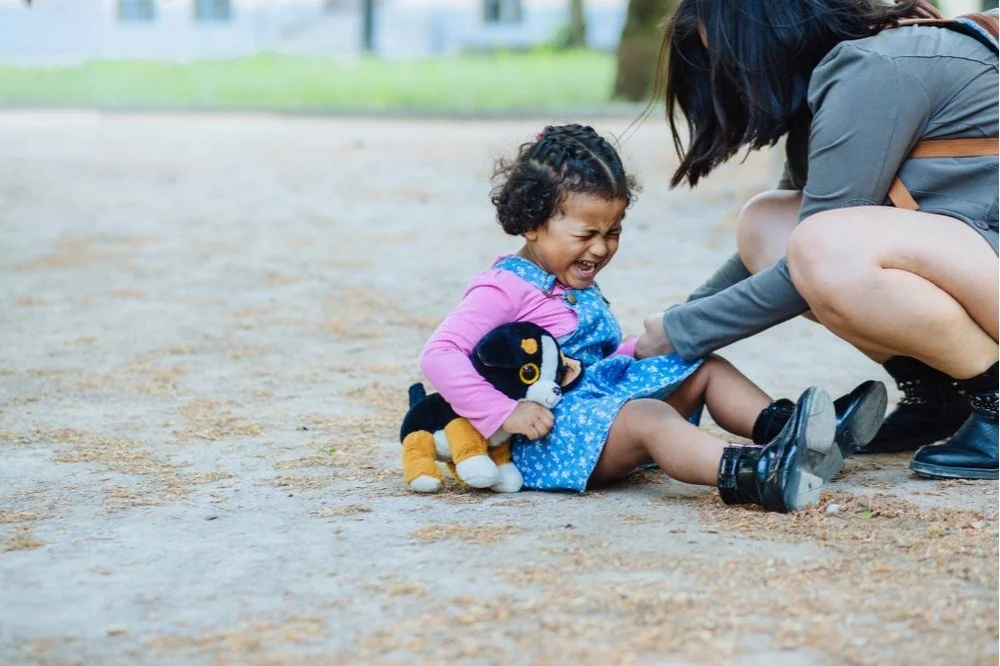
How To Be A "Gentle" Parent When You Have A Big Reactor
Every week I have multiple consults during which parents are in tears and experiencing utter despair over not being able to be the "gentle" parent they want to be. They feel like total failures. All are exhausted and depleted. Some are depressed.
These parents all have "big reactors", aka, kids who go from 0-60 in a nanosecond if you: cut their sandwich the wrong way; take a different route home from school; pay ANY attention to the new baby; don't let them have another TV show; can't get their blankets on exactly the way they want after 20 minutes of trying, and so on.
These moms and dads, like all parents, want to be "gentle" parents: calm, loving, empathetic, validating and warmly connected to their kids.
The problem is that, largely from the explosion of social media, they have gotten the message that being a "gentle" parent means: your child is never unhappy; you are always engaged in loving, joyful connection with your child; you have the power to always calm your child when they are upset; you never feel frustrated, angry, overwhelmed, or want a break from your child, and act out on those feelings.
This might be possible if you have a super adaptable, go-with-the-flow child (who makes their parents look soooo good!) These are the kids born with an "easy" temperament, who weather changes and transitions easily and who cope with limits and life's natural disappointments and frustrations without a lot of distress and dysregulation.
But "sharing your calm" (aka "co-regulation") with a child whose epic meltdowns can be destructive, and venomous (a recent favorite is from a 4 yo who shouted at his father: "I'm taking you back to the daddy store!"). and include "slaughterhouse screams" and physical aggression—hitting, spitting, kicking, scratching—is a whole different ballgame.

The Beauty of Boundaries at Bedtime: When securing a door is loving, not harmful
In any given week, I consult with multiple families who are ensconced in battles with their children around bedtime. This includes children running out of their rooms repeatedly after lights out, which sometimes lasts for hours. Parents are exhausted and angry with their kids for causing so much stress. The bedtime routine that should be full of cuddles and connection has become fraught with tumult and tension.
Few (if any) children happily send their parents off at bedtime. Most want to extend their time with you as long as possible to forestall a separation from the people they love the most. Can you blame them? That’s why setting and enforcing limits is almost always necessary for establishing healthy sleep habits. Remember: what children want isn’t always what they need.
Which brings me to a not-so-tiny victory I want to share because it has to do with putting in place a boundary that many parents I talk to are very uncomfortable with: securing a bedroom door closed, which, at a cellular level, feels harsh and harmful.
I hope this story will help you see that setting a clear boundary at bedtime is loving, not mean or neglectful. (All names changed to protect the innocent.)

Understanding and Supporting Highly Sensitive Children (HSC)
Our five-year-old, Gabriel, is a very bright, funny, charming little guy. But he still has a lot of tantrums, which we thought would be over by this age. He reacts very poorly to consequences. He will get very threatening and aggressive physically and verbally: slamming doors, hitting, and lashing out verbally. We are constantly negotiating with limit setting. When we hold to the limit, he will escalate and sometimes will have very intense tantrums that can last over 30 minutes. When he is happy, he is the most delightful child. But the second something doesn’t happen exactly how or when he wants it, he is explosive. We are totally exhausted.
Gabriel is also very sensitive and self-conscious. He is easily offended. He doesn’t like people focusing attention on him or looking at him. Every single performance he has participated in he turns his back away from the audience. He is also a perfectionist and will be very self-critical when he doesn’t do things perfectly.
Gabriel feels rejected easily. For example, the other day I was giving his little sister a piggyback ride down the stairs in the morning. He went under his covers and started screaming all sorts of inflammatory and threatening things. When I try to talk to him about these incidents, he covers his ears. If we try to ignore his inappropriate language, he will just escalate. He eventually calms down and feels badly about his behavior. When we process it once the explosion is over, he will say things like “I push people away, like Elsa (of Frozen).” Or, “My brain is so out of control…I don’t know why I stay so mad.”
Most parents who seek my services have a Gabriel (to varying degrees) in their family. Whether the motivation to make that first call to me is for a challenge with tantrums, aggressive behavior, power struggles, sleep, or potty training, the common denominator is that their child is highly sensitive (HS) by nature, also known as temperament.
Temperament is a child’s way of approaching the world—the “why” that explains the meaning of his behavior. Temperament is something we are all born with, not something children choose or that parents create. It influences the way we process our experiences in the world. It is why some children jump right into new situations and others are anxious and need time to warm up to the unfamiliar. It is why some children go-with-the-flow and weather life’s ups and downs with ease and others have big reactions to seemingly minor events. It is also why siblings can be so different. They share DNA and grow up in the same family, but their reactions to the very same experiences—a move, a loss, their parents’ approach to discipline—may be vastly different based on their temperament.
The reason HS children tend to experience more challenges is because they are wired to register their feelings and experiences in the world more deeply than other children. Parents often describe their HS children as being either ecstatic or enraged—with no middle register. They are sometimes referred to as “orchids”[1] because they are affected by and reactive to even minor changes in their environment. They are more vulnerable than the kids we call “dandelions” who go with the flow and thrive even in challenging circumstances (and make their parents looks so good!)

Stop Trying to Control Your Child
This article is the first in a series based on my 2021 book, Why Is My Child In Charge? Through stories of my work with families, I show how making critical mindshifts—seeing children’s behaviors through a new lens —empowers parents to solve their most vexing childrearing challenges, including: tantrums, aggressive behavior, sleep, mealtime battles, and potty learning. Most importantly, it shows you how to get back in the driver's seat--where you belong and where your child needs you to be.
The spotlight in this blog is on a mindset many of you who have worked with me or have read my content have heard me talk a lot about: “I can control and change my child’s feelings and behavior.” The reason I bring it up so often is because it is perhaps the most pervasive obstacle to “positive” and effective parenting because it puts your child, not you, in the driver’s seat—a dynamic that is not healthy for anyone.
The fact is that you cannot actually make your child do anything: sleep, eat, not thrown a tantrum, agree to get in the car seat, pee in the potty…the list is endless. Children, like all humans, are the only ones who control their words and actions. This is one of the most humbling aspects of parenting that no one warns you about. It runs so fiercely counter to how we see ourselves and our role. We are supposed to be able to make our children behave.

How to Help Highly Sensitive Children Be More Adaptable and Flexible
This article is part of a series on understanding and supporting highly sensitive children. You can check out other installments in this series, here.
Flexibility is one of the most important assets for functioning well in this world. It is an essential ingredient for adapting to the countless events in life that we can’t predict or control. It also helps us work effectively in groups and develop healthy relationships because it enables us to take into consideration the perspectives and needs of others.
It’s important to keep in mind that learning to be flexible is harder for some children than others, largely due to their temperament. Go-with-the-flow kids, those "dandelions"* who are more adaptable by nature, are naturally more flexible. "Orchids"*--who are wired to be more sensitive—tend to be more inflexible. They often have intense responses to seemingly minor stressors, as illustrated by these typical examples:

Regression: Why children take steps backwards in their development and what you can do
Madison used to be a great sleeper. Over the past few weeks, as the coronavirus lockdown has persisted, bedtime has deteriorated. It started with Madison insisting that I stay with her until she falls asleep. Now she insists on sleeping in our bed all night. –Father of a four-year-old
Jackson had been fully potty trained and was a “big boy” in so many ways. Since his little brother was born, he has started to have a lot of accidents. He is demanding a bottle and wants to be carried 24/7. This is driving us crazy. We don’t need two babies in this household! —Mom of a three-year-old
Kids regressing—moving backwards in their development—is a common phenomenon. It is usually in reaction to a stressor: a move, a new baby in the family, a change in schools or caregivers, or…a global pandemic, to name a few. Any change or disruption in children’s daily routines is stressful.
When we, children and adults alike, experience shifts in our worlds (especially when they are unexpected or seismic, like COVID), our psychic energy gets diverted from higher level brain functions to just trying to cope day to day. (Few people I know would say they are at the top of their game right now. Just like many of us are having a harder time managing everyday tasks and challenges, so are our kids.) This can result in more challenging behaviors and regression to less mature levels of functioning. When a child’s system is stressed, she may get frustrated more easily, become more clingy, have more potty accidents, experience sleep disruption, or, have a change in her eating patterns. Keep in mind that highly sensitive (HS) children are more prone to regression as they are more vulnerable and reactive to changes in their world.
That’s not to say that all stress is harmful to kids. For example, starting preschool is a major shift. Most children go through a period of discomfort as they learn to adapt to this new experience—managing the separation from parents/caregivers, figuring out the rules of the classroom and how to get along with peers. This is positive stress because it leads to growth and the development of new skills. But during this adaptation process, some regression is to be expected. In the preschools where I consult, there are always some children who in the first month of school won’t eat snack or use the toilet, and may not do a lot of talking or interacting with their peers or teachers. Once they adapt, they feel comfortable and their stress is reduced, they have access to all of their skills—their full range of functioning—and thrive.
Also keep in mind that highly sensitive (HS) children are more prone to regression as they are more vulnerable and reactive to changes in their world.
RESPONDING TO REGRESSION: WHAT NOT TO DO

Securing Sleep: Key Principles for Helping Your Child Become a Good Sleeper
Nine-month-old Lilah, previously a great sleeper, has started to protest when her mom puts her down to sleep. She wakes up multiple times at night. She won’t fall back to sleep unless she gets a bottle that she scarfs down.
Three-year-old Amir insists on an endless litany of demands at bedtime—2, then 3, then 4 more books, placing his cars in a specific order on his shelf, getting his blankets on “just right”. Even when his parents acquiesce, it’s never enough. He still flips out when they say they are leaving and it’s time for him to go to sleep. When they finally put a monkey lock on Amir’s door to keep him from leaving his room after lights-out, he gets them in the jugular by shouting things like: “It’s illegal to ignore your child!”
Sleep challenges come in all shapes and sizes. And, like most childrearing challenges, a one-size-fits-all approach to help children become good sleepers does not exist. Every child and family is different. The underlying cause of the trouble can vary significantly from one scenario to another. One child struggles with separation anxiety; another tests limits; another doesn’t know how to fall asleep on his own. That’s why general prescriptions don’t work. In fact, they can lead to more frustration for parents when the suggested plan does not feel comfortable for them or doesn’t work for their child. Instead, what I have found most useful is to provide parents with a set of guiding principles to develop their own path to help their child (and themselves!) get a good night’s sleep. These are not solutions to specific sleep challenges, but rather overarching strategies and mindset shifts that empower you to come up with an approach that meets your child’s and family’s needs.
Guiding Principles