
Lerner Child Development Blog
Blogs By Categories
- ADHD
- All Most Popular
- All Most Popular Blogs
- Anxiety
- Big Reactors
- Blogs
- Building Resilience
- Challenging behaviors
- Cooperation
- Distress Tolerance
- Emotional Regulation
- Food Challenges
- Highly Sensitive Children
- Limit-Setting With Love
- Low Frustration Tolerance
- Mealtime
- Neurodiversity
- No Power Struggles
- Parental Self Awareness
- Parental Self Regulation
- Physical Aggression
- Positive Discipline
- Potty Learning
- Regression
- School Related Issues
- School challenges
- Separation and Divorce
- Sibling Issues
- Sleep
- Social challenges
- Social emotional development
- challenging behaviors
- explosive behavior
- food
- lying
- masking
- mealtime
- parenting self-awareness
- positive parenting
- separation anxiety
- sleep
- social emotional development
- stress
- victim mindset

When Kids Act Like Dictators
"You have to put all my blocks back exactly the way I had them! You are not allowed to touch my blocks!"
"Stop talking to mommy! I have a question and she needs to listen to me right now!"(Shouting at dad who is in a conversation with mom.)
While kids of all temperaments have been known to act like dictators at times, parents who have HSCs (highly sensitive children) report that their children make these kinds of seemingly outrageous demands on a regular basis. If the demand is not met, their kids can be very angsty and unpleasant. There may be a lot of whining or a full-blown tantrum. Many parents have said they feel like they are "negotiating with terrorists" during these encounters.
These moments are so maddening because:
1) The tone the child takes is mortifying and "obnoxious" and totally unacceptable.
2) What triggers the child seems so minor and irrational, and makes parents feel like their they are raising spoiled brats that they need to "toughen up."
This makes it very challenging for parents who are working so hard to be the empathetic, calm, connected moms and dads they want to be.
A common knee-jerk reaction is to admonish or correct: "You can't talk to us that way! It is disrespectful." This tends to amp kids up further. They are quick to shame in the face of being corrected—which they experience as criticism— propelling them into further dysregulation. When their brains are flooded with overwhelming feelings, they are unable to process or learn any lesson you are trying to teach them. (Here's more on how to teach lessons to kids who can't tolerate being corrected.)
What Your Child Needs
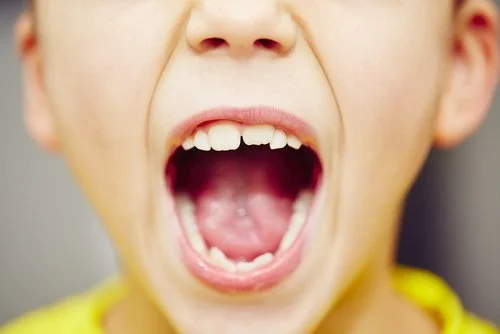
Why Kids Bite And Why Punishment Doesn't Work
I met with a family recently with a 23-month-old (whom I'll call Aiden) who is biting. Naturally, the parents (Maritza and Oliver) are very concerned because other families are getting upset at their children being the victims of these bites.
Like many parents who find themselves in this situation, Maritza and Oliver want to do whatever they can to stop the biting. They believe/hope that punishment will end this behavior; that Aiden will want to please them and not get into trouble, which will motivate him to stop this behavior. So they have been using a harsh voice and putting him in time-out, or taking desired toys and activities away.
Meanwhile, Aiden has been walking around the house saying, "No biting. Aiden no bite," throughout the day. Just like us, kids replay experiences over and over that are emotionally-charged, trying to make sense of what it all means. This puts Aiden in a quandary, because what he does understand is that his parents are unhappy with him, but what he does not have is the impulse control to stop himself when he has this urge to bite. This puts him in a very uncomfortable, impossible situation. (It also means that no amount of threats or punishment is likely going to help him stop this behavior.)
As I guide Maritza and Oliver to do the detective work to figure out as best we can what the root cause is of the biting, we identify a pattern: the biting happens when Aiden is triggered into over-arousal. He is happily playing rough-and-tumble with his dad and then, out of nowhere, he chomps into Oliver's arm. Or, he is racing up and down the slide, and after a few rounds of this, sinks his teeth into a child next to him in line.
So, the punishment is not working because:

Safe Space Breaks: When Giving Your Child (And Yourself!) A Break Can Be Helpful, Not Harmful
One of the most challenging situations families of big reactors face is what to do when their children are so out of control that they are destructive. They are "going to a category five in a nanosecond" and there is no calming them once they are triggered. Their meltdowns are frequent and intense. In the heat of these "red-zone" moments—when their children are hurling objects, kicking, hitting, biting, scratching and spitting—these parents are pushed to their emotional, and physical, limit. They instinctively know that a break is necessary—for themselves and their children.
The problem is that most have spent a fair amount of time on social media and have been barraged with the message that time-out is not developmentally appropriate and can be detrimental to their child; that it is negating children's feelings and tantamount to traumatizing them by abandoning them when they are in distress. What loving parent would do something that could be so harmful to their child?
This leaves these parents in despair, feeling like their hands are tied, totally helpless. It is an awful feeling that is not good for them or their kids.
The frequency of these stories led to my decision to start incorporating home visits into my practice so I could observe first-hand how these encounters unfold and provide more relevant and targeted support to parents—that meets them in their realities. What I saw was that when emotions (and cortisol levels in the brain) are sky-high, a break for both parent and child can be a healthier approach than the tense, often aggressive, back-and-forth (physical and emotional) that ensues in red-zone moments when parents are trying to physically restrain children and losing control themselves. While remaining with their child in these moments feels like the more loving thing to do, this dynamic is much more harmful to children than providing them (and their parents!) some space in a safe and loving way. What's the parent of a big reactor to do?
So, in this blog I am revisiting this whole controversy about time-out because it continues to vex many families who come to see me. And, because I want to spread the very important word that two highly respected colleagues have recently reviewed the actual research on time-out and both have concluded that not only isn't it harmful, but can be a helpful, positive parenting strategy. It's all abut how it is implemented.
The Controversy Around Time-Out
There is broad agreement that the use of time-out as punishment for “misbehavior” is both developmentally inappropriate and ineffective. A robust body of research clearly shows that the part of the brain that controls the ability to think about and manage feelings and actions is not well-developed in young children. They are driven by their emotions and impulses. They are not misbehaving on purpose, so they don’t learn anything from time-outs. Further, punitive approaches tend to increase challenging behaviors. They exacerbate the distress children are already experiencing as they struggle to cope with life’s myriad frustrations and disappointments. They need our empathy and support, not anger and rejection.
The problem is that now time-out has become a catchall. Any type of break a child might need is seen as punitive and detrimental to children. The antidote to time-out has become time-in, which entails staying with the child throughout the meltdown, no matter what. Parents act as “co-regulators”, providing the support young children need to soothe themselves given that they have very limited ability to self-regulate.
This makes all the sense in the world, in theory. But for many families, the reality is that their presence in these moments is not calming or regulating for their child who is so out of control that they cannot accept comfort. The more these moms and dads try to calm their kids, the more out of control they get. In these situations, time-in is not helping soothe their child’s stress response. Being in the room with their child is a stimulant, even when parents are staying calm and quiet. They become an available target for continued aggressive behavior, keeping their child revved up and reactive.
Not to mention that parents are also human, and as hard as we may work on controlling our emotions, there are times when children are so out-of-control and destructive that the only way to cool things down is to take a break from the intensity of the moment.
Consequently, I have come to believe that it is a disservice to parents to tell them that the only acceptable option when their child is spiraling out of control is time-in. They already feel like failures for having a child who can get so out-of-control and destructive. When time-ins only extend and exacerbate these red-zone moments, parents despair that they have no tool that enables them to maintain some sense of control over their child’s behavior. They are physically and emotionally “burnt-out,” as one parent recently put it, from all the knock-down, drag-out battles they experience—sometimes on a daily basis. And, sadly, these parents spend a lot of time feeling angry at their children for making them feel so out of control.
The Research On Time-Out Does Not Show Harmful Effects and Confirms It Can Be a Helpful, Loving Strategy
Science journalist, Melinda Wenner Moyer recently did a review of all the research on time-outs and reports: “In the parenting advice world, the big concerns about time-outs are that they are emotionally damaging and that they erode the quality of the parent-child relationship. Yet I couldn’t find evidence to suggest they do either of these things, and found plenty of research suggesting the opposite." She continues: "Clinical psychologists evaluated the vast published research on time-outs, concluding that ‘time-out represents a safe, effective form of discipline which, in the context of a larger environment dominated by positivity, consistency, and predictability, has been shown across hundreds of research studies to be beneficial to the overall emotional and developmental functioning of young children.'"
Psychologist Cara Goodwin did a deep-dive into the genesis of Time-Out, and it's impact on parent-child attachment (I assume because parents are bombarded with claims on social media about time-out eroding a secure attachment.) She found that time-out has no negative impact on attachment, and that "Temporary and predictable separations with positive reunions are an important part of secure attachment." It's all about how parents provide this break. I strongly recommend you read her excellent article, highlighted above.
How to Implement the "Safe-Space Break" in a Loving and Supportive Way
The breaks I suggest parents give themselves and their children in these most challenging moments are not punitive but loving and supportive. I don’t call them “time-out” because this term has become synonymous with punishment. I call them “safe-space breaks." Breaks are not inherently or necessarily harmful to young children: it’s all in the way they are executed. When parents approach the break calmly and lovingly—not punitively ("Go to your room right now!”)—this tool can be caring, not callous. It creates the space parents and children need to prevent further escalation, and to come back together to solve the problem when they are both calm.
Let your child know what the plan will be when they are in the red-zone. In a quiet moment (not during a tantrum), acknowledge that meltdowns will happen. Everyone experiences times when they are so upset that they lose control of their minds and bodies. Explain to your child that when they are in that state, your job is to be their helper. You will always first try to help them get calm by using a range of tools you come up with together, such as giving them a bear hug, or taking deep belly breaths.
But in situations in which they are having a hard time controlling their body, you will take them to their safe space. Make the focus keeping them safe, not that you are protecting other people from them. (If you make the focus on how they are being harmful to others, it is likely to be more triggering to them and result in further dysregulation.) Once they are calm, you can talk about the incident—depending on their age—and help them begin to understand how their behavior impacts both themselves and others.
Show them that you have a safe-space break, too. This could simply be your room. Place some calming tools in there—like stress balls, exercise bands you can snap, etc.—and explain to your child that when you are getting agitated, you go into your safe space and use these objects, or strategies like taking deep breaths, to get yourself calm. Then, when you are calm, you are better able to help solve whatever problem is at hand. This is a very powerful model for self-regulation, reinforces that the safe space is not punishment but a tool for calming that everyone needs, and shows them that they are not alone. A dad recently reported that when he modeled this in the heat of a moment with his almost 4-year-old, his son responded by going into his room and looking at books to calm himself.
Be sure the safe space has a boundary to prevent your child from exiting on their own. For children who will not stay in the safe space and keep running out before they are back in control, I find it essential to provide a boundary. When children can exit the safe space freely, parents lose control over the situation which tends to only further fuel the frenzy. Boundaries are good for kids. They keep them safe and secure. I recommend using a door monkey which keeps the door wedged open a few inches—not enough for a child to squeeze out. This way you don’t have to close or lock doors. Preview how door monkey works so your child knows exactly what to expect: “This is our friend Mr. Door Helper. He keeps you secure in your safe space until your body is calm.” If the door monkey doesn't work in your home (ie if you live in an old row house), using a door knob cover or reversing the lock on the door can work well.
A child’s bedroom can serve as the safe space since it is not being used as punishment but as a loving, calming place.
Once your child is safely in the space, you can sit on the other side of the door and say a calming mantra or just be a quiet presence. Just knowing you are there to weather the storm is loving and supportive to your child, even if they are not making you feel like you are being loving and supportive.
In situations where you don’t feel you can get your child into the safe space, (i.e., if you have an older child who is too big for you to carry to the space) an alternative is to secure yourself in a safe space and calmly tell your child: “I am going to my safe space. When you are back in control of your body I will come out and we can work on solving the problem.”
Include your child in designing the space. First, be sure to child-proof the space. Make sure there are no dangerous objects they can gain access to. Remove anything they can climb on such as stools or chairs. Brainstorm together what they can do in their safe space. Help them choose from a range of acceptable items that can be included, such as: stuffed animals, squishy balls, cozy pillows, and books. Putting a kids’ tent in the space can be very effective as it feels snuggly and comforting to children, especially when they are unraveling. Creating a warm, friendly space communicates to your child that it is not for punishment—it’s a loving space. (Still, don't expect your child to thank you for putting them in the break space. Remember, just because a child doesn't like a limit doesn't mean it's not good for them.)
Stay as calm as possible when moving your child to the break space. If your child is not able or willing to go to the break space on their own, you may need to carry them there. Even as you hold them at arm’s length to avoid their kicking, hitting or biting, try to stay calm and keep language to a minimum. Remember, kids can’t process more input when they are in the red-zone. Their brains are flooded with emotion and they can't think rationally. Whisper a calming statement: “You’re really upset and are having a hard time controlling your body. I am going to be a helper and take you to your safe space for a break. When you are calm we can get back to playing.”
You can stay on the other side of the door and say a calming mantra, like: “I know, this is a tough moment. I am here.”
Options for ending the break. Some parents choose to end the break when their child is calm. Another option is to set a timer for three to five minutes, then check in. At this point, your child may still be upset, but if they are no longer out of control and are able to accept being comforted, you can help them move on. It can also be helpful to tell your child that when they count to 10, you will know their body is calm. Giving them a job—something to focus their attention—can be organizing and help them regulate.
Be sure to have appropriate expectations for what the break will accomplish. Young children do not yet have the ability to reflect on their actions and behavior on their own, without help from a caring adult. This means that the goal of taking a break is not self-reflection: “Gee, I wonder why I let my emotions get the best of me—I really shouldn’t have scratched and kicked daddy when he turned the TV off” is beyond toddlers and even preschoolers (not to mention many adults!) The goal is to provide a quiet place where your child can move from a state of high agitation and upset to calm. The break offers the space for both parent and child to regroup. No learning takes place when children are in an agitated, emotionally flooded state.
Breakdowns are evidence that children are experiencing overwhelming stress they can’t manage. When your child is being harmful and you cannot control them, or when they are so out of control that they cannot accept and benefit from your attempts to comfort them, a short break from interaction can help them (and you!) cool down. In the context of a loving, strong parent-child relationship, giving your child and yourself this space can be helpful, not harmful.
Related articles:
How To Be a “Gentle” Parent With a Big Reactor
How to deal with public meltdowns Managing physical aggressionWhen limit-setting gets physicalStop working so hard to calm your child

Why Punishment Doesn't Stop Aggressive Behavior
Few things are more vexing than when children are physically aggressive: hitting, kicking, pushing, biting, pinching. Many parents I work with worry that this kind of behavior signals a lack of empathy. One dad recently wondered about something that is perplexing to many parents: "How could we—such loving, peaceful people—have created a kid who can be so hurtful?”
At the same time, parents fear the consequences for their child: Will she be seen as a bully? Will other children not want to play with him? Will she get kicked out of preschool? And for themselves: Will I be alienated from the other parents who judge me because of my child’s behavior?
These are all very natural concerns which understandably trigger intense reactions. In an effort to eliminate these aggressive behaviors, most parents become harsh and punitive. They shame: “What is wrong with you? Why would you want to hurt your friend?” They use threats and punishment: “No TV time for the rest of the week if you hit again!” Or, instill fear: “No one will ever want to play with you if you hurt them.”
The problem with these tactics is that while they may seem logical from an adult perspective—that they should motivate a child to stop the behaviors—they often backfire for several reasons: