
Lerner Child Development Blog
Open access to my full library of over 150 blogs is now available by becoming a member of Lerner Child Development (LCD). Scroll through thumbnails below or see the button to explore all the blogs by topic.
This subscription service enables me to continue to provide in-depth, reality-based content drawn from more than three decades of helping families solve their most vexing childrearing challenges.
In addition to access to my blogs, subscription to LCD includes several new interactive learning opportunities with me each month: a live, open Q&A and quarterly webinars on key topics. Members are also entered for two monthly drawings for a free 30-min consultation.
Note that I have made some of my most popular blogs available for free.
Blogs By Categories
- All Most Popular Blogs
- Big Reactors
- Building Resilience
- Challenging behaviors
- Cooperation
- Emotional Regulation
- Food Challenges
- Highly Sensitive Children
- Limit-Setting With Love
- Low Frustration Tolerance
- Mealtime
- No Power Struggles
- Parental Self Awareness
- Parental Self Regulation
- Physical Aggression
- Positive Discipline
- Potty Learning
- Regression
- School Related Issues
- Separation and Divorce
- Sibling Issues
- Sleep
- Social challenges
- challenging behaviors
- lying
- masking
- positive parenting
- separation anxiety
- social emotional development
- stress
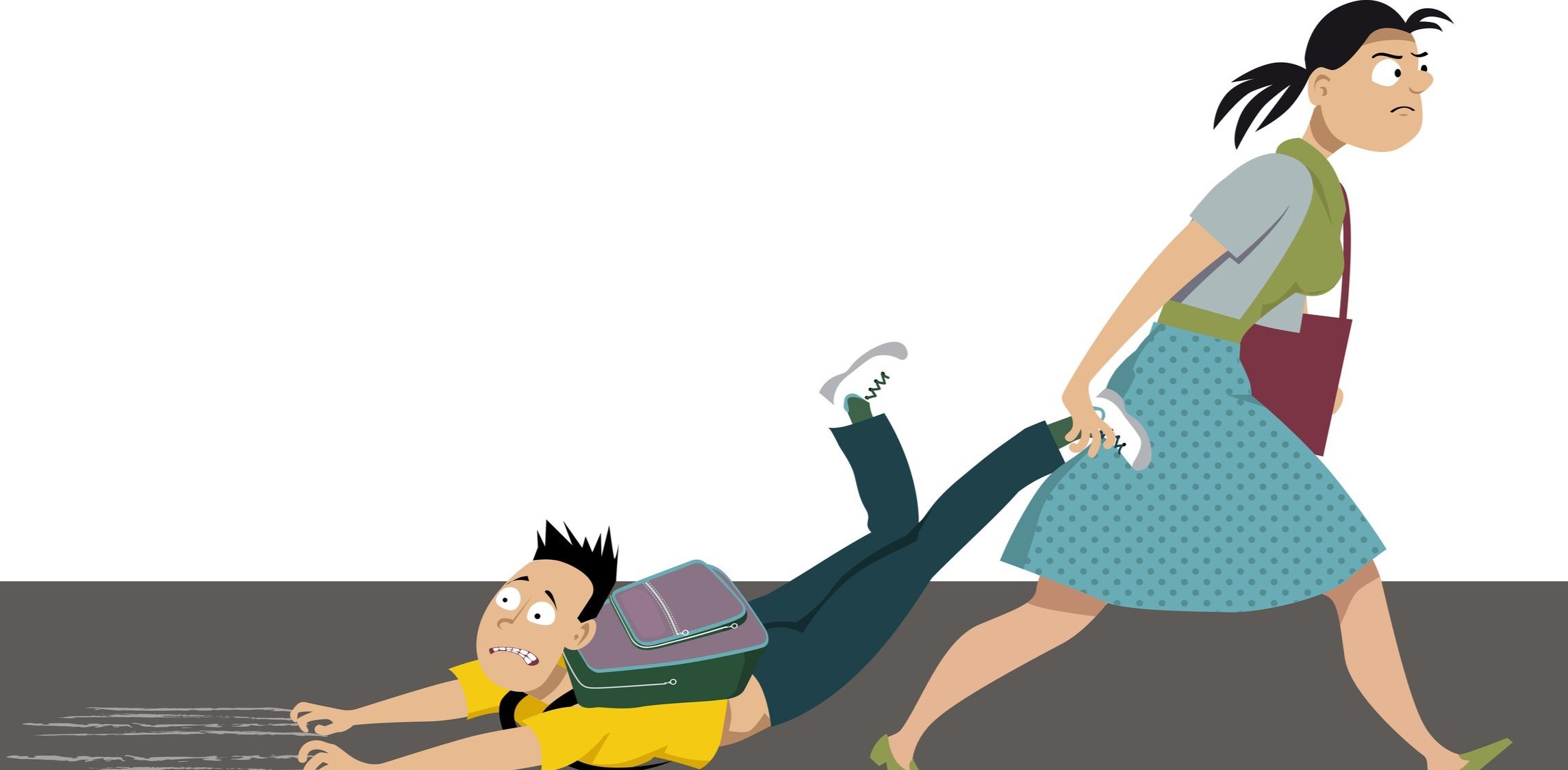
The Trouble With Transitions: Why They Are So Hard For Some Kids And How To Help
My four-year-old was very hesitant when I signed her up for gymnastics class. After a few sessions, she started to join in and now she LOVES it. I can’t get her out of there when class is over. But every week, when it’s time to go back, she fights tooth and nail, insisting she doesn’t want to go. It’s like Groundhog’s Day. I just don’t get it.
This phenomenon is one that many parents I work with find confounding and frustrating, understandably. Where is the learning curve?
As I help parents do the detective work to figure out the root cause of why their kids react this way, in most cases the challenge is making the transition, not their feelings about the activity. Once the child is engaged in the experience, they love it—whether it is school, dance class, jujitsu, art, or going to the playground. As one mom reported just earlier today: “This weekend we told Bodie (5) that we were going to the playground to meet some friends. He melted down, screaming that he wasn’t going; that he hates the playground, and he hates the children we were meeting there. We held firm and got him there, which was really, really hard and uncomfortable. But within minutes he was having the best time playing with the child he had claimed to detest just minutes earlier."
Why are transitions so hard?
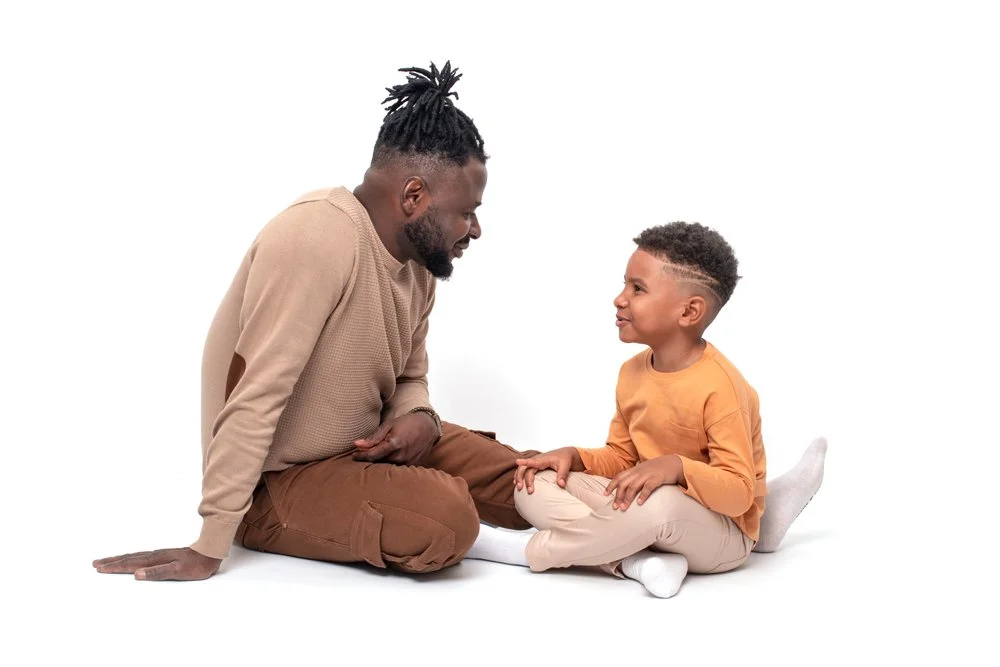
I DON’T WANT TO TALK ABOUT IT!!!! When Your Child Resists Discussions about Difficult Incidents
One of the greatest gifts we give our children is self-awareness, a key component of emotional intelligence. Helping them understand what makes them tick—to tune into and understand how their thoughts and feelings affect their behavior—is critical for their ability to develop effective, healthy ways to express their full range of emotions as they grow. That is the definition of good mental health.
Self-awareness is especially important for highly sensitive children (HSC) because of how deeply they register their emotional and sensory experiences in the world. They get overwhelmed more easily because their systems are registering more than they can effectively process. This leads to big reactions that they need to learn to manage—no small feat—but that is so critical to their healthy development.
Some HSCs are very open and eager to talk about their feelings after the meltdown or difficult incident has ended and they are calm. They often share profound and poignant insights, like the six-year-old who explained: “I remember them (the calming tools) before, and I remember them after. I just don’t remember them in the middle.” Or, the five-year-old who said, “It’s like the spirit leaves my body” after he’s had an epic meltdown. Or, the four-year-old who was able to tell her mom that the reason she fights going to school every morning is because she is afraid mommy will disappear. (Her parents had recently gone through a separation.)
As hard as it may be to hear our children share painful feelings, it is such a powerful positive for them for them to have this insight and feel safe to share it with you. It makes working through these difficult experiences possible.
But many parents I work with express concern about their children being resistant to talking about feelings. They refuse to engage in reflective discussions to process and learn from difficult incidents. They cover their ears, tell parents to go away, immediately change the subject, or just shout that they don't want to talk about it.
I believe this reaction is rooted in the discomfort of revisiting an emotionally charged experience, especially when the child feels shame about it. The last thing they want is a face-to-face discussion that can feel very overwhelming, so they shut it down.
You can't, nor should you, try to force your kids to have these conversations. Pressuring them often results in their digging in their heels more fiercely and redoubling their defenses. Further, they develop a knee-jerk, negative reaction every time you try to initiate a reflective discussion, making it less likely they will feel safe to reflect and open up in the future.
Strategies that can reduce defensiveness and open kids up
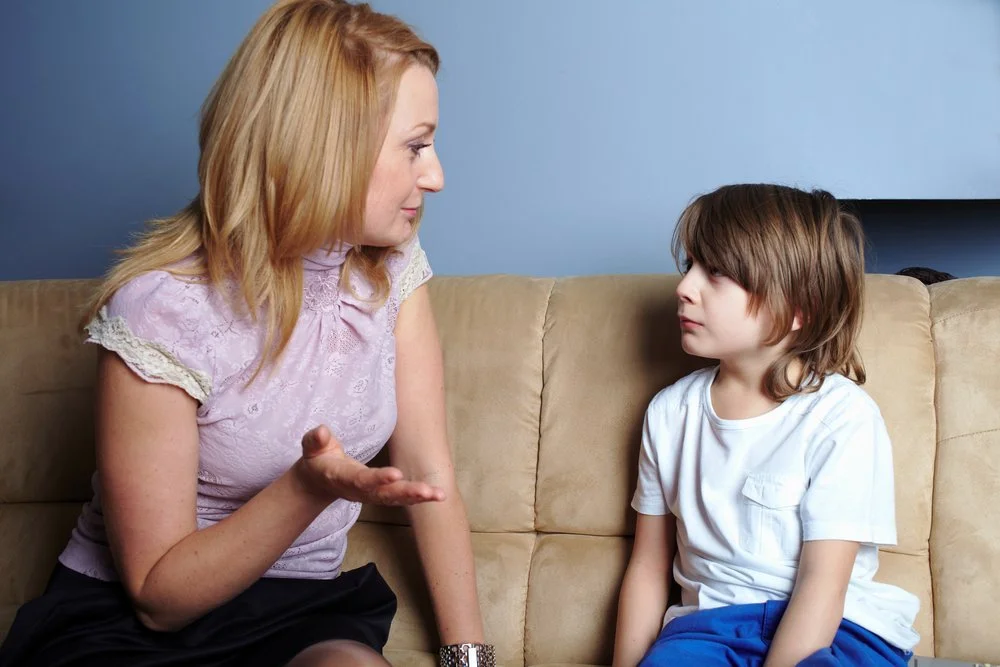
The "Have-To": A simple strategy to prevent power struggles
Every week I receive video and audio recordings from parents of challenging moments with their children that they want help understanding and effectively addressing. They almost always involve power struggles—the most pervasive problem for which parents seek my help.
In a recent recording, a seven-year-old, whom we'll call Ryder, was arguing with his dad, Arthur, at bedtime about why he couldn't go downstairs and do art instead of having book time:
Dad: "There is no going downstairs when it's bedtime."
Ryder: "That's stupid. All you want me to do is read and read and read and read because you think it's educational. Well art is educational too. Haven't you ever heard of art class?"
Dad: "It is bedtime, which is reading time."
Ryder: "That doesn't make any sense! You never let me do anything I want to do. This is the worst day ever!"
Dad: "That is not true, Ryder. You get to do so many things you want to do..." as Arthur proceeds to remind Ryder of many recent examples.
Arthur's repeated efforts to explain (defend) himself—to convince Ryder to see that his accusations are unfounded, and that the limit is fair, is just fodder for Ryder to keep upping the ante. His retorts get more fierce and increasingly irrational: "You care more about Lilah (his younger sister) than me! She gets to do art whenever she wants!" "You are so mean to me. I don't even think you love me!"
This goes on for over 20 minutes, with Arthur playing defense, countering every accusation and negotiation point. He is completely worn down and ends up letting Ryder do art in his room for an extra 30 minutes before lights-out.
I share this encounter because it reflects the stories I hear from families on a daily basis. A four-year-old launches into a long explanation of why she needs more time to make food for her stuffed animals, right when it's time to go to school. Her mom says she can have five more minutes. But when the timer goes off, her daughter comes up with another task she needs to do, the struggle continues. They are ultimately late for school and separate with everyone exasperated.
A five-year-old draws her parents into a 10-minute discussion about why she should be able to watch another episode of her show, talking circles around them until their heads are about to explode.
As we analyze these interactions, it becomes evident that the foundational problem is that their kids have found a LOOPHOLE: the absence of a clear limit that creates a void—an opening and opportunity—for kids to try to thwart their parents from setting the limits they don't like. Once the child effectively engages their parents in a debate or negotiation, the child sees that there is a chance that they can get their parents to cave in on or amend the limit to their liking. The longer the child can keep their parents engaged in these debates/battles (and parents will stay a long time, hoping that if they can just get their child to agree to respect the limit, they can head off the dreaded tantrum), the more revved up and irrational their children tend to get. It is utterly exhausting for everyone involved.

What’s the Difference Between PDA (Pervasive Demand Avoidance)and Just Being Strong-Willed?
“Demand avoidance”—a knee-jerk, defiant reaction to any direction to cooperate with a task or to make a transition— is a phenomenon that I see frequently in my work with families of highly sensitive children(HSC)/big reactors.
This pattern of behavior has been officially termed "Pathological Demand Avoidance" (PDA), but many experts, myself included, prefer "Pervasive Demand Avoidance."
The first and most important thing to know about PDA is that it is a reaction that is based in the nervous system and is not purposeful "opposition" or "defiance." The nervous system interprets the demand as a threat to the child's autonomy and triggers a stress response that prepares the body to fight or flee.
While PDA is associated with ASD (Autism Spectrum Disorder), I work with hundreds families each year and see many kids who are not on the Autism spectrum but are prone to demand avoidance. Most of these children are HSCs who often feel overwhelmed on the inside because of how deeply they process their experiences in the world. To cope—to make life more manageable—they seek to control as much as they can on the outside. This frequently translates into refusal to follow a direction, given the fact that directions are designed to control a child's behavior—to get them to do something you want them to do. These kids are totally clued into this and resisting the demand is a way to feel in control.
So what's a parent to do when many of these tasks HAVE TO BE DONE to keep their children healthy and safe, and to run an effective household, especially a busy one with multiple kids? Teeth need to be brushed; kids need to be at school, doctor appointments, and activities on time; baths/showers have to be taken; kids need to stay safely in their rooms at night to get the sleep they need (if you are choosing to have your children sleep independently.)

"This Is the WORST DAY EVER!"
This exclamation was made by a highly sensitive child (HSC), when, after a wonderful day with hours of fun and joy, her dad said "no" to going back downstairs (once she was already in bed with lights out). She insisted she needed to check on a Magnatile structure she had been working on earlier that day.
I can't tell you how many times a week I hear stories like this from parents. Their HSC has a great day with lots of good stuff; and then one, often seemingly minor, event/disappointment happens and everything is ruined.
After decades of working with families of HSCs, and parenting my own, I understand that this is often part of the deal with these deeply feeling kids: they live life at the extremes. They are ecstatic or enraged. They tend to process their experiences in this all or nothing, black and white way. It's all good or all bad. They have a harder time living in the gray.
The temptation, naturally, is to try to get them to see that there was so much good in their day, to talk them out of this all-encompassing, negative state, which seems so unfortunate and sad—for them to see the world this way. But that usually results in the HSC, in reaction to being told how to feel, doubling-down to prove to you that in fact, everything is indeed ruined.
Keep in mind that this doesn't mean the good stuff isn't getting through or having a positive impact on them. This awareness may also help you avoid the temptation to try to get them to acknowledge it or feel it in that moment.

When Kids Act Like Dictators
"You have to put all my blocks back exactly the way I had them! You are not allowed to touch my blocks!"
"Stop talking to mommy! I have a question and she needs to listen to me right now!"(Shouting at dad who is in a conversation with mom.)
While kids of all temperaments have been known to act like dictators at times, parents who have HSCs (highly sensitive children) report that their children make these kinds of seemingly outrageous demands on a regular basis. If the demand is not met, their kids can be very angsty and unpleasant. There may be a lot of whining or a full-blown tantrum. Many parents have said they feel like they are "negotiating with terrorists" during these encounters.
These moments are so maddening because:
1) The tone the child takes is mortifying and "obnoxious" and totally unacceptable.
2) What triggers the child seems so minor and irrational, and makes parents feel like their they are raising spoiled brats that they need to "toughen up."
This makes it very challenging for parents who are working so hard to be the empathetic, calm, connected moms and dads they want to be.
A common knee-jerk reaction is to admonish or correct: "You can't talk to us that way! It is disrespectful." This tends to amp kids up further. They are quick to shame in the face of being corrected—which they experience as criticism— propelling them into further dysregulation. When their brains are flooded with overwhelming feelings, they are unable to process or learn any lesson you are trying to teach them. (Here's more on how to teach lessons to kids who can't tolerate being corrected.)
What Your Child Needs

How To Support Vs. Enable Your Highly Sensitive Child
This is Part 2 of my blog on being your child’s emotional support parent (ESP), not a “helicopter parent.” In that piece, I describe the complex dynamic that often evolves when you have a very committed, loving, sensitive parent with a child who is not wired to be as adaptable as other kids; who gets triggered easily by the unexpected, and by sensations that are registered at a higher decibel and cause discomfort; and, whose big feelings are hard to manage, especially at such an early age. These parents are acting out of necessity, really survival. They are doing their best and working to the point of physical and emotional exhaustion to provide comfort to their children who are hard to comfort, and to preserve some semblance of family peace and harmony—no small feat—when you’ve got a big reactor in your home.
Part 2 provides guidance, based on my own parenting journey and my collaboration with hundreds of parents of highly sensitive children, on how to support versus enable your HSC; in other words, how to nurture that special closeness you have with your child while also setting the important limits that are essential for children’s individuation, growing sense of competence, and healthy, independent functioning.

You Are Not A Helicopter Parent. You Are Your Child's Emotional Support Parent
This blog may be the nearest and dearest to me. It speaks to a parenting phenomenon that I have personally struggled with, and continue to work on 30+ years into my parenting journey.
It all crystallized for me when, a few months ago, a mom of a very sensitive, reactive child who gets triggered into discomfort easily, and is thus prone to frequent and intense meltdowns, described herself as her child’s “emotional support animal” and it took my breath away. This so perfectly captured my experience and that of so many of the parents (most often a mom) I work with who have an HSC (highly sensitive child).
This mom is her child’s primary and most desired (demanded) source of comfort. She is the person who is highly tuned in to her child, keenly focused on anticipating anything that might cause him stress, and tirelessly working to head it off.
We are often called “Helicopter Parents” which has become the catch-all nomer (slur) for any parent who is perceived to be overprotecting their child. It is shaming and judgmental. It is damaging, and not helpful. And it does not capture or take into consideration the more complex and nuanced dynamic that evolves when you have a very committed, loving, sensitive parent with a child who is not wired to be as adaptable as other kids; who gets triggered easily by the unexpected, and by sensations that are registered at a higher decibel and cause discomfort; and, whose big feelings are hard to manage, especially at such an early age. These parents are acting out of necessity, really survival. They are doing their best and working to the point of physical and emotional exhaustion to provide comfort to their children who are hard to comfort, and to preserve some semblance of family peace and harmony—no small feat—when you’ve got a big reactor in your home.
Just telling parents to stop hovering, to stop “overprotecting” and rescuing, to set limits and not give in to tantrums, is too simplistic and doesn’t acknowledge the very complex systems that evolve in families with big reactors just to cope day to day.
This blog offers insights from my own parenting experience and my work with hundreds of kindred ESPs (“emotional support parents”) that I hope will be validating, and will also help you find that important, but often hard-to-find, sweet spot of supporting versus enabling your child. In other words, how to nurture that special closeness you have with your child while also setting the important limits that are essential for children’s individuation and healthy, independent functioning far into the future.

How To Help Kids Navigate Social Challenges
Caleb, 5, is at the playground trying to enter a game of tag with some of the neighborhood kids. He is randomly tagging people, not following the rules. The kids are getting annoyed. They keep telling him to stop. Caleb ignores their pleas and gets sillier. He starts to make fun of their names, calling Isaac, "Pisak" and Max, "Sax." At this point, the kids tell him to go away. Caleb runs to his mom, Mira, who has been sitting on a bench observing. He is angry and crying because the kids are being mean to him and not letting him play.
Mira: "What do you expect, Caleb? Why would they want to play with you when you're not playing by the rules and are making fun of their names? And you don't stop when they ask you to. They don't like it so they don't want to play with you."
Caleb: "They're mean. You don't understand! You never listen to me! You are always on their side." He demands to go home, which they do.
Mira feels awful. It is so clear to her that the way Caleb is acting with his peers is resulting in rejection, which is having a very negative affect on him and is painful for Mira to witness. She feels so sad for Caleb. At the same time, she is frustrated and at a loss as to how to help him see how his behavior is causing the problem, and that the solution is in his hands; that if he played more appropriately, he would have more positive social interactions and feel better about himself. But the second she tries to talk to him about it, he gets defensive. He acts like he is the victim and projects all the blame onto the other kids. She is despairing about how to help him.
This is a very common story, and conundrum, that many families I work with face with their children. It is so distressing for them to see their kids behave in ways that they know will not bode well for them.
The deep love we have for our children, and the concomitant fear that comes with this territory, propels us into reactive-mode, which often takes the form of schooling them (as Mira did), hoping that this will convince them to change their ways: “Why would your friends want to play if you won't share?" "We just can't do playdates if you are going to boss your friends around. They don't like it." We think that if we can just get our important (brilliant! insightful!) points across, they will change their behavior and all will be right with the world.
While you mean to be helpful, these kinds of responses are experienced as criticism, and thus shaming, by children, and launches them into defensive, self-protection, closed-brain mode. This prevents any possibility for reflection and behavior change—the ultimate goal.
What To Do

How To Help Avoidant Kids Take on Challenges And Work Through Fears
Jacob (6) loves swimming and joins a swim team that he is really enjoying. Then he has a series of illnesses that keep him out of this activity for over a month, after which he starts refusing to go to practices. When his parents ask why, he says he doesn't like swimming anymore—that it is "stupid”—which is perplexing and worrying to them. They know how fortifying this activity is for Jacob and that giving it up would be a real loss.
Accordingly, they respond: "But you love swimming, and are great at it! Why would you stop going?" They also start cheerleading—encouraging him and offering rewards if he agrees to return. Jacob only digs in his heels further. He refutes all of their talking points and doubles down on his position that he is quitting swimming.
This is a very common response from kids when parents try to convince them to keep at something they are anxious about. While you intend/hope it will be motivating, it can backfire, especially for highly sensitive kids who are very tuned into the underlying motives of their parents. They are already coping with difficult feelings about the situation. When they sense that you are disappointed or unhappy with their non-participation—when they won't jump into the pool to join the class with the other kids, or when they resist joining in the scrum at the birthday—it adds to their stress and makes it less likely they will feel confident to persevere through the challenge.
When we meet, Jacob's parents are feeling very distressed that their son is giving up something that was so important and healthy for him, and feel helpless to get him to change his mind. They are particularly concerned because this is a pattern for Jacob. He tends to give up easily and avoid things that are hard or that he isn't perfect at. His parents worry that he is missing out on important experiences that could potentially bring him a lot of pleasure.

How To Teach Lessons to Kids Who Can't Tolerate Being Corrected
All parents want to teach their kids to learn to take responsibility for their actions.
For parents of kids who are big reactors, this can feel like an impossible goal because their kids react so negatively, and sometimes explosively, to being corrected. They get angry and defensive, cover their ears, run away, or completely shut down when faced with an adult who is trying to inculcate them in some way.
So many parents have shared stories in recent consults about this vexing phenomenon, which tells me that there are probably many of you out there who are struggling with this, too. So, this blog provides insight and guidance on how to teach kids important lessons when they can't tolerate being corrected.
Why kids have a hard time being corrected
Highly sensitive children (HSC) tend to be quick to shame. Seemingly benign corrections or suggestions—how to hold scissors correctly, how to aim the ball to get it in the basket, how to solve a problem with a peer—are experienced as criticisms or personal indictments, not as helpful guidance you are intending to offer.
They also interpret and process your input as a threat to their sense of self and autonomy; that you are trying to control them and change their behavior, which results in a defensive reaction. They engage in all sorts of evasion (often blaming you or other external forces, for their actions) as a way to ward off feelings they are having a hard time understanding and managing.
When they experience your anger, annoyance, or disappointment at their behavior, it only increases their stress, which results in deeper dysregulation.
Further, you may find that when you want to reflect on these difficult incidents once they are over, to help your child process the experience and learn from it, your child refuses to revisit the uncomfortable feelings and events. This leaves many parents despairing about how they will ever be able to teach their children important lessons about the impact of their actions on others.
What you can do
Teaching lessons may look very different with a big reactor.It turns out that, often, the most effective way to do this is counterintuitive for most parents; the opposite of what your logical, adult mind dictates, as illustrated by the examples below.
Seven-year-old sore at losing
Max, 7, is playing in a basketball game. His dad, Peter, is in the stands and sees that Max is getting increasingly frustrated that no one is passing the ball to him. Just as Peter fears—because Max has a history of sore-losing and blaming it on unfair tactics—Max ultimately storms off the court to where Peter is sitting. Max pretends that the reason he left the game is because there is something in his eye; he doesn't want anyone to think he is crying. Then he blurts out to Peter that it's not fair—no one is passing the ball to him so he can't make any baskets.
With the best of intentions, Peter launches right into encouragement/cheerleading/problem-solving: "That happens in games. You can't always get the ball or a basket. What do you think your teammates and coach will think about you walking off? You have to get back out there, Buddy."
Max's response: "Stop talking to me right now!! You are so annoying!" as he starts to push angrily into Peter. Peter admonishes Max for getting aggressive. This ultimately leads to Max running out of the gym and Peter feeling totally distraught about how this behavior will affect the way Max’s peers will see him and how in the world he is ever going to be able to teach Max how to be more resilient.
After we process this incident in a consult, Peter is able to see why his response may have backfired; that his intended encouragement was not experienced as motivating, but as added stress. Max is very sensitive and tuned in to the fact that Peter was disappointed in his reaction; that he wanted Max to be able to buck up and bounce back, which Max was not ready/able to do. This left Max feeling pressured, and alone and misunderstood, making it less likely he would feel confident to get back out there and learn to cope with the challenges of a competitive sport.
With this insight, the next time a similar incident happens, here is how Peter responds:
He starts with empathy: "I hear you Bud, playing team sports can be challenging and frustrating."
He lets Max know he is not alone in his feelings/experience: "It took me a long time to get comfortable with not always getting the ball, or a basket, or a goal. I ended up deciding that I would try to manage the frustration and disappointment that can happen in team sports because I didn't want to give up playing those games with my friends."
He avoids telling Max what to do (which always leads to a defensive reaction) and, instead, positions himself as a person who will help Max think these trickly situations through: "Looks like your options are to take some deep breaths and go back into the game, or take a break and then figure out how you want to proceed. What do you think is a better choice for you right now?"
Now that Peter is no longer trying to change Max's behavior, and is giving him the space and opportunity to figure things out for himself, Max is calming more quickly and is sometimes open to engaging in a reflective process to think through these difficult situations. This is what gives Max the best chance of building the resilience Peter knows would be so good for him. It has also solidified a strong bond between Peter and Max, who now feels seen, understood, and respected by his dad.
Six-year-old whose body often acts before his brain
Roman is a very intense, amazing child who is super empathic, creative, and curious. He can also become explosive when things don't go the way he wants or expects: his sister goes first...for anything; he hits a snag in a project he is working on; his mom, Serena, says “no” to a new Lego set.
For a long time, when Roman would lose it and start hurling toys, which sometimes hit her, Serena, typically and naturally, had a big reaction—shouting at Roman for hurting her and admonishing that he cannot throw objects. It's dangerous. This always led to Roman getting more dysregulated and defensive, with more aggressive behavior and vitriol hurled. The whole situation spiraled further out of control with no lessons learned.
Serena has been working for years on managing her own emotions in the face of these explosions, and trying to figure out the best way to help Roman learn to manage his impulses and take responsibility for his actions. In our most recent consult she shared this major victory and lesson learned...for her:
Roman was frustrated and tossed a toy that grazed Serena on the cheek. She stayed calm and without a word, went to the sink and started to take care of the scrape. Roman immediately approached her with great remorse, hugged her legs, said he was sorry, and asked if she was okay.
No doubt, showing this kind of self-control in the heat-of-the-moment, especially when she had just been the victim of her son’s aggression, was nothing short of super-human. But you can see the payoff. By not going into correction mode, or fueling the flames, Serena created a very powerful opportunity for Roman to take responsibility for his actions.
I see this dynamic all the time at homes and in preschools. The bigger the reaction from the adult, and the more they try to correct the child and teach them a lesson, the more agitated and aggressive the child becomes. Less is more in these situations.
4 yo with low frustration tolerance
I was observing 4 yo, Evie, at preschool because her teacher had expressed concern about her giving up very quickly when facing a challenge and how this would effect her moving onto Kindergarten next year. Indeed, after not too long, I saw Evie getting increasingly frustrated that she couldn't cut a piece of paper in the shape she wanted. She kept grunting and repeating, "I can't do it! This is too hard!”
Because I still have a hard time resisting my impulse to rescue kids when they are struggling, without thinking (first major mistake), I sat down next to Evie and started to show her how to more effectively hold the scissors and paper. Her response: she shouted at me to "STOP!" as she crumpled up the paper, threw it on the floor, and walked away.
Of course, in her agitated state, she had experienced my attempt to be helpful and teach her fine motor skills as intrusive and overwhelming—hence her defensive reaction. I knew I wouldn't get another chance anytime soon to have a redo with Evie. But I shared the insight I had gained from the incident with the teacher. My suggestion was that that when Evie is struggling, not to step in with solutions but to acknowledge her frustration (“I know, learning to cut with scissors can be frustrating and take time and practice to figure out”) and then to say, "I have some ideas about how you might solve this problem. Would you like to hear them?"
The following month the teacher reported back that this approach was working: Evie was calming more quickly. And, when asked for permission to provide ideas, she was more open to the teacher's suggestions and was not reacting so quickly with panic when she faced a challenge. All told, Evie’s growing ability to manage her frustration and think through how to solve problems has resulted in her building much stronger executive functioning skills.
Take-home:
It’s all about stopping trying to control your child is one of the hardest pills to swallow for many parents. You clearly see the potential negative outcomes for them when they "act-out"; when they give up easily upon facing a challenge or act in hurtful ways. You do know what would be best and healthiest for your child because you’re a smart, sensitive parent, and you love them so much you want to do everything in your power to make that happen. You want to change the outcome for them and ensure they will do the "right" thing.
But at the end of the day, your kids are the ones out there on the playground, the basketball court, in the classroom. They need to figure out how to handle these situations. And it turns out that the most powerful way to help children, especially big reactors, learn to make good choices is not by telling them what to do.
Related articles
Why Children Laugh, Evade, or Get Angry When Being Corrected (No, your child is not a sociopath)
When your child gives up easily: How to help them become good problem-solvers

How To Be A "Gentle" Parent When You Have A Big Reactor
Every week I have multiple consults during which parents are in tears and experiencing utter despair over not being able to be the "gentle" parent they want to be. They feel like total failures. All are exhausted and depleted. Some are depressed.
These parents all have "big reactors", aka, kids who go from 0-60 in a nanosecond if you: cut their sandwich the wrong way; take a different route home from school; pay ANY attention to the new baby; don't let them have another TV show; can't get their blankets on exactly the way they want after 20 minutes of trying, and so on.
These moms and dads, like all parents, want to be "gentle" parents: calm, loving, empathetic, validating and warmly connected to their kids.
The problem is that, largely from the explosion of social media, they have gotten the message that being a "gentle" parent means: your child is never unhappy; you are always engaged in loving, joyful connection with your child; you have the power to always calm your child when they are upset; you never feel frustrated, angry, overwhelmed, or want a break from your child, and act out on those feelings.
This might be possible if you have a super adaptable, go-with-the-flow child (who makes their parents look soooo good!) These are the kids born with an "easy" temperament, who weather changes and transitions easily and who cope with limits and life's natural disappointments and frustrations without a lot of distress and dysregulation.
But "sharing your calm" (aka "co-regulation") with a child whose epic meltdowns can be destructive, and venomous (a recent favorite is from a 4 yo who shouted at his father: "I'm taking you back to the daddy store!"). and include "slaughterhouse screams" and physical aggression—hitting, spitting, kicking, scratching—is a whole different ballgame.

“It’s All Your Fault!” Why Your Child Blames You For Everything (and how to help kids learn to take responsibility for their mistakes)
“Do all 4-year-olds blame their mothers for all of their mistakes or when anything goes wrong?? My daughter drops pizza on the floor, I’m responsible. I get a drip of water from her toothbrush on her shirt and I did it on purpose. She falls off her scooter, I made it happen, and according to her, I should never have bought the scooter (she had begged for!) to begin with! Don’t I know that she HATES scooters?!”
I hear stories like these all the time from parents (and not just of 4 yo’s), and recall this charming phenomenon from my own days in the childrearing trenches.
With 20-20 hindsight, and decades of working with kids since mine were little, I have gained some insight into the roots of these reactions and what children need from us in these moments in order to learn to accept their failures and manage their mistakes—the ultimate goal.
Why Our Kids Blame Us

A Roadmap To Setting Limits With Love
As you know, I am on a mission to help parents experience less stress and more joy with their little ones. It has become very clear from my work in the trenches with families that being comfortable with setting clear limits and boundaries, and implementing them in a way that is loving, is key to achieving this goal. Otherwise, parents are in constant power-struggles with their kids and harboring very negative feelings about them. Nothing feels worse.
It doesn't have to be that way, even with the most intensely reactive kids.
Mastering this skill of setting limits calmly and lovingly often feels elusive and impossible to the moms and dads I work with, when they first come to see me. But this dream has become a reality for so many; they are now in charge in the loving way their children need them to be, and it is truly life-changing for everyone involved.
One of these parents recently asked if I had a cheat-sheet that lays out the key steps to being a loving, limit-setter. While I write extensively on this subject, I realized that I do not have a resource that distills this process down. There's a reason for this: I am not a fan of prescriptive approaches (5 steps to getting your child to sleep; 4 steps to stopping tantrums, and so forth) because they are often formulaic/one-size-fits-all plans that don't take into account all the individual differences in kids and families. And when the system doesn't work, it leaves parents feeling more despairing.
At the same time, I see the value in having an organized way of thinking about how to approach a challenging situation, especially when it is triggering and likely to lead to reactivity, which rarely results in a positive, effective outcome.
So, in the hopes that it helps you get a promising start to the new year, this edition of the newsletter offers a roadmap for how to respond in difficult moments in a way that is loving and supportive, AND that keeps you in charge by implementing the boundaries children need to learn to cope with life's limits.

When Giving "One More Chance" Backfires
Recently. many parents have recounted stories of giving begging children more time for a desired activity, or giving them multiple chances to correct unacceptable behavior, in the hopes that it will head off a tantrum. But in the end, it backfires.
Let's unpack it.
"Mommy, mommy, pleeeeease, just one more minute (on the tablet...at the playground...playing before bed). I just need ONE MORE MINUTE!"
"Daddy! I need one more chance. I promise I won't (hit my little brother...throw mulch...raid the pantry for a treat) again!"
Children are rarely excited about the end of a fun activity, or about a limit being set on their behavior. So, begging for more time, or a second...third...fourth chance when engaging in unacceptable behavior, is to be expected.
The problem is that giving the extra time or additional chance often backfires, because it teaches your child to negotiate everything, which becomes maddening and exhausting for parents. All the child's energy gets focused on getting more of what they want. One more minute of extra screen time turns quickly into begging for 5 and then 10 more...and then parents are done. They feel manipulated and angry. They flip their lids and resort to yelling and threats. ("It's never enough! If you don't put that tablet down right now, there is no more screen time for a month!") The child melts down (exactly what the parents were trying to avoid), and the whole thing falls apart. Nothing is resolved or learned. Everyone is miserable.
What to do instead?
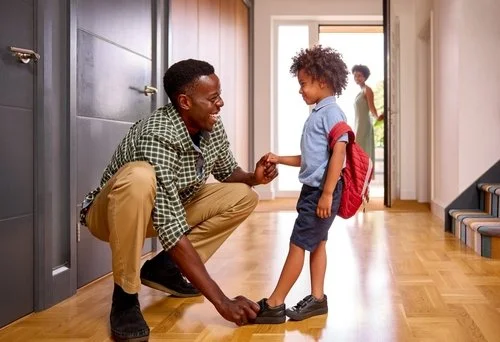
Stop Trying To Make Your Kids Cooperate
"My child won't listen" ranks as one of, if not the, most frequent complaints from parents that drive them to schedule a consult. Typical stories include:
Ben (6) has a breakfast bar every morning before school and refuses to throw away the wrapper. He ignores us or outright refuses. We have tried everything to get him to cooperate with this basic rule. We, of course, end up throwing it away. What else are we supposed to do? How do we make him listen?
Kayla (4) refuses to wash her hands before dinner. We have tried rewards, bribes, you name it. Nothing works. She wins every time--her hands just don't get washed. We are so frustrated but are out of tools. How do you make a kid cooperate?
How to get kids to follow directions and make good choices is a topic I have addressed frequently in previous blogs. I am revisiting it here because it speaks to the bane of most parents' existence: the power struggle, which can be eliminated. And, because I have some new insights to share. Even after 30 plus years in the childrearing trenches (my own and with all the families I have had the honor to work with), and having just turned 60!, I am still gaining new understanding about the meaning of kids' behavior and what they need to thrive.
Key Insights

When NOT To Apologize To Your Child
Apologizing to your child when you have reacted harshly to them is very important, for your child, and for you. You are providing a powerful model for taking responsibility for one's actions. It also means that you are willing to step back, reflect and work on your own self-regulation--one of the most necessary and greatest assets that will strengthen your loving and secure attachment to your child.
But, in my practice, I often see parents apologizing to their children when they have done nothing wrong. A child accuses his mom of playing the game "wrong", meaning he did not like the outcome and lost. Or, dad wasn't first in line at carpool pickup. Or, mom made the pancake the "wrong" way; the shape isn't right. It's not a perfect circle.
In these moments, children are distressed because something doesn't happen the way they expect or want. They have very fixed ideas about the way things should be, and when their expectations are not met, they fall apart. One two-year-old flipped out when her mother wore her hair up. She would insist her mom take it down, which her mom acquiesced to, to relieve the stress.

Why Kids Bite And Why Punishment Doesn't Work
I met with a family recently with a 23-month-old (whom I'll call Aiden) who is biting. Naturally, the parents (Maritza and Oliver) are very concerned because other families are getting upset at their children being the victims of these bites.
Like many parents who find themselves in this situation, Maritza and Oliver want to do whatever they can to stop the biting. They believe/hope that punishment will end this behavior; that Aiden will want to please them and not get into trouble, which will motivate him to stop this behavior. So they have been using a harsh voice and putting him in time-out, or taking desired toys and activities away.
Meanwhile, Aiden has been walking around the house saying, "No biting. Aiden no bite," throughout the day. Just like us, kids replay experiences over and over that are emotionally-charged, trying to make sense of what it all means. This puts Aiden in a quandary, because what he does understand is that his parents are unhappy with him, but what he does not have is the impulse control to stop himself when he has this urge to bite. This puts him in a very uncomfortable, impossible situation. (It also means that no amount of threats or punishment is likely going to help him stop this behavior.)
As I guide Maritza and Oliver to do the detective work to figure out as best we can what the root cause is of the biting, we identify a pattern: the biting happens when Aiden is triggered into over-arousal. He is happily playing rough-and-tumble with his dad and then, out of nowhere, he chomps into Oliver's arm. Or, he is racing up and down the slide, and after a few rounds of this, sinks his teeth into a child next to him in line.
So, the punishment is not working because: