
Lerner Child Development Blog
Blogs By Categories
- ADHD
- All Most Popular
- All Most Popular Blogs
- Anxiety
- Big Reactors
- Blogs
- Building Resilience
- Challenging behaviors
- Cooperation
- Distress Tolerance
- Emotional Regulation
- Food Challenges
- Highly Sensitive Children
- Limit-Setting With Love
- Low Frustration Tolerance
- Mealtime
- Neurodiversity
- No Power Struggles
- Parental Self Awareness
- Parental Self Regulation
- Physical Aggression
- Positive Discipline
- Potty Learning
- Regression
- School Related Issues
- School challenges
- Separation and Divorce
- Sibling Issues
- Sleep
- Social challenges
- Social emotional development
- challenging behaviors
- explosive behavior
- food
- lying
- masking
- mealtime
- parenting self-awareness
- positive parenting
- separation anxiety
- sleep
- social emotional development
- stress
- victim mindset

Teaching Without Triggering: How to give corrections to kids who can’t tolerate not being “right”
This case is an excerpt from my latest book, Big Rectors: Practical Strategies for Parenting Highly Sensitive Children
Olivia (5) is incredibly bright and passionate, and extremely sensitive. When her Kindergarten teacher teared-up at their graduation ceremony, Olivia got up in front of a packed room and gave the teacher a big hug, despite the fact that she typically avoids calling any attention to herself. Her empathy is that big.
Her parents, Anthony and Heather, report that Olivia overreacts to everything. They are especially concerned about her response when they have to correct or advise her. She accuses them of being mean and descends into self-flagellation. They tell her to pet the dog’s body, not pull his tail, and she responds: “You don’t think I can do anything right! You’re always yelling at me! I am so stupid!” and then pouts. (Note that her parents aren’t raising their voices in these situations. HSCs often interpret and react to a firm tone of voice as being mean or harsh.) When Anthony and Heather correct Olivia, explaining that the Olympic event they’re watching is called “breakdancing,” not “hip hop,” it’s the music that’s called “hip hop,” Olivia gets angry and tells them they don’t know anything. She shouts that the event is “hip hop” and runs out of the room.
Then there was a recent incident at school that finally led Anthony and Heather to seek consultation. Olivia was sobbing at school pick-up. Through her tears, she told Heather that the teacher had not given her a goodie bag. This didn’t sound right to Heather. She reached out to the teacher who explained that Olivia and a friend were being very loud and disruptive to peers who were playing in the block area, so she directed them to move to the quiet corner to take a break. The other child had no problem with this. Oliva, on the other hand, had a major meltdown. The school day ended soon thereafter. At their goodbye circle, the teacher was handing out goodie bags from a special event they had that day. Olivia was still so distressed that she didn’t accept her bag. She just ran out of the classroom.
Anthony and Heather are troubled by Olivia’s negative statements about herself and her total intolerance of being mistaken about anything. They are especially concerned about her lying. They feel like their hands are tied: isn’t it their job to guide her when she is doing something unacceptable or when she is wrong?

From Inflexible to Adaptable: A Case from the Trenches
This is an excerpt from my new book, Big Reactors: Practical Strategies for Parenting Highly Sensitive Children
Jenny and Thomas seek my guidance about their two-year-old, Uma, who falls apart whenever something happens in a way that she doesn’t like or expect: the puzzle is on the wrong shelf, they move a chair that was in Uma’s room to another place, or Thomas doesn’t sing the song he made up in exactly the way he did the night before. One of Uma’s biggest triggers is when her mom wears her hair up in a ponytail, bun or braid. She gets hysterical and demands that Jenny take it down immediately.
Jenny and Thomas are confused and very distressed by these reactions. They are also exhausted. Prior to starting our consultation, they had been racing to undo anything that made Uma uncomfortable. They moved the puzzle to the correct bookshelf. Thomas tried over and over to recreate the song exactly as Uma had recalled it (which was impossible and concluded with a 20-minute meltdown), and Jenny acquiesced to Uma's hairstyle demands and wore it down all the time. While they instinctively knew that constantly accommodating Uma’s demands wasn’t healthy, they just wanted Uma to be happy. They hoped and told themselves that she would grow out of it. But when it didn’t get better, they called for a consult.
It's important to add that Uma does great at and loves school. Her teachers report that they don’t see the inflexibility Jenny and Thomas are reporting and are surprised to hear about how differently she behaves at home. At school, she is very cooperative and content. (This is a very common phenomenon in the families I work with—a child being a “superstar” at school and a “terror” at home—which I address in depth in Chapter 7.)

Ditch the Lectures, Schooling and Corrections: Less is more when it comes to teaching lessons to big reactors
As I guide parents through the reflection and analysis of the challenging situations they are struggling with, a key factor almost always at play is that parents are doing too much...talking, teaching, correcting, reasoning (or trying to)...when their kids are acting out or melting down, even when they know that less is more. It's just so freak'in hard to control ourselves in the heat of that moment when we are triggered by our kids' worrisome/scary/harmful behavior.
I was inspired to hone in once again on this phenomenon because I also have a great story from the trenches that I wanted to share. It's a powerful, real life example of how less is almost always more with big reactors, and how you sometimes have to throw out a lot of the advice you have read that may work with other children but rarely works with these kiddos. I hope it will provide insight and also inspire you to continue to do the hard work of managing your own big reactions—the one thing you do have control over.
Toby and Stephen reached out because their five-year-old, Lucas, is having a very tough time with the birth of his new baby brother. He alternates between spewing terrible venom that is very disturbing to them, especially at Toby, while also clinging to her like Velcro.
In our first consult, this is what Toby shared:
Lucas is saying horrible things, especially to me, and also about his new baby brother, that makes the old "I HATE YOU!" seem totally benign. He threatens to hurt us in all sorts of ways that can be shocking. I don't know where he gets this language or these ideas at his age. It's not language we ever use.
I am so upset and disturbed by this. I feel attacked by such hateful words. I tell him that he is being unkind and is hurting my feelings. I beg him to stop. This just leads to more escalation. And also more intense clinging.
We have also tried to correct him, telling him he can't talk like that. More escalation. He ramps up and comes on with even more intensity. Shouldn’t there be some consequence for talking this way? We don't know what to do. It feels so wrong.

"This Is the WORST DAY EVER!"
This exclamation was made by a highly sensitive child (HSC), when, after a wonderful day with hours of fun and joy, her dad said "no" to going back downstairs (once she was already in bed with lights out). She insisted she needed to check on a Magnatile structure she had been working on earlier that day.
I can't tell you how many times a week I hear stories like this from parents. Their HSC has a great day with lots of good stuff; and then one, often seemingly minor, event/disappointment happens and everything is ruined.
After decades of working with families of HSCs, and parenting my own, I understand that this is often part of the deal with these deeply feeling kids: they live life at the extremes. They are ecstatic or enraged. They tend to process their experiences in this all or nothing, black and white way. It's all good or all bad. They have a harder time living in the gray.
The temptation, naturally, is to try to get them to see that there was so much good in their day, to talk them out of this all-encompassing, negative state, which seems so unfortunate and sad—for them to see the world this way. But that usually results in the HSC, in reaction to being told how to feel, doubling-down to prove to you that in fact, everything is indeed ruined.
Keep in mind that this doesn't mean the good stuff isn't getting through or having a positive impact on them. This awareness may also help you avoid the temptation to try to get them to acknowledge it or feel it in that moment.

How To Support Vs. Enable Your Highly Sensitive Child
This is Part 2 of my blog on being your child’s emotional support parent (ESP), not a “helicopter parent.” In that piece, I describe the complex dynamic that often evolves when you have a very committed, loving, sensitive parent with a child who is not wired to be as adaptable as other kids; who gets triggered easily by the unexpected, and by sensations that are registered at a higher decibel and cause discomfort; and, whose big feelings are hard to manage, especially at such an early age. These parents are acting out of necessity, really survival. They are doing their best and working to the point of physical and emotional exhaustion to provide comfort to their children who are hard to comfort, and to preserve some semblance of family peace and harmony—no small feat—when you’ve got a big reactor in your home.
Part 2 provides guidance, based on my own parenting journey and my collaboration with hundreds of parents of highly sensitive children, on how to support versus enable your HSC; in other words, how to nurture that special closeness you have with your child while also setting the important limits that are essential for children’s individuation, growing sense of competence, and healthy, independent functioning.
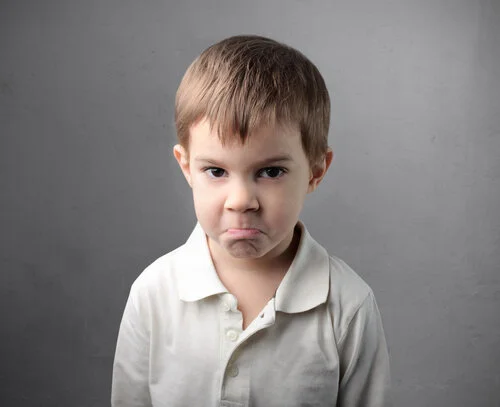
Highly Sensitive Children: Is there a sensory piece of the puzzle?
I always thought Samantha was just more ‘intense’ than other children. Her reactions to nearly everything were incredibly strong. She threw massive tantrums at least multiple times a day over things such as having to sit in her car seat or accidentally getting water in her eyes during bath time. People would tell me tantrums were “normal,” but I felt it wasn’t normal to be having such intense tantrums so many times each day. She was incredibly impulsive. She also seemed to both seek physical input (for example, by climbing on others) while also protesting intensely any physical touch that she didn’t like (for example, an adult restraining her from an unsafe situation). She would melt down if someone else did something she wanted to do like flush the toilet, push a button, or turn on the faucet to wash hands, and she often didn’t “recover” for several minutes, even an hour at times. She also had a hard time listening to and following directions, so things like getting her dressed were often very difficult. I felt completely overwhelmed and lost.
I have found in my work that children who are highly sensitive from an emotional standpoint are also likely to be more sensitive to sensory input—to some degree. They experience sights, sounds, tastes, smells and/or textures more intensely. They may become afraid of public bathrooms because the flusher is too jarring and loud. They may reject foods that have strong tastes and smells. They may find bright lights uncomfortable.
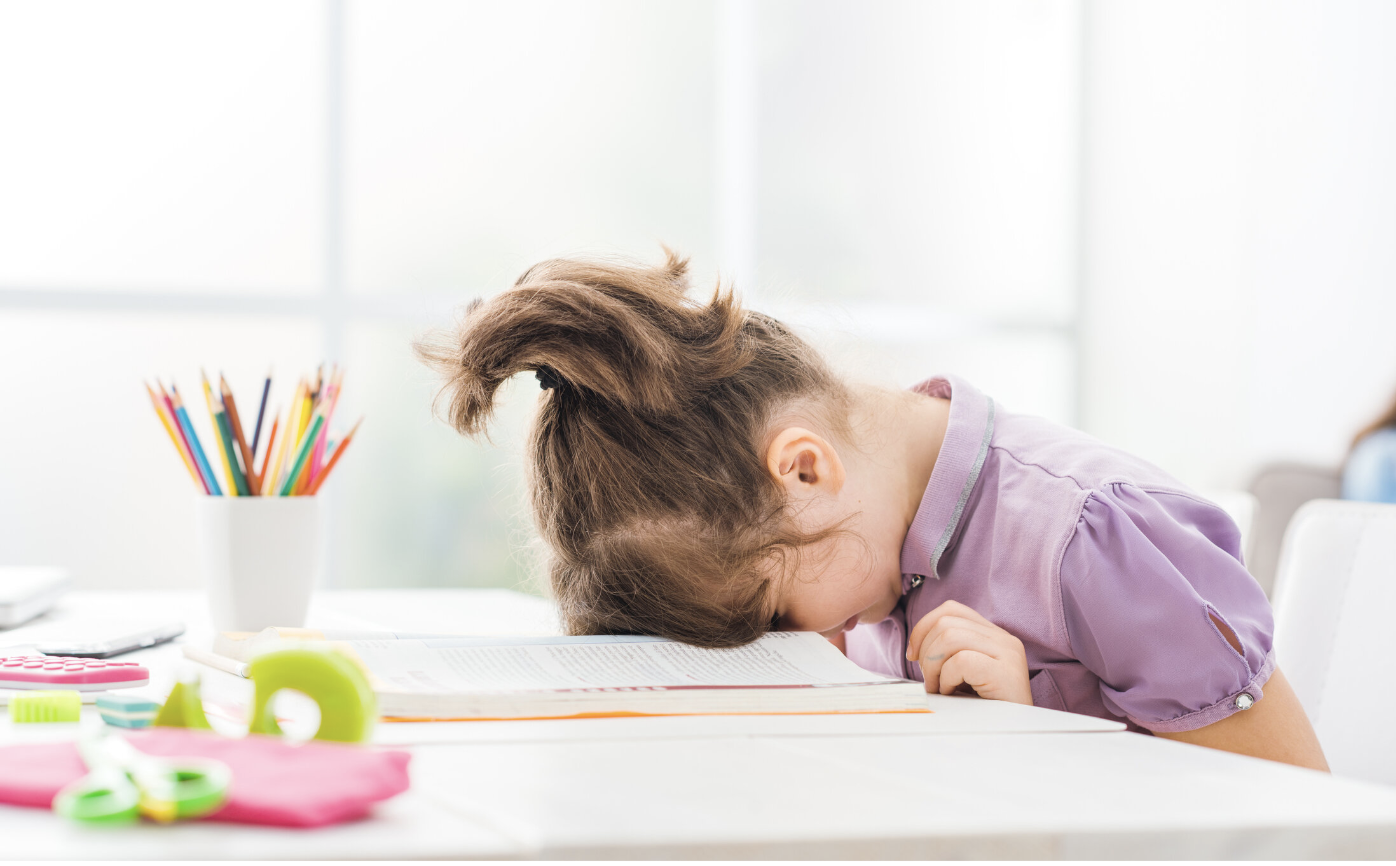
Sore Losers: How to help them cope with competition
Leo is the worst sore loser. We can't play any family games because he goes nuts if he doesn't win. Even though he's great at soccer and makes a lot of goals, the second someone blocks one of his attempts to get the ball into the net he starts screaming that it's unfair and storms off the field. It's embarrassing and I worry about how other kids see him and if they are going to want to stop playing with him.
Being a perfectionist and having a very low tolerance for losing go hand-in-hand and makes competitive activities especially stressful for kids who struggle with these issues. To cope and protect themselves from the discomfort and shame that gets triggered when they lose, highly sensitive (HS) kids try to manipulate the game to win (aka "cheat") or they get angry and quit. In a time long ago, before COVID, I was playing Connect Four with five-year-old Lucy on a home visit. She made the first move. When it was my turn, I dropped my piece into the slot next to hers—the obvious move. Lucy immediately got revved up and explained, “No, Ms. Claire, I tell you where you can put your pieces.”
What you can do:

How to Build resilience in Children who have a low Tolerance for Frustration
Lucas (4) just got a new scooter which he has wanted for a very long time. He hops on it, but as soon as he has trouble balancing, he tosses it to the ground. He pronounces that he hates scooters, that he really never wanted one, and runs inside.
Highly sensitive (HS) children tend to experience more distress and give up more easily when they confront a challenging task or can’t master a new skill right away. The root cause, once again, is the vulnerability and loss of control that gets triggered very quickly in these kids. HS children need more support to build resilience—to see that they can muscle through challenges.
What you can do:

How to Support Children Who Struggle with Self-Consciousness and Feel More Easily Slighted
Talia (4) hates when we talk about her, even if we are praising her, like telling her what a good job she has done or describing one of her accomplishments to grandpa.
Highly sensitive (HS) children are more keenly focused on how other’s see them. Like Gabriel, whom you met in a previous blog on HS kids, who refused to participate in any class performances; and, Jonah, who didn’t want the kids or teacher in the swim class to look at him. They get very uncomfortable when any attention is called to them, even when parents or other adults are saying complimentary things. It feels overwhelming to be under any kind of scrutiny.
What you can do:

Slow-to-Warm-Up Kids: How to Support Children Who are Cautious About New People and Experiences
Stephanie takes her five-year-old, Jonah, to swim class for the first time. He refuses to get off of her lap and go into the water. The teacher and the other kids are very encouraging, trying to get Jonah to join them. The more they try to woo him, the more uncomfortable Jonah becomes. He starts curling up into a ball and uses baby talk. When he gets home, his grandmother asks him about the class. He doesn’t respond and runs into his room. Stephanie has a strong sense that Jonah is feeling very ashamed about the whole experience. Her heart breaks for him.
Children who are more fearful and cautious by nature are often highly sensitive (HS). When they enter a new situation—be it a classroom, a birthday party, or swim class—their wheels are turning. They wonder: What is this place? What will happen here? Who are these people? What can I expect from them? Will they like me? Will I be safe? Will I be good at whatever is expected of me here? This deep thinking and constant analysis of their environment makes HS children extremely bright and insightful. But it can also be overwhelming and make them more prone to anxiety. To cope, they fiercely cling to their comfort zone, which means they often resist anything new. They tend to have a harder time separating from their parents. It takes them longer to adapt when they start childcare or preschool. They refuse to go to soccer or swimming, even when they love these activities.
What you can do:

Highly Sensitive Children: How to help them manage their big emotions
Natalia reminds her daughter, Olivia (4), that her dad, Luis, is leaving in a few days to go away for the weekend. Olivia starts physically pushing her mom as she blurts out, “Don’t say that mommy!” She then turns to her dad and shouts at him: “Go away right now! It’s time for you to leave this house!”
Olivia's reaction is confounding to Natalia and Luis. Why would she be telling Luis to leave--early no less--when she is so distressed at the thought of being separated from him? Wouldn’t Olivia want to keep dad close? While seemingly irrational, looking at it from Olivia’s perspective, her rejection of Luis is a way to gain control of a situation that she has no control over. The old, “I’ll reject him before he rejects me” defense mechanism at work. Olivia is not being mean or hurtful on purpose. She is trying to cope with a stressful situation in the only way she knows how.
Olivia’s reaction upon Luis’ return from his trips away from home is also confusing when taken at face value: Olivia ghosts him. She is cold and refuses to engage with him for a full day or two. This, again, is a common reaction in highly sensitive (HS) children. It takes a lot of psychic energy to adapt to a separation from a loved one. When mom or dad returns, the child needs time to let that person back in and feel safe to reconnect.
What you can do: