
Lerner Child Development Blog
Open access to my full library of over 150 blogs is now available by becoming a member of Lerner Child Development (LCD). Scroll through thumbnails below or see the button to explore all the blogs by topic.
This subscription service enables me to continue to provide in-depth, reality-based content drawn from more than three decades of helping families solve their most vexing childrearing challenges.
In addition to access to my blogs, subscription to LCD includes several new interactive learning opportunities with me each month: a live, open Q&A and quarterly webinars on key topics. Members are also entered for two monthly drawings for a free 30-min consultation.
Note that I have made some of my most popular blogs available for free.
Blogs By Categories
- All Most Popular Blogs
- Big Reactors
- Building Resilience
- Challenging behaviors
- Cooperation
- Emotional Regulation
- Food Challenges
- Highly Sensitive Children
- Limit-Setting With Love
- Low Frustration Tolerance
- Mealtime
- No Power Struggles
- Parental Self Awareness
- Parental Self Regulation
- Physical Aggression
- Positive Discipline
- Potty Learning
- Regression
- School Related Issues
- Separation and Divorce
- Sibling Issues
- Sleep
- Social challenges
- challenging behaviors
- lying
- masking
- positive parenting
- separation anxiety
- social emotional development
- stress

How to Be Responsive and Effective Versus Reactive and Frustrated When It Comes to Getting Your Kids to Cooperate
One of the most pervasive pitfalls that result in parents feeling out of control and ineffective in getting their kids to "listen", aka, cooperate, with a rule or limit: REACTIVITY. Your child refuses to hand over the tablet when screen time is over. You get triggered by your child's refusal to comply and launch into an array of threats, bribes, or rewards to convince your child to get with the program. An ugly power struggle ensues. The more you feel yourself losing this battle, the more frustrated and angry you become at your child for creating this highly unpleasant situation. It ends with everybody miserable.
The inherent problem in resorting to threats, bribery and rewards is that these tactics are all dependent on your child being swayed by your threat, bribe or reward, which means he is in total control of the situation and is the decider about how this encounter will unfold. What if your bribe or threat doesn't work? Your child doesn't care (or feigns not to care) about getting extra books at bedtime if he cooperates; or, alternatively, about having books taken away at bedtime. Where does that leave you? Feeling more exasperated and out of control.
When you are in reactive mode, it is very hard to think clearly and plan your response. To help parents with this perennial challenge, I have come up with a simple strategy to prevent reactivity: taking a mommy/daddy moment to give yourself a chance to think about how to respond in a way that is calm and loving and that leads to greater cooperation from your children.

It's Time to Stop Choosing Your Battles: No need to be at war with your child
The mom of a feisty four-year-old was recently on a Facebook group for parents of “spirited” children to seek guidance on setting limits. The overwhelming response she received was to “choose your battles.” Of course, this concept is not new to me, but for some reason on this occasion it gave me pause. It struck me as so unfortunate to frame the problem of how to deal with the sometimes incessant and often irrational toddler demands and defiance in this combative way.
The concept of “choosing battles” puts parents in a defensive mindset—that you are in for a fight. This results in approaching these moments when your kids are doing exactly what their DNA dictate they do—advocate for something they want or refuse to cooperate with a limit—with your haunches up. This parental state of mind only leads to exactly what you are trying to avoid: a power struggle.
Further, “choosing battles” implies that you are opting to give in to your toddler’s demands or defiance because it’s one too many battles for your or your child to handle. In practice, what this means is that you are setting up a dynamic in which your child learns that if she pushes hard enough, she will eventually wear you down and get her way. This handy strategy is proven effective and is thus relied on for future use, which only increases power struggles. It also leaves most parents feeling angry and resentful toward their children for pushing them to the limit and forcing them to cave when they really don’t want to.

Low Frustration Tolerance: What to do When Your Child Gives Up Easily
Three-year-old Marcus is trying to find where the pieces fit in a challenging puzzle. Four-year-old Ruby is working on how to keep her block tower from falling down. Omar and Zoey are looking for what they can use as superhero capes when Omar’s mom won’t let them use her scarves. These are all examples of kids hard at work solving problems.
This ability—to face a challenge and come up with effective solutions—is the key to developing resilience and is one of the most important skills for success in school, in relationships, and in navigating life. It is also an important component of building strong “executive functioning”, which is a child’s ability to manage his emotions and control his impulses so he can focus and maintain attention on the task at hand, draw on knowledge gained from past experiences, and to think creatively—to fix mistakes and try another strategy when the one he is using is not working.
You see this in real life when a child faces an obstacle, like not being able to fit the square block in the round space on the shape-sorter. Despite his frustration, he does not give up and toss the block across the room. Instead, he is able to stay calm enough to keep focusing on the task. He has done shape-sorters before and knows that he has to keep trying different spaces until he finds the correct one. Through this process of trial-and-error he successfully finds the right space for all the shapes. Solving the problem results in a powerful sense of mastery.
Here’s how you can support your child’s ability to become a master problem-solver:

Eight Strategies for Working at Home While Caring for Kids
The pandemic led to many seismic shifts in our world, including the advent of parents working at home. As if parenting isn’t stressful enough, the complexity of managing work/life balance became much more challenging. This blog provides guidance on how to set and enforce healthy expectations and boundaries when you are working at home.

Regression: Why children take steps backwards in their development and what you can do
Madison used to be a great sleeper. Over the past few weeks, as the coronavirus lockdown has persisted, bedtime has deteriorated. It started with Madison insisting that I stay with her until she falls asleep. Now she insists on sleeping in our bed all night. –Father of a four-year-old
Jackson had been fully potty trained and was a “big boy” in so many ways. Since his little brother was born, he has started to have a lot of accidents. He is demanding a bottle and wants to be carried 24/7. This is driving us crazy. We don’t need two babies in this household! —Mom of a three-year-old
Kids regressing—moving backwards in their development—is a common phenomenon. It is usually in reaction to a stressor: a move, a new baby in the family, a change in schools or caregivers, or…a global pandemic, to name a few. Any change or disruption in children’s daily routines is stressful.
When we, children and adults alike, experience shifts in our worlds (especially when they are unexpected or seismic, like COVID), our psychic energy gets diverted from higher level brain functions to just trying to cope day to day. (Few people I know would say they are at the top of their game right now. Just like many of us are having a harder time managing everyday tasks and challenges, so are our kids.) This can result in more challenging behaviors and regression to less mature levels of functioning. When a child’s system is stressed, she may get frustrated more easily, become more clingy, have more potty accidents, experience sleep disruption, or, have a change in her eating patterns. Keep in mind that highly sensitive (HS) children are more prone to regression as they are more vulnerable and reactive to changes in their world.
That’s not to say that all stress is harmful to kids. For example, starting preschool is a major shift. Most children go through a period of discomfort as they learn to adapt to this new experience—managing the separation from parents/caregivers, figuring out the rules of the classroom and how to get along with peers. This is positive stress because it leads to growth and the development of new skills. But during this adaptation process, some regression is to be expected. In the preschools where I consult, there are always some children who in the first month of school won’t eat snack or use the toilet, and may not do a lot of talking or interacting with their peers or teachers. Once they adapt, they feel comfortable and their stress is reduced, they have access to all of their skills—their full range of functioning—and thrive.
Also keep in mind that highly sensitive (HS) children are more prone to regression as they are more vulnerable and reactive to changes in their world.
RESPONDING TO REGRESSION: WHAT NOT TO DO
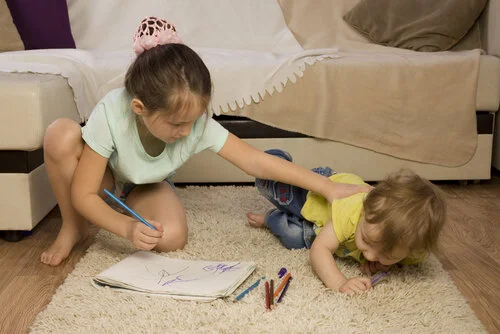
Why Can't You All Just Get Along?
“Haha—you lost!”
“Stop singing that stupid song. You’re hurting my ears!”
“YOU CANNOT PLAY THIS GAME. YOU DO NOT KNOW HOW TO PLAY!”
The sibling relationship is about as complex as it gets. Talk about the confluence of emotions that run the gamut from the extremes of love and hate. The natural conflict that arises as siblings navigate their relationship ranks as one of the most vexing challenges for parents, often sending them into reactive-mode which tends to exacerbate, not eliminate, sibling squabbles.
Since every family dynamic is different, there is no prescriptive approach to effectively addressing sibling rivalry. Instead, I offer some key guiding principles to help you avoid common pitfalls, as well as some actionable strategies for responding supportively and effectively when your kids are causing chaos, that you can tailor to your unique situation.
GUIDING PRINCIPLES

How to Support Kids Spiraling Out of Control
Janelle starts reading a bedtime book to her three-year-old, Sam. One page in, he starts screaming that she isn’t reading the book the right way and insists that daddy (Brent) take over. This flip-flopping goes on for several more rounds until both Janelle and Brent are at their wits end and Sam wears himself out sobbing and falls asleep.
Lucy (4) asks for toast for breakfast. Bernard, one of her dads, presents it to her; but, uh-oh, he has cut it on the diagonal when she wanted it halved down the middle! Lucy insists that he must make a new piece of toast. Bernard sighs heavily—they’ve been around this block before—and looks at his husband, Josh, with that “what to do?” hunch of the shoulders. They know Lucy is having a hard time these days with all the changes in her world. So, they decide they will ease her stress by meeting her demand. Josh pops another piece of bread into the toaster. When he hands it to her, Lucy announces that what she really wants is a scrambled egg. Josh gets visibly annoyed with Lucy—telling her to make up her mind. She starts to pout and tells Josh to stop yelling at her. Josh feels bad for losing it with her and proceeds to whip up an egg. Spoiler alert: Lucy proclaims that the egg is too yellow, and the crazy-making cycle continues.
When children feel out of control on the inside, they act out of control on the outside, which results in situations like those described above. And, those “orchids”—the kids who are more sensitive and reactive by nature—are even more likely to struggle during this time of major change.
How do you respond to children who are spiraling out of control and getting themselves into complete tizzies, driving themselves, and everyone around them, mad?

How to Balance Working From Home While Caring for Kids
As if being a working parent wasn’t stressful enough, what do you do when suddenly you are expected to work at home and take care of your kids at the same time? If you are in this predicament, here are some ideas for how to manage the seemingly unmanageable. Of course, you will need to adapt and apply these based on the age of your child and your unique situation.

How to Balance the Need for Routines with Helping Kids Be Flexible
What happens when you have done such a good job establishing routines and making sure your child knows what to expect that they fall apart when there is a break in the plan? Or when something unexpected happens? Read on. . .

Happy Children Aren’t Always Happy: Eight Pivotal Parenting Pitfalls and How to Prevent Them
The obstacle to parents being the loving limit setters their children need (but don’t want) them to be is often the false notion that happy children are always happy; that it is your job to keep your child happy. In fact, it is working through the frustration and disappointment of not always getting what they want when they want it that builds resilience and makes children happy. This blog addresses how to do just that.

Safe Space Breaks: When Giving Your Child (And Yourself!) A Break Can Be Helpful, Not Harmful
One of the most challenging situations families of big reactors face is what to do when their children are so out of control that they are destructive. They are "going to a category five in a nanosecond" and there is no calming them once they are triggered. Their meltdowns are frequent and intense. In the heat of these "red-zone" moments—when their children are hurling objects, kicking, hitting, biting, scratching and spitting—these parents are pushed to their emotional, and physical, limit. They instinctively know that a break is necessary—for themselves and their children.
The problem is that most have spent a fair amount of time on social media and have been barraged with the message that time-out is not developmentally appropriate and can be detrimental to their child; that it is negating children's feelings and tantamount to traumatizing them by abandoning them when they are in distress. What loving parent would do something that could be so harmful to their child?
This leaves these parents in despair, feeling like their hands are tied, totally helpless. It is an awful feeling that is not good for them or their kids.

Why Punishment Doesn't Stop Aggressive Behavior
Few things are more vexing than when children are physically aggressive: hitting, kicking, pushing, biting, pinching. Many parents I work with worry that this kind of behavior signals a lack of empathy. One dad recently wondered about something that is perplexing to many parents: "How could we—such loving, peaceful people—have created a kid who can be so hurtful?”
At the same time, parents fear the consequences for their child: Will she be seen as a bully? Will other children not want to play with him? Will she get kicked out of preschool? And for themselves: Will I be alienated from the other parents who judge me because of my child’s behavior?
These are all very natural concerns which understandably trigger intense reactions. In an effort to eliminate these aggressive behaviors, most parents become harsh and punitive. They shame: “What is wrong with you? Why would you want to hurt your friend?” They use threats and punishment: “No TV time for the rest of the week if you hit again!” Or, instill fear: “No one will ever want to play with you if you hurt them.”
The problem with these tactics is that while they may seem logical from an adult perspective—that they should motivate a child to stop the behaviors—they often backfire for several reasons:

Just Say “No” to Threats Part 2: What to do when your child is the one using intimidation
Recently, I wrote about avoiding the use of threats to get kids to cooperate or to stop misbehaving. But what about when your child is the one doing the intimidating to get her way, as illustrated in these recent stories parents have shared?
After being told she can’t go ice-skating with a friend because Aunt Jackie is coming over for a visit, Layla (6) announces that she is going to open up her window (in her bedroom on the second floor) and then run out the front door so when her parents can’t find her, they’ll think she fell out of the window.
Marcus (3) threatens not to eat for the rest of the day if his dad won’t give him a snack-bar for breakfast.
Soriah (4) exclaims that she won’t let the babysitter in the house and will “get her dead” if mommy goes out to meet her friends for dinner.
These kinds of provocative proclamations, while not uncommon, are naturally very disturbing to parents who take them at face value and worry that they are raising a sociopath. With this mindset, it is understandable that parents’ knee-jerk reaction is to get harsh and punitive to teach their child a lesson and to shut down these kinds of threats. But this backfires almost every time, as any big parental reaction is a victory for the child and reinforces the power and validity of the irrational proclamation. When efforts to yank their parents’ chain work, the behavior is proven effective.
But children don’t mean what they say when they are in “red zone”. (Even most of us adults can recall a time or two when we said horrible things to those we loved when we were angry or hurt.) In these moments, children are using inflammatory language because they are desperate to get their point across. They also know these alarming threats often get a rise of out of parents, which is their goal.
What to do instead? Ignore the provocation, but don’t ignore your child.
Just Say "NO!" to Threats
“If you don’t stay in your room and get to sleep, I am going to put a gate up!”
“If you don't put all these toys away, I am throwing them in the trash."
Most parents have resorted to threats like these in a desperate attempt to get their kids to cooperate. But this tactic often backfires because children pick up on the negativity and react to it. It sends the message to your child that you are already anticipating that she isn’t going to comply and that you are in for a fight. This puts kids in oppositional, power-struggle mode, especially children who are more defiant by nature. Negativity and threats tend to amplify their resistance and they just dig in their heels more firmly. (Not to mention that most of the time parents have no intention of following through on the threat and the child knows it.)
What you can do

Dealing with Demanding Behavior
I have been talking to a lot of parents recently who are struggling with how to respond to demanding, dictatorial behavior. Think:
"Get me orange juice!"
"Put my shoes on!"
“Bring me my blanket!"
Most parents find demands like this from their kids infuriating, understandably. Their knee-jerk reaction goes something like this: "You can't talk to me that way! I won't get you anything when you use that tone." This seems totally logical, but it often backfires. When we respond with a negative (and often revved-up) tone, it tends to amplify children's negativity and make them more of a "fascist dictator" as many a parent has been known to describe their child.
As counterintuitive as it may seem, I find the most effective response is to take the following approach:

Limits are Only as Effective as Your Ability to Implement Them
Adam and Brian are entrenched in breakfast battles with their 3-year-old, Sadie, who lollygags and gets up and down from the table for a seemingly endless array of urgent tasks she insists must be undertaken. She keeps going back to her room to make sure her teddy’s blanket is still on securely. Or, she looks for the toy she wants to bring to school that day to put in her backpack. Her dads vacillate between trying to convince her to eat—telling her she will be hungry at school—and making threats such as no dessert after dinner if she doesn’t stay at the table. None of these tactics motivates Sadie to sit and eat. When they announce that it’s time to leave for school after the more-than-adequate 20 minutes they have allotted for breakfast, Sadie has taken maybe 3 small bites of her toast. She starts shouting: “I haven’t had time to eat and will starve!” Exasperated but worried that she will be hungry at school, Adam and Brian give her five more minutes which turns into 10 and then 15. They finally, angrily pick her up and get her into her car seat. With Sadie in hysterics, they scold her for making everyone late and lecture her all the way to school about how it is her fault if she doesn’t eat. Everyone is miserable.
I see this dynamic play out in home after home: parents unsuccessful at getting their kids to cooperate—be it to eat, sleep, put toys away—by trying to convince them to comply using logic (you’ll be hungry!), threats and bribery. The problem with these tactics is that they all put the child in the driver’s seat. Whenever parents are in the position of trying to convince a child to comply with a direction and are waiting for her to agree to the expectation they have set, the child holds all the cards. This naturally makes parents feel out of control which leads to reactive and harsh responses that only intensify the struggle and reduce a parent’s ability to be effective.
The key is for parents to make a critical mindset shift which is to recognize that you have no control over your child. He’s a human being and you can’t make him do anything, including eat, pee in the potty, clean up his toys, or go to sleep. The only person you control is you.

When It’s Not Okay to Say, “Okay?”
I have to give my mom credit for this insight. On a visit when my son was three, she pointed out that every time I gave him a direction, I ended it with “Okay?” She wondered why I would ask a question when I was not intending to give my son a choice (Sam, time to leave the playground, okay?) and noted that this might be confusing to him. Once I was aware of this dynamic, I realized that it had become a totally unconscious, reflexive response that I used constantly.Sam, time for bath, okay? Sam, time to get in the car, okay?I also began to notice that this was a pervasive phenomenon in every family I worked with. Twenty-five years later, as I visit home after home, I can confidently report that nothing has changed. We all fall prey to this pitfall. And it’s a problematic one, because it is confusing to children: they hear that they are being given a choice even though this is not their parents’ intention. When children don’t comply, it results in a lot of frustration and anger. I was at a home visit recently during which a mom kept asking her 2-year-old to, “Please take your feet off the kitchen table, okay?” After several requests the toddler turned to her mom and simply said, “No, I like them on the table.”
While it seems simple to just kick this unhelpful habit, that’s not how we operate as parents. These knee-jerk reactions tend to be pretty persistent. The only way most of us are able to make a change is to become conscious of what is driving us to act as we do—what the trigger is. Otherwise, the impulse wins out over what we know is “right” almost every time.
For me, and most parents I have talked with about this phenomenon, the root of our reaction lies in a discomfort with giving directions. It feels dictatorial and authoritarian, which is inconsistent with who we are and who we want to be as parents. We know how important it is to nurture children’s sense of agency and independence. Telling them what to do feels contrary to that goal.
The mental shift we need to make is seeing that children thrive when they know exactly what is expected of them. The same is true for adults. We feel less anxious, more in control and better able to complete tasks at work when our boss is clear about what the expectations are. This is precisely why children tend to behave better at school than at home: good teachers have no problem giving directions, and children love them all the same. Making marching orders crystal clear gives kids the information they need to make good choices. They clean up after snack so they can move on to an activity; they put the sandbox toys away so they can earn the privilege of playing with them the next time they go to the playground.
What to do?
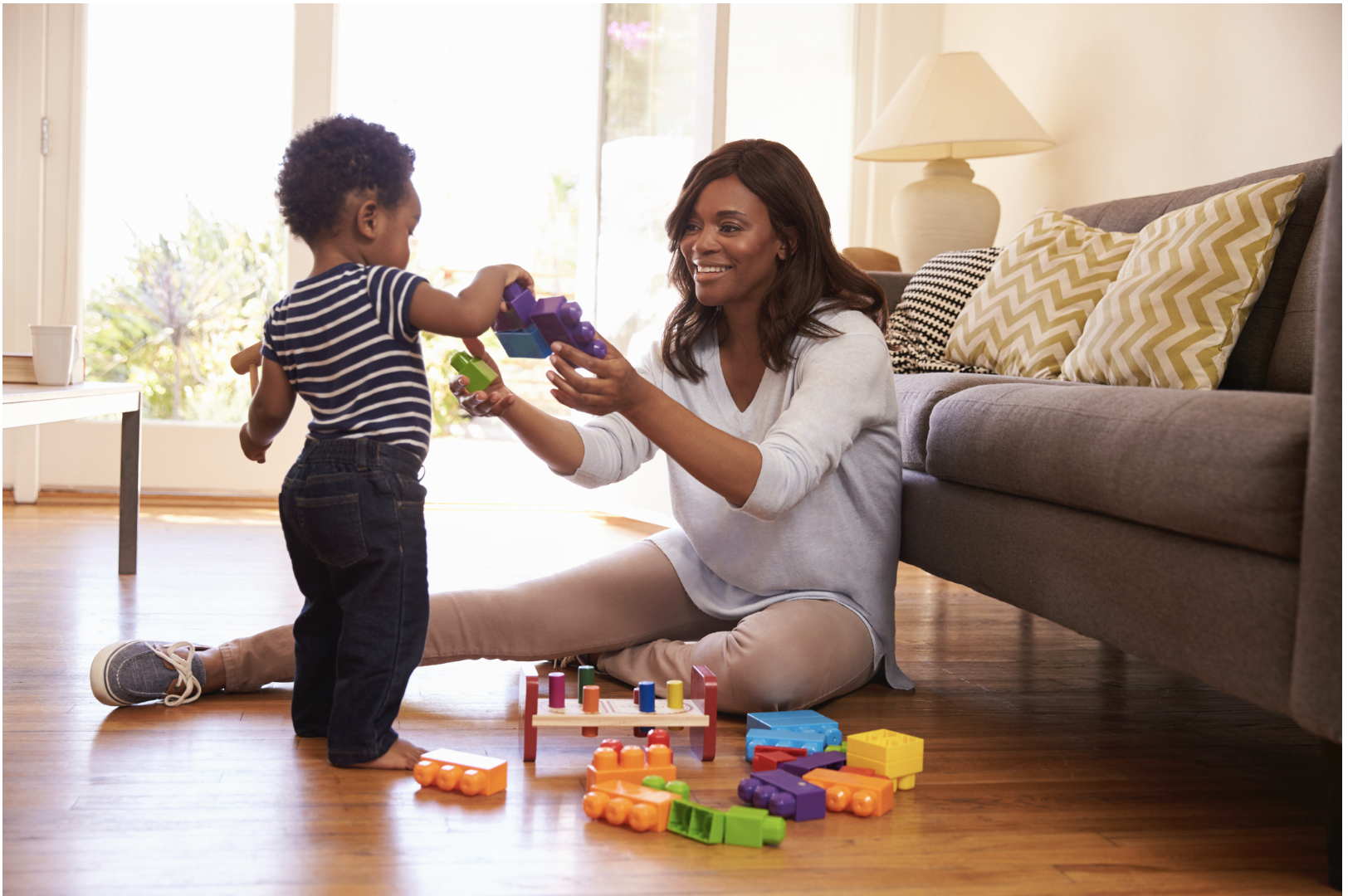
Pause and Problem-solve--A Handy Tool for Helping Children Get Calm and Cope
On a recent visit to a preschool, I was working with the teachers to come up with strategies to help the children learn to become good problem-solvers. The greatest obstacle to this, the teachers noted, was helping the children remain calm when facing a challenge so they can persevere to solve a problem. They find this is especially difficult for the “big reactors” who tend to go from 0-60 in the blink of an eye. Common tactics, such as deep belly breathing, weren't working as well as the teachers would have liked. They couldn’t get the kids calm enough to even use this soothing tool.
Since I have had some success with the use of cues or mantras for children—a phrase you use repeatedly to throw a monkey-wrench into a detrimental dynamic—I decided to try a new one out with a class of four-year-olds. It is designed to help build self-regulation. I call it Pause-and-Problem-Solve, and it has proven to be quite powerful for helping children regroup in a positive way when a breakdown is brewing. In this newsletter, I share how you might use this tool to encourage your children to become good problem-solvers. Here are the key steps: