
Lerner Child Development Blog
Blogs By Categories
- ADHD
- All Most Popular
- All Most Popular Blogs
- Anxiety
- Big Reactors
- Blogs
- Building Resilience
- Challenging behaviors
- Cooperation
- Distress Tolerance
- Emotional Regulation
- Food Challenges
- Highly Sensitive Children
- Limit-Setting With Love
- Low Frustration Tolerance
- Mealtime
- Neurodiversity
- No Power Struggles
- Parental Self Awareness
- Parental Self Regulation
- Physical Aggression
- Positive Discipline
- Potty Learning
- Regression
- School Related Issues
- School challenges
- Separation and Divorce
- Sibling Issues
- Sleep
- Social challenges
- Social emotional development
- challenging behaviors
- explosive behavior
- food
- lying
- masking
- mealtime
- parenting self-awareness
- positive parenting
- separation anxiety
- sleep
- social emotional development
- stress
- victim mindset



The Limit is the Lesson
A common conundrum for many parents who seek my consultation is how to impart important lessons to their kids who won’t listen. Their kids reject, argue, shut the conversation down or put the blame on their parent.
You will see from the stories below that what I have found...wait for it..is that less is more in these moments. The more you try to get your child to absorb the information you want to impart, the less likely they are to tune in to and internalize it, as these stories below show.

A Roadmap To Setting Limits With Love
As you know, I am on a mission to help parents experience less stress and more joy with their little ones. It has become very clear from my work in the trenches with families that being comfortable with setting clear limits and boundaries, and implementing them in a way that is loving, is key to achieving this goal. Otherwise, parents are in constant power-struggles with their kids and harboring very negative feelings about them. Nothing feels worse.
It doesn't have to be that way, even with the most intensely reactive kids.
Mastering this skill of setting limits calmly and lovingly often feels elusive and impossible to the moms and dads I work with, when they first come to see me. But this dream has become a reality for so many; they are now in charge in the loving way their children need them to be, and it is truly life-changing for everyone involved.
One of these parents recently asked if I had a cheat-sheet that lays out the key steps to being a loving, limit-setter. While I write extensively on this subject, I realized that I do not have a resource that distills this process down. There's a reason for this: I am not a fan of prescriptive approaches (5 steps to getting your child to sleep; 4 steps to stopping tantrums, and so forth) because they are often formulaic/one-size-fits-all plans that don't take into account all the individual differences in kids and families. And when the system doesn't work, it leaves parents feeling more despairing.
At the same time, I see the value in having an organized way of thinking about how to approach a challenging situation, especially when it is triggering and likely to lead to reactivity, which rarely results in a positive, effective outcome.
So, in the hopes that it helps you get a promising start to the new year, this edition of the newsletter offers a roadmap for how to respond in difficult moments in a way that is loving and supportive, AND that keeps you in charge by implementing the boundaries children need to learn to cope with life's limits.

Stop Trying To Make Your Kids Cooperate
"My child won't listen" ranks as one of, if not the, most frequent complaints from parents that drive them to schedule a consult. Typical stories include:
Ben (6) has a breakfast bar every morning before school and refuses to throw away the wrapper. He ignores us or outright refuses. We have tried everything to get him to cooperate with this basic rule. We, of course, end up throwing it away. What else are we supposed to do? How do we make him listen?
Kayla (4) refuses to wash her hands before dinner. We have tried rewards, bribes, you name it. Nothing works. She wins every time--her hands just don't get washed. We are so frustrated but are out of tools. How do you make a kid cooperate?
How to get kids to follow directions and make good choices is a topic I have addressed frequently in previous blogs. I am revisiting it here because it speaks to the bane of most parents' existence: the power struggle, which can be eliminated. And, because I have some new insights to share. Even after 30 plus years in the childrearing trenches (my own and with all the families I have had the honor to work with), and having just turned 60!, I am still gaining new understanding about the meaning of kids' behavior and what they need to thrive.
Key Insights

The Lowdown On Limits
Every week I hear from multiple parents who have done great work setting clear limits in a loving way, but are concerned that their limits are wrong or not working because their child continues to protest and not accept the boundary, even after parents repeatedly follow through and don't cave on the limit or get drawn into a protracted power struggle.
The mindshift to make is that the goal is not to get your child to like, agree with, or accept the limit, or even to change his behavior—something you have no control over.
The true purpose of the limit is to stay in charge in the positive way your child needs you to be, and to avoid the pernicious power struggle that is so detrimental and destructive to both kids and parents.
Take the case of Ari, who was coming in and out of his room for hours after lights-out. When his parents, Jen and Arash, stopped trying to coax, reward, bribe or threaten Ari to agree to stay in his room—none of which had been successful—they put a boundary on his door. But Ari continued to scream at the top of his lungs for 5 to 10 minutes every night before falling asleep, even though they stuck to the plan and did not react to his shouting for them. (They did walk by his room periodically to whisper a soothing mantra to assure him they were still there and all was right with the world. More on approaches to setting up loving sleep plans can be found here.) Jen and Arash worried that Ari's continued upset and protests meant that the limit wasn't working or was harmful.
Au contraire. Let's look at all the positive outcomes of this limit:

Positive Parenting Mindshift: Your Child is Strategic, Not Manipulative
This blog is part of a series based on my 2021 book, Why Is My Child In Charge? Through stories of my work with families, I show how making critical mindshifts empowers parents to solve their most vexing childrearing challenges, including: tantrums, aggressive behavior, sleep, mealtime battles, and potty learning. Most importantly, it shows you how to get back in the driver's seat--where you belong and where your child needs you to be.
When my child tries to get her way, she is being manipulative.
Luca and Scott walk into my office and announce that they have a master manipulator living in their home. They explain that they had established what they wanted to be a hard and fast rule that there would be no screen time for their daughter, Sophie (4), in the mornings before school.
But Sophie refuses to get dressed unless they let her watch an episode of Peppa Pig while she puts her clothes on. Every morning it’s the same scenario: Luca and Scott ask Sophie to get dressed. She demands Peppa. They remind her there is no TV in the morning. They tell her they will come back in five minutes and expect her to be dressed. When they return, Sophie is just messing around in her room and announces: “I need Peppa!” They get annoyed and start raising their voices, telling her they are going to be late and that she needs to cooperate!
After a prolonged power struggle, it always concludes the same way: the clock is ticking, so to get everyone to their destination on time, Luca and Scott give in and turn on the show. They are angry at Sophie for putting them in this position and “extorting” them. They wonder how they have gotten to a point where a four-year-old can wield so much power and control the family in this way.
_________________________________________________________
Three-year-old Joseph is pushing the limits around bedtime, demanding an increasing number of books and songs and then calling out with a litany of problems he needs fixed, such as his blankets being messed up or the animals on his shelf not being positioned the way he wants them to be. Joseph's parents are getting increasingly annoyed with Joseph and are feeling manipulated. He is calling all the shots and they are angry at him for making them feel out of control. They don’t know how to turn it around.
Making the Mindshift

It's Time to Stop Choosing Your Battles: No need to be at war with your child
The mom of a feisty four-year-old was recently on a Facebook group for parents of “spirited” children to seek guidance on setting limits. The overwhelming response she received was to “choose your battles.” Of course, this concept is not new to me, but for some reason on this occasion it gave me pause. It struck me as so unfortunate to frame the problem of how to deal with the sometimes incessant and often irrational toddler demands and defiance in this combative way.
The concept of “choosing battles” puts parents in a defensive mindset—that you are in for a fight. This results in approaching these moments when your kids are doing exactly what their DNA dictate they do—advocate for something they want or refuse to cooperate with a limit—with your haunches up. This parental state of mind only leads to exactly what you are trying to avoid: a power struggle.
Further, “choosing battles” implies that you are opting to give in to your toddler’s demands or defiance because it’s one too many battles for your or your child to handle. In practice, what this means is that you are setting up a dynamic in which your child learns that if she pushes hard enough, she will eventually wear you down and get her way. This handy strategy is proven effective and is thus relied on for future use, which only increases power struggles. It also leaves most parents feeling angry and resentful toward their children for pushing them to the limit and forcing them to cave when they really don’t want to.
Why Can't You All Just Get Along?
“Haha—you lost!”
“Stop singing that stupid song. You’re hurting my ears!”
“YOU CANNOT PLAY THIS GAME. YOU DO NOT KNOW HOW TO PLAY!”
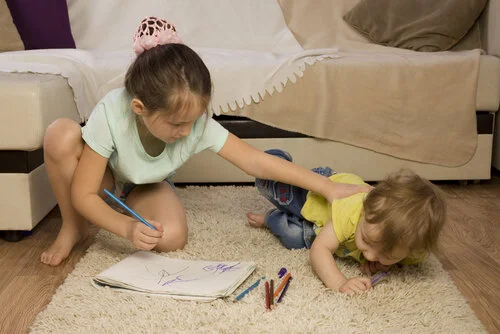
The sibling relationship is about as complex as it gets. Talk about the confluence of emotions that run the gamut from the extremes of love and hate. The natural conflict that arises as siblings navigate their relationship ranks as one of the most vexing challenges for parents, often sending them into reactive-mode which tends to exacerbate, not eliminate, sibling squabbles.
Since every family dynamic is different, there is no prescriptive approach to effectively addressing sibling rivalry. Instead, I offer some key guiding principles to help you avoid common pitfalls, as well as some actionable strategies for responding supportively and effectively when your kids are causing chaos, that you can tailor to your unique situation.
GUIDING PRINCIPLES

How to Support Kids Spiraling Out of Control
Janelle starts reading a bedtime book to her three-year-old, Sam. One page in, he starts screaming that she isn’t reading the book the right way and insists that daddy (Brent) take over. This flip-flopping goes on for several more rounds until both Janelle and Brent are at their wits end and Sam wears himself out sobbing and falls asleep.
Lucy (4) asks for toast for breakfast. Bernard, one of her dads, presents it to her; but, uh-oh, he has cut it on the diagonal when she wanted it halved down the middle! Lucy insists that he must make a new piece of toast. Bernard sighs heavily—they’ve been around this block before—and looks at his husband, Josh, with that “what to do?” hunch of the shoulders. They know Lucy is having a hard time these days with all the changes in her world. So, they decide they will ease her stress by meeting her demand. Josh pops another piece of bread into the toaster. When he hands it to her, Lucy announces that what she really wants is a scrambled egg. Josh gets visibly annoyed with Lucy—telling her to make up her mind. She starts to pout and tells Josh to stop yelling at her. Josh feels bad for losing it with her and proceeds to whip up an egg. Spoiler alert: Lucy proclaims that the egg is too yellow, and the crazy-making cycle continues.
When children feel out of control on the inside, they act out of control on the outside, which results in situations like those described above. And, those “orchids”—the kids who are more sensitive and reactive by nature—are even more likely to struggle during this time of major change.
How do you respond to children who are spiraling out of control and getting themselves into complete tizzies, driving themselves, and everyone around them, mad?

How to Balance the Need for Routines with Helping Kids Be Flexible
What happens when you have done such a good job establishing routines and making sure your child knows what to expect that they fall apart when there is a break in the plan? Or when something unexpected happens? Read on. . .

Safe Space Breaks: When Giving Your Child (And Yourself!) A Break Can Be Helpful, Not Harmful
One of the most challenging situations families of big reactors face is what to do when their children are so out of control that they are destructive. They are "going to a category five in a nanosecond" and there is no calming them once they are triggered. Their meltdowns are frequent and intense. In the heat of these "red-zone" moments—when their children are hurling objects, kicking, hitting, biting, scratching and spitting—these parents are pushed to their emotional, and physical, limit. They instinctively know that a break is necessary—for themselves and their children.
The problem is that most have spent a fair amount of time on social media and have been barraged with the message that time-out is not developmentally appropriate and can be detrimental to their child; that it is negating children's feelings and tantamount to traumatizing them by abandoning them when they are in distress. What loving parent would do something that could be so harmful to their child?
This leaves these parents in despair, feeling like their hands are tied, totally helpless. It is an awful feeling that is not good for them or their kids.
The frequency of these stories led to my decision to start incorporating home visits into my practice so I could observe first-hand how these encounters unfold and provide more relevant and targeted support to parents—that meets them in their realities. What I saw was that when emotions (and cortisol levels in the brain) are sky-high, a break for both parent and child can be a healthier approach than the tense, often aggressive, back-and-forth (physical and emotional) that ensues in red-zone moments when parents are trying to physically restrain children and losing control themselves. While remaining with their child in these moments feels like the more loving thing to do, this dynamic is much more harmful to children than providing them (and their parents!) some space in a safe and loving way. What's the parent of a big reactor to do?
So, in this blog I am revisiting this whole controversy about time-out because it continues to vex many families who come to see me. And, because I want to spread the very important word that two highly respected colleagues have recently reviewed the actual research on time-out and both have concluded that not only isn't it harmful, but can be a helpful, positive parenting strategy. It's all abut how it is implemented.
The Controversy Around Time-Out
There is broad agreement that the use of time-out as punishment for “misbehavior” is both developmentally inappropriate and ineffective. A robust body of research clearly shows that the part of the brain that controls the ability to think about and manage feelings and actions is not well-developed in young children. They are driven by their emotions and impulses. They are not misbehaving on purpose, so they don’t learn anything from time-outs. Further, punitive approaches tend to increase challenging behaviors. They exacerbate the distress children are already experiencing as they struggle to cope with life’s myriad frustrations and disappointments. They need our empathy and support, not anger and rejection.
The problem is that now time-out has become a catchall. Any type of break a child might need is seen as punitive and detrimental to children. The antidote to time-out has become time-in, which entails staying with the child throughout the meltdown, no matter what. Parents act as “co-regulators”, providing the support young children need to soothe themselves given that they have very limited ability to self-regulate.
This makes all the sense in the world, in theory. But for many families, the reality is that their presence in these moments is not calming or regulating for their child who is so out of control that they cannot accept comfort. The more these moms and dads try to calm their kids, the more out of control they get. In these situations, time-in is not helping soothe their child’s stress response. Being in the room with their child is a stimulant, even when parents are staying calm and quiet. They become an available target for continued aggressive behavior, keeping their child revved up and reactive.
Not to mention that parents are also human, and as hard as we may work on controlling our emotions, there are times when children are so out-of-control and destructive that the only way to cool things down is to take a break from the intensity of the moment.
Consequently, I have come to believe that it is a disservice to parents to tell them that the only acceptable option when their child is spiraling out of control is time-in. They already feel like failures for having a child who can get so out-of-control and destructive. When time-ins only extend and exacerbate these red-zone moments, parents despair that they have no tool that enables them to maintain some sense of control over their child’s behavior. They are physically and emotionally “burnt-out,” as one parent recently put it, from all the knock-down, drag-out battles they experience—sometimes on a daily basis. And, sadly, these parents spend a lot of time feeling angry at their children for making them feel so out of control.
The Research On Time-Out Does Not Show Harmful Effects and Confirms It Can Be a Helpful, Loving Strategy
Science journalist, Melinda Wenner Moyer recently did a review of all the research on time-outs and reports: “In the parenting advice world, the big concerns about time-outs are that they are emotionally damaging and that they erode the quality of the parent-child relationship. Yet I couldn’t find evidence to suggest they do either of these things, and found plenty of research suggesting the opposite." She continues: "Clinical psychologists evaluated the vast published research on time-outs, concluding that ‘time-out represents a safe, effective form of discipline which, in the context of a larger environment dominated by positivity, consistency, and predictability, has been shown across hundreds of research studies to be beneficial to the overall emotional and developmental functioning of young children.'"
Psychologist Cara Goodwin did a deep-dive into the genesis of Time-Out, and it's impact on parent-child attachment (I assume because parents are bombarded with claims on social media about time-out eroding a secure attachment.) She found that time-out has no negative impact on attachment, and that "Temporary and predictable separations with positive reunions are an important part of secure attachment." It's all about how parents provide this break. I strongly recommend you read her excellent article, highlighted above.
How to Implement the "Safe-Space Break" in a Loving and Supportive Way
The breaks I suggest parents give themselves and their children in these most challenging moments are not punitive but loving and supportive. I don’t call them “time-out” because this term has become synonymous with punishment. I call them “safe-space breaks." Breaks are not inherently or necessarily harmful to young children: it’s all in the way they are executed. When parents approach the break calmly and lovingly—not punitively ("Go to your room right now!”)—this tool can be caring, not callous. It creates the space parents and children need to prevent further escalation, and to come back together to solve the problem when they are both calm.
Let your child know what the plan will be when they are in the red-zone. In a quiet moment (not during a tantrum), acknowledge that meltdowns will happen. Everyone experiences times when they are so upset that they lose control of their minds and bodies. Explain to your child that when they are in that state, your job is to be their helper. You will always first try to help them get calm by using a range of tools you come up with together, such as giving them a bear hug, or taking deep belly breaths.
But in situations in which they are having a hard time controlling their body, you will take them to their safe space. Make the focus keeping them safe, not that you are protecting other people from them. (If you make the focus on how they are being harmful to others, it is likely to be more triggering to them and result in further dysregulation.) Once they are calm, you can talk about the incident—depending on their age—and help them begin to understand how their behavior impacts both themselves and others.
Show them that you have a safe-space break, too. This could simply be your room. Place some calming tools in there—like stress balls, exercise bands you can snap, etc.—and explain to your child that when you are getting agitated, you go into your safe space and use these objects, or strategies like taking deep breaths, to get yourself calm. Then, when you are calm, you are better able to help solve whatever problem is at hand. This is a very powerful model for self-regulation, reinforces that the safe space is not punishment but a tool for calming that everyone needs, and shows them that they are not alone. A dad recently reported that when he modeled this in the heat of a moment with his almost 4-year-old, his son responded by going into his room and looking at books to calm himself.
Be sure the safe space has a boundary to prevent your child from exiting on their own. For children who will not stay in the safe space and keep running out before they are back in control, I find it essential to provide a boundary. When children can exit the safe space freely, parents lose control over the situation which tends to only further fuel the frenzy. Boundaries are good for kids. They keep them safe and secure. I recommend using a door monkey which keeps the door wedged open a few inches—not enough for a child to squeeze out. This way you don’t have to close or lock doors. Preview how door monkey works so your child knows exactly what to expect: “This is our friend Mr. Door Helper. He keeps you secure in your safe space until your body is calm.” If the door monkey doesn't work in your home (ie if you live in an old row house), using a door knob cover or reversing the lock on the door can work well.
A child’s bedroom can serve as the safe space since it is not being used as punishment but as a loving, calming place.
Once your child is safely in the space, you can sit on the other side of the door and say a calming mantra or just be a quiet presence. Just knowing you are there to weather the storm is loving and supportive to your child, even if they are not making you feel like you are being loving and supportive.
In situations where you don’t feel you can get your child into the safe space, (i.e., if you have an older child who is too big for you to carry to the space) an alternative is to secure yourself in a safe space and calmly tell your child: “I am going to my safe space. When you are back in control of your body I will come out and we can work on solving the problem.”
Include your child in designing the space. First, be sure to child-proof the space. Make sure there are no dangerous objects they can gain access to. Remove anything they can climb on such as stools or chairs. Brainstorm together what they can do in their safe space. Help them choose from a range of acceptable items that can be included, such as: stuffed animals, squishy balls, cozy pillows, and books. Putting a kids’ tent in the space can be very effective as it feels snuggly and comforting to children, especially when they are unraveling. Creating a warm, friendly space communicates to your child that it is not for punishment—it’s a loving space. (Still, don't expect your child to thank you for putting them in the break space. Remember, just because a child doesn't like a limit doesn't mean it's not good for them.)
Stay as calm as possible when moving your child to the break space. If your child is not able or willing to go to the break space on their own, you may need to carry them there. Even as you hold them at arm’s length to avoid their kicking, hitting or biting, try to stay calm and keep language to a minimum. Remember, kids can’t process more input when they are in the red-zone. Their brains are flooded with emotion and they can't think rationally. Whisper a calming statement: “You’re really upset and are having a hard time controlling your body. I am going to be a helper and take you to your safe space for a break. When you are calm we can get back to playing.”
You can stay on the other side of the door and say a calming mantra, like: “I know, this is a tough moment. I am here.”
Options for ending the break. Some parents choose to end the break when their child is calm. Another option is to set a timer for three to five minutes, then check in. At this point, your child may still be upset, but if they are no longer out of control and are able to accept being comforted, you can help them move on. It can also be helpful to tell your child that when they count to 10, you will know their body is calm. Giving them a job—something to focus their attention—can be organizing and help them regulate.
Be sure to have appropriate expectations for what the break will accomplish. Young children do not yet have the ability to reflect on their actions and behavior on their own, without help from a caring adult. This means that the goal of taking a break is not self-reflection: “Gee, I wonder why I let my emotions get the best of me—I really shouldn’t have scratched and kicked daddy when he turned the TV off” is beyond toddlers and even preschoolers (not to mention many adults!) The goal is to provide a quiet place where your child can move from a state of high agitation and upset to calm. The break offers the space for both parent and child to regroup. No learning takes place when children are in an agitated, emotionally flooded state.
Breakdowns are evidence that children are experiencing overwhelming stress they can’t manage. When your child is being harmful and you cannot control them, or when they are so out of control that they cannot accept and benefit from your attempts to comfort them, a short break from interaction can help them (and you!) cool down. In the context of a loving, strong parent-child relationship, giving your child and yourself this space can be helpful, not harmful.
Related articles:
How To Be a “Gentle” Parent With a Big Reactor
How to deal with public meltdowns Managing physical aggressionWhen limit-setting gets physicalStop working so hard to calm your child

Dealing with Demanding Behavior
I have been talking to a lot of parents recently who are struggling with how to respond to demanding, dictatorial behavior. Think:
"Get me orange juice!"
"Put my shoes on!"
“Bring me my blanket!"
Most parents find demands like this from their kids infuriating, understandably. Their knee-jerk reaction goes something like this: "You can't talk to me that way! I won't get you anything when you use that tone." This seems totally logical, but it often backfires. When we respond with a negative (and often revved-up) tone, it tends to amplify children's negativity and make them more of a "fascist dictator" as many a parent has been known to describe their child.
As counterintuitive as it may seem, I find the most effective response is to take the following approach:

Limits are Only as Effective as Your Ability to Implement Them
Adam and Brian are entrenched in breakfast battles with their 3-year-old, Sadie, who lollygags and gets up and down from the table for a seemingly endless array of urgent tasks she insists must be undertaken. She keeps going back to her room to make sure her teddy’s blanket is still on securely. Or, she looks for the toy she wants to bring to school that day to put in her backpack. Her dads vacillate between trying to convince her to eat—telling her she will be hungry at school—and making threats such as no dessert after dinner if she doesn’t stay at the table. None of these tactics motivates Sadie to sit and eat. When they announce that it’s time to leave for school after the more-than-adequate 20 minutes they have allotted for breakfast, Sadie has taken maybe 3 small bites of her toast. She starts shouting: “I haven’t had time to eat and will starve!” Exasperated but worried that she will be hungry at school, Adam and Brian give her five more minutes which turns into 10 and then 15. They finally, angrily pick her up and get her into her car seat. With Sadie in hysterics, they scold her for making everyone late and lecture her all the way to school about how it is her fault if she doesn’t eat. Everyone is miserable.
I see this dynamic play out in home after home: parents unsuccessful at getting their kids to cooperate—be it to eat, sleep, put toys away—by trying to convince them to comply using logic (you’ll be hungry!), threats and bribery. The problem with these tactics is that they all put the child in the driver’s seat. Whenever parents are in the position of trying to convince a child to comply with a direction and are waiting for her to agree to the expectation they have set, the child holds all the cards. This naturally makes parents feel out of control which leads to reactive and harsh responses that only intensify the struggle and reduce a parent’s ability to be effective.
The key is for parents to make a critical mindset shift which is to recognize that you have no control over your child. He’s a human being and you can’t make him do anything, including eat, pee in the potty, clean up his toys, or go to sleep. The only person you control is you.

9 Guiding Principles For More Positive Parenting
1. Be sure your expectations for your child match her age and stage of development. Recognize that young children are driven by emotions, not logic, so irrational behavior is totally normal. The part of the brain that enables us to think about and manage our feelings and impulses is not well-developed until five to six years of age. Expecting more from children than they are capable of can lead to lots of frustration for both parents and children. Having appropriate expectations is critical because the meaning you assign to your child’s behavior influences how you react. If you think your child is purposefully breaking rules, you are much more likely to react in harsh ways that further distress your child instead of calming her. If you see these behaviors in the context of normal development, you are more likely to approach your child with empathy and appreciate these moments as opportunities to teach good coping skills.
2. Tune in to the meaning of your child’s behavior. Getting to the root cause of your child’s actions can help you to respond in ways that are sensitive and effective. A tantrum in the grocery store might be caused by sensory overload, fatigue, or disappointment about not getting a cookie from the bakery. Biting might be a self-soothing strategy, a way to keep others at a distance, or an expression of anger. Understanding the root cause of a behavior can help you come up with discipline strategies that address the underlying issue and help your child build strong coping skills. This means considering some factors that impact behavior: What’s going on in your child’s world—has she experienced a recent move? A new caregiver? A recent loss? Parental stress? It’s also important to think about your child’s temperament. Is she a big reactor or a go-with-the-flow kind of kid? Is he persistent or does he get frustrated easily? How does she react to new people and experiences—does she jump right in or need time to feel comfortable? All of these factors influence children’s ability to cope with life’s natural stressors, such as adapting to new experiences, learning to wait, and managing daily transitions.

Responsive vs Reactive Parenting: It Makes All the Difference
“I’M HUNGRY!” shouts 3-year-old, Jolie, every night after her dads, Kyle and Wayne, put her to bed. Their concern that she is not getting enough nutrition, given how little she eats most nights at dinner, wins out. They reluctantly give in, even though they know Jolie “driving the car” is not a good dynamic.
This is reactive parenting—when we get triggered and act on our emotions without thinking through what our children’s behavior is telling us and what response is going to teach them positive ways to cope with whatever need they are trying to meet or challenge they are facing. More often than not, reactivity leads to an escalation of the problem and more stress and frustration for both parent and child. It is one of, if not the, greatest obstacles, to parents’ ability to be the parent they want to be--in control and able to set and enforce appropriate limits while remaining loving and positively connected to their child.
But it is really hard not to be reactive. Parenting is by nature a highly emotional endeavor that stems from our deep love for our children and the accompanying worry for their well-being. The toddler years can be especially challenging given that young children are driven by their emotions and behave in irrational, maddening and often confusing ways that most parents have no roadmap for navigating.
So, what is the antidote to reactivity?

You're Not the Boss Of ME! How to respond to back-talk and other provocative proclamations from the mouths of babes
I am going to lock you in your room with no food for 10 million days!—Four-year-old’s response to his mom when she told him he couldn’t have a popsicle before he ate his growing foods.
You’re a poopy, daddy face! –Three-year-old’s reaction when her father took away the tablet when the timer went off, even though she was in the middle of a game.
Children making alarming threats and hurling vitriol at their parents is not a new phenomenon. Kids have been known to say a lot of outrageous things when they are angry or frustrated. But the venom kids are spewing seems to have reached epic proportions during this pandemic. No surprise. As the effects of the coronavirus extend and continue to deeply impact children’s daily routines, their threshold for coping with stress has plummeted. This means they lose it much more quickly and frequently. (See this blog for more on how to help kids who are spiraling out of control during this time.)
Children may be reacting to a limit you have set that they are non-plussed about or a task/activity they are struggling with. Or, it might be that they are feeling sad about missing their friends or grandparents. Sadness turns very quickly to anger (for adults, too.) I have heard many stories from parents over the past eight weeks about their children having huge meltdowns over seemingly minor things. Once they calm down, they blurt out statements like, “I miss Ms. Melissa” (the child’s teacher); or, “When is nana coming to visit?”
While provocative statements and threats, especially out of the mouths of babes, feel so wrong, it’s important not to interpret and react to them at face value. Your child is not a budding sociopath. Children don’t mean what they say in these moments. While your logical reaction might be that you need to teach your child a lesson through some kind of disciplinary action that shames him for this inappropriate outburst, any big reaction—especially being successful at yanking your chain—is reinforcing and likely to result in more of these surly (or “obnoxious”, as one parent recently put it) statements. Further, when you react harshly, it can escalate, versus reduce, the distress your child is experiencing that led to the inappropriate proclamation to begin with.
What’s the best way to respond to these provocative proclamations?

Know Your Triggers: Managing Your Emotions and Reactions is one of your most important parenting tools
Cherie, a very social and athletic mom who highly values team sports, feels very anxious that her 4-year-old, Martin, is hesitant about playing soccer with the other kids on the playground. He watches on the sidelines. Cherie keeps pushing him to join in, but this leads to greater resistance. So she tries bribery, which results in Martin inching his way toward the soccer field and running around the kids but not playing with them, looking anxious and sad.
Caring for young children (really, children of any age) is an intensely emotional experience. We love our kids so deeply and want the best for them, so when faced with an incident or behavior that we worry is detrimental to the their well-being, it triggers a reaction which often leads to negative outcomes. In the case of Martin, forcing leads to a decrease, not increase, in his desire join the play, and erodes his trust in Cherie to be sensitive to and respect his needs. Further, bribery communicates that the goal or desired behavior is so important to the parent that she is willing offer a reward for it—making it about meeting the parent’s not the child’s needs; and when the child can’t meet the need, there is a risk that he feels like a disappointment to his parent—a big burden for a little child. (Bribery can also lead the nasty little phenomenon of your child expecting a reward for everything—cleaning up toys, brushing his teeth.)