
Lerner Child Development Blog
Blogs By Categories
- ADHD
- All Most Popular
- All Most Popular Blogs
- Anxiety
- Big Reactors
- Blogs
- Building Resilience
- Challenging behaviors
- Cooperation
- Distress Tolerance
- Emotional Regulation
- Food Challenges
- Highly Sensitive Children
- Limit-Setting With Love
- Low Frustration Tolerance
- Mealtime
- Neurodiversity
- No Power Struggles
- Parental Self Awareness
- Parental Self Regulation
- Physical Aggression
- Positive Discipline
- Potty Learning
- Regression
- School Related Issues
- School challenges
- Separation and Divorce
- Sibling Issues
- Sleep
- Social challenges
- Social emotional development
- challenging behaviors
- explosive behavior
- food
- lying
- masking
- mealtime
- parenting self-awareness
- positive parenting
- separation anxiety
- sleep
- social emotional development
- stress
- victim mindset

When Children Lie: What it means and how to teach about telling the truth
“Sawyer (5) cut the line for the slide at the playground. When I approached, to guide her to go back to her place, she started shouting at me that she didn’t cut. We got into this whole argument about whether or not she did something I witnessed with my own two eyes. She just dug in her heels deeper and deeper. It was insane. This kind of thing happens frequently—she’ll take her sister’s toy from her room and deny it. I don’t know what to do about this. Sometimes I worry I’m raising a sociopath!”
It’s important to see this behavior through the lens of development. Five-year-olds' moral reasoning is still heavily influenced by external consequences (e.g., avoiding punishment or pleasing adults) rather than an internal sense of morality. They lie to serve immediate needs, such as avoiding trouble or gaining attention. From a cognitive perspective, they don't fully grasp the broader social or relational impact of lying.
They are not sociopaths.
In this case, Sawyer knows she did something wrong and likely feels shame about it, a very difficult emotion she is trying to deflect via denial, as a way to cope with with this conflict.
What to do?

YOU DO IT!: When Your Child Demands You Do Things For Them That They Can Do Themselves
You may have heard the saying, “Kids do well when they can."[1] This is the idea that when kids are struggling, it’s not because they are misbehaving or not cooperating on purpose. It’s either because they don’t have the skills, or access to the skills, necessary to manage in that moment. The former might be expecting a very active two-year-old to sit happily in a restaurant for 30 minutes. The latter might be a four-year-old who understands, from a cognitive perspective, that hitting is not okay. But when they are triggered by a big feeling, their downstairs takes over and so they hit.
It's the expectation gap that causes so much stress in families because parents are constantly frustrated and kids feel misunderstood when their unintentional actions are treated as misbehavior. They also get the message that they are not good or capable enough. Having appropriate expectations can move you from anger and frustration to empathy and help you establish the most loving, effective ways to support your child, especially in difficult moments.

How The Obsession With Validating Feelings Is Failing Our Children (and resulting in less, not more, emotional regulation)
In a recent consult, the parents of a seven-year-old, who by nature is a very big reactor, shared that after a lot of hard work on managing their own emotions and being less reactive to him when he is having a difficult moment, he is now much better able to soothe himself. He will even voluntarily go into his room to take a break. They asked if it is okay to let him do this. They have heard so much about the importance of tuning into and acknowledging children's feelings. They worry that he won’t know that they are there for him—that they care about his emotions—and wonder if they should follow him and get him to talk.
Here is a child who has learned an amazing skill—to regulate himself in such a healthy and positive way. He is clearly letting his parents know that this is what he needs. There will be opportunities to talk about feelings, and to show that they see and feel him. But pursuing him in this moment would likely be experienced as intrusive, not respecting his boundaries.
Yes, I am a mental health professional who has dedicated over three decades to supporting children's social and emotional well-being. And yes, I believe that tuning in to and validating feelings is critically important for children's mental health and for healthy parent-child relationships. But what I see happening now is that parents have been led to believe (largely via popular Instagram accounts) that leaning deep into feelings is ALWAYS what kids need; that not doing so sends the message that you don’t care about your child’s feelings and are abandoning them in their moment of distress. This notion has had a very detrimental effect on many of the families I work with. Rather than following their children’s lead (true loving and "gentle" parenting), they are being intrusive and often inadvertently escalating their children’s dysregulation, not supporting their emotional regulation.
In practice, what kids need when it comes to exploring emotions is highly dependent on context and timing. It is not helpful when:
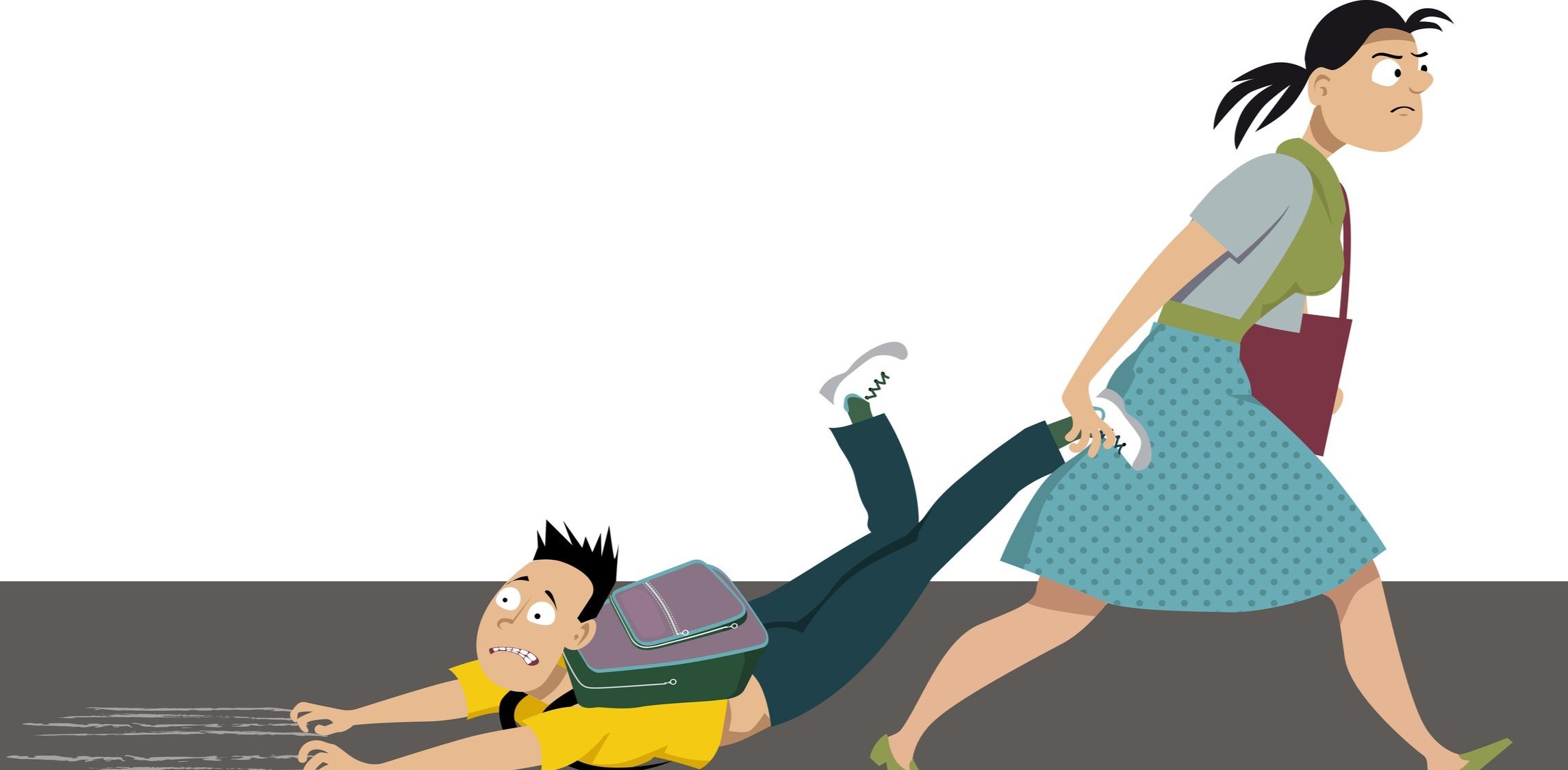
The Trouble With Transitions: Why They Are So Hard For Some Kids And How To Help
My four-year-old was very hesitant when I signed her up for gymnastics class. After a few sessions, she started to join in and now she LOVES it. I can’t get her out of there when class is over. But every week, when it’s time to go back, she fights tooth and nail, insisting she doesn’t want to go. It’s like Groundhog’s Day. I just don’t get it.
This phenomenon is one that many parents I work with find confounding and frustrating, understandably. Where is the learning curve?
As I help parents do the detective work to figure out the root cause of why their kids react this way, in most cases the challenge is making the transition, not their feelings about the activity. Once the child is engaged in the experience, they love it—whether it is school, dance class, jujitsu, art, or going to the playground. As one mom reported just earlier today: “This weekend we told Bodie (5) that we were going to the playground to meet some friends. He melted down, screaming that he wasn’t going; that he hates the playground, and he hates the children we were meeting there. We held firm and got him there, which was really, really hard and uncomfortable. But within minutes he was having the best time playing with the child he had claimed to detest just minutes earlier."
Why are transitions so hard?

"This Is the WORST DAY EVER!"
This exclamation was made by a highly sensitive child (HSC), when, after a wonderful day with hours of fun and joy, her dad said "no" to going back downstairs (once she was already in bed with lights out). She insisted she needed to check on a Magnatile structure she had been working on earlier that day.
I can't tell you how many times a week I hear stories like this from parents. Their HSC has a great day with lots of good stuff; and then one, often seemingly minor, event/disappointment happens and everything is ruined.
After decades of working with families of HSCs, and parenting my own, I understand that this is often part of the deal with these deeply feeling kids: they live life at the extremes. They are ecstatic or enraged. They tend to process their experiences in this all or nothing, black and white way. It's all good or all bad. They have a harder time living in the gray.
The temptation, naturally, is to try to get them to see that there was so much good in their day, to talk them out of this all-encompassing, negative state, which seems so unfortunate and sad—for them to see the world this way. But that usually results in the HSC, in reaction to being told how to feel, doubling-down to prove to you that in fact, everything is indeed ruined.
Keep in mind that this doesn't mean the good stuff isn't getting through or having a positive impact on them. This awareness may also help you avoid the temptation to try to get them to acknowledge it or feel it in that moment.

You Are Not A Helicopter Parent. You Are Your Child's Emotional Support Parent
This blog may be the nearest and dearest to me. It speaks to a parenting phenomenon that I have personally struggled with, and continue to work on 30+ years into my parenting journey.
It all crystallized for me when, a few months ago, a mom of a very sensitive, reactive child who gets triggered into discomfort easily, and is thus prone to frequent and intense meltdowns, described herself as her child’s “emotional support animal” and it took my breath away. This so perfectly captured my experience and that of so many of the parents (most often a mom) I work with who have an HSC (highly sensitive child).
This mom is her child’s primary and most desired (demanded) source of comfort. She is the person who is highly tuned in to her child, keenly focused on anticipating anything that might cause him stress, and tirelessly working to head it off.
We are often called “Helicopter Parents” which has become the catch-all nomer (slur) for any parent who is perceived to be overprotecting their child. It is shaming and judgmental. It is damaging, and not helpful. And it does not capture or take into consideration the more complex and nuanced dynamic that evolves when you have a very committed, loving, sensitive parent with a child who is not wired to be as adaptable as other kids; who gets triggered easily by the unexpected, and by sensations that are registered at a higher decibel and cause discomfort; and, whose big feelings are hard to manage, especially at such an early age. These parents are acting out of necessity, really survival. They are doing their best and working to the point of physical and emotional exhaustion to provide comfort to their children who are hard to comfort, and to preserve some semblance of family peace and harmony—no small feat—when you’ve got a big reactor in your home.
Just telling parents to stop hovering, to stop “overprotecting” and rescuing, to set limits and not give in to tantrums, is too simplistic and doesn’t acknowledge the very complex systems that evolve in families with big reactors just to cope day to day.
This blog offers insights from my own parenting experience and my work with hundreds of kindred ESPs (“emotional support parents”) that I hope will be validating, and will also help you find that important, but often hard-to-find, sweet spot of supporting versus enabling your child. In other words, how to nurture that special closeness you have with your child while also setting the important limits that are essential for children’s individuation and healthy, independent functioning far into the future.

How To Teach Lessons to Kids Who Can't Tolerate Being Corrected
All parents want to teach their kids to learn to take responsibility for their actions.
For parents of kids who are big reactors, this can feel like an impossible goal because their kids react so negatively, and sometimes explosively, to being corrected. They get angry and defensive, cover their ears, run away, or completely shut down when faced with an adult who is trying to inculcate them in some way.
So many parents have shared stories in recent consults about this vexing phenomenon, which tells me that there are probably many of you out there who are struggling with this, too. So, this blog provides insight and guidance on how to teach kids important lessons when they can't tolerate being corrected.
Why kids have a hard time being corrected
Highly sensitive children (HSC) tend to be quick to shame. Seemingly benign corrections or suggestions—how to hold scissors correctly, how to aim the ball to get it in the basket, how to solve a problem with a peer—are experienced as criticisms or personal indictments, not as helpful guidance you are intending to offer.
They also interpret and process your input as a threat to their sense of self and autonomy; that you are trying to control them and change their behavior, which results in a defensive reaction. They engage in all sorts of evasion (often blaming you or other external forces, for their actions) as a way to ward off feelings they are having a hard time understanding and managing.
When they experience your anger, annoyance, or disappointment at their behavior, it only increases their stress, which results in deeper dysregulation.
Further, you may find that when you want to reflect on these difficult incidents once they are over, to help your child process the experience and learn from it, your child refuses to revisit the uncomfortable feelings and events. This leaves many parents despairing about how they will ever be able to teach their children important lessons about the impact of their actions on others.
What you can do
Teaching lessons may look very different with a big reactor.It turns out that, often, the most effective way to do this is counterintuitive for most parents; the opposite of what your logical, adult mind dictates, as illustrated by the examples below.
Seven-year-old sore at losing
Max, 7, is playing in a basketball game. His dad, Peter, is in the stands and sees that Max is getting increasingly frustrated that no one is passing the ball to him. Just as Peter fears—because Max has a history of sore-losing and blaming it on unfair tactics—Max ultimately storms off the court to where Peter is sitting. Max pretends that the reason he left the game is because there is something in his eye; he doesn't want anyone to think he is crying. Then he blurts out to Peter that it's not fair—no one is passing the ball to him so he can't make any baskets.
With the best of intentions, Peter launches right into encouragement/cheerleading/problem-solving: "That happens in games. You can't always get the ball or a basket. What do you think your teammates and coach will think about you walking off? You have to get back out there, Buddy."
Max's response: "Stop talking to me right now!! You are so annoying!" as he starts to push angrily into Peter. Peter admonishes Max for getting aggressive. This ultimately leads to Max running out of the gym and Peter feeling totally distraught about how this behavior will affect the way Max’s peers will see him and how in the world he is ever going to be able to teach Max how to be more resilient.
After we process this incident in a consult, Peter is able to see why his response may have backfired; that his intended encouragement was not experienced as motivating, but as added stress. Max is very sensitive and tuned in to the fact that Peter was disappointed in his reaction; that he wanted Max to be able to buck up and bounce back, which Max was not ready/able to do. This left Max feeling pressured, and alone and misunderstood, making it less likely he would feel confident to get back out there and learn to cope with the challenges of a competitive sport.
With this insight, the next time a similar incident happens, here is how Peter responds:
He starts with empathy: "I hear you Bud, playing team sports can be challenging and frustrating."
He lets Max know he is not alone in his feelings/experience: "It took me a long time to get comfortable with not always getting the ball, or a basket, or a goal. I ended up deciding that I would try to manage the frustration and disappointment that can happen in team sports because I didn't want to give up playing those games with my friends."
He avoids telling Max what to do (which always leads to a defensive reaction) and, instead, positions himself as a person who will help Max think these trickly situations through: "Looks like your options are to take some deep breaths and go back into the game, or take a break and then figure out how you want to proceed. What do you think is a better choice for you right now?"
Now that Peter is no longer trying to change Max's behavior, and is giving him the space and opportunity to figure things out for himself, Max is calming more quickly and is sometimes open to engaging in a reflective process to think through these difficult situations. This is what gives Max the best chance of building the resilience Peter knows would be so good for him. It has also solidified a strong bond between Peter and Max, who now feels seen, understood, and respected by his dad.
Six-year-old whose body often acts before his brain
Roman is a very intense, amazing child who is super empathic, creative, and curious. He can also become explosive when things don't go the way he wants or expects: his sister goes first...for anything; he hits a snag in a project he is working on; his mom, Serena, says “no” to a new Lego set.
For a long time, when Roman would lose it and start hurling toys, which sometimes hit her, Serena, typically and naturally, had a big reaction—shouting at Roman for hurting her and admonishing that he cannot throw objects. It's dangerous. This always led to Roman getting more dysregulated and defensive, with more aggressive behavior and vitriol hurled. The whole situation spiraled further out of control with no lessons learned.
Serena has been working for years on managing her own emotions in the face of these explosions, and trying to figure out the best way to help Roman learn to manage his impulses and take responsibility for his actions. In our most recent consult she shared this major victory and lesson learned...for her:
Roman was frustrated and tossed a toy that grazed Serena on the cheek. She stayed calm and without a word, went to the sink and started to take care of the scrape. Roman immediately approached her with great remorse, hugged her legs, said he was sorry, and asked if she was okay.
No doubt, showing this kind of self-control in the heat-of-the-moment, especially when she had just been the victim of her son’s aggression, was nothing short of super-human. But you can see the payoff. By not going into correction mode, or fueling the flames, Serena created a very powerful opportunity for Roman to take responsibility for his actions.
I see this dynamic all the time at homes and in preschools. The bigger the reaction from the adult, and the more they try to correct the child and teach them a lesson, the more agitated and aggressive the child becomes. Less is more in these situations.
4 yo with low frustration tolerance
I was observing 4 yo, Evie, at preschool because her teacher had expressed concern about her giving up very quickly when facing a challenge and how this would effect her moving onto Kindergarten next year. Indeed, after not too long, I saw Evie getting increasingly frustrated that she couldn't cut a piece of paper in the shape she wanted. She kept grunting and repeating, "I can't do it! This is too hard!”
Because I still have a hard time resisting my impulse to rescue kids when they are struggling, without thinking (first major mistake), I sat down next to Evie and started to show her how to more effectively hold the scissors and paper. Her response: she shouted at me to "STOP!" as she crumpled up the paper, threw it on the floor, and walked away.
Of course, in her agitated state, she had experienced my attempt to be helpful and teach her fine motor skills as intrusive and overwhelming—hence her defensive reaction. I knew I wouldn't get another chance anytime soon to have a redo with Evie. But I shared the insight I had gained from the incident with the teacher. My suggestion was that that when Evie is struggling, not to step in with solutions but to acknowledge her frustration (“I know, learning to cut with scissors can be frustrating and take time and practice to figure out”) and then to say, "I have some ideas about how you might solve this problem. Would you like to hear them?"
The following month the teacher reported back that this approach was working: Evie was calming more quickly. And, when asked for permission to provide ideas, she was more open to the teacher's suggestions and was not reacting so quickly with panic when she faced a challenge. All told, Evie’s growing ability to manage her frustration and think through how to solve problems has resulted in her building much stronger executive functioning skills.
Take-home:
It’s all about stopping trying to control your child is one of the hardest pills to swallow for many parents. You clearly see the potential negative outcomes for them when they "act-out"; when they give up easily upon facing a challenge or act in hurtful ways. You do know what would be best and healthiest for your child because you’re a smart, sensitive parent, and you love them so much you want to do everything in your power to make that happen. You want to change the outcome for them and ensure they will do the "right" thing.
But at the end of the day, your kids are the ones out there on the playground, the basketball court, in the classroom. They need to figure out how to handle these situations. And it turns out that the most powerful way to help children, especially big reactors, learn to make good choices is not by telling them what to do.
Related articles
Why Children Laugh, Evade, or Get Angry When Being Corrected (No, your child is not a sociopath)
When your child gives up easily: How to help them become good problem-solvers