
Lerner Child Development Blog
Open access to my full library of over 150 blogs is now available by becoming a member of Lerner Child Development (LCD). Scroll through thumbnails below or see the button to explore all the blogs by topic.
This subscription service enables me to continue to provide in-depth, reality-based content drawn from more than three decades of helping families solve their most vexing childrearing challenges.
In addition to access to my blogs, subscription to LCD includes several new interactive learning opportunities with me each month: a live, open Q&A and quarterly webinars on key topics. Members are also entered for two monthly drawings for a free 30-min consultation.
Note that I have made some of my most popular blogs available for free.
Blogs By Categories
- All Most Popular Blogs
- Big Reactors
- Building Resilience
- Challenging behaviors
- Cooperation
- Emotional Regulation
- Food Challenges
- Highly Sensitive Children
- Limit-Setting With Love
- Low Frustration Tolerance
- Mealtime
- No Power Struggles
- Parental Self Awareness
- Parental Self Regulation
- Physical Aggression
- Positive Discipline
- Potty Learning
- Regression
- School Related Issues
- Separation and Divorce
- Sibling Issues
- Sleep
- Social challenges
- challenging behaviors
- lying
- masking
- positive parenting
- separation anxiety
- social emotional development
- stress
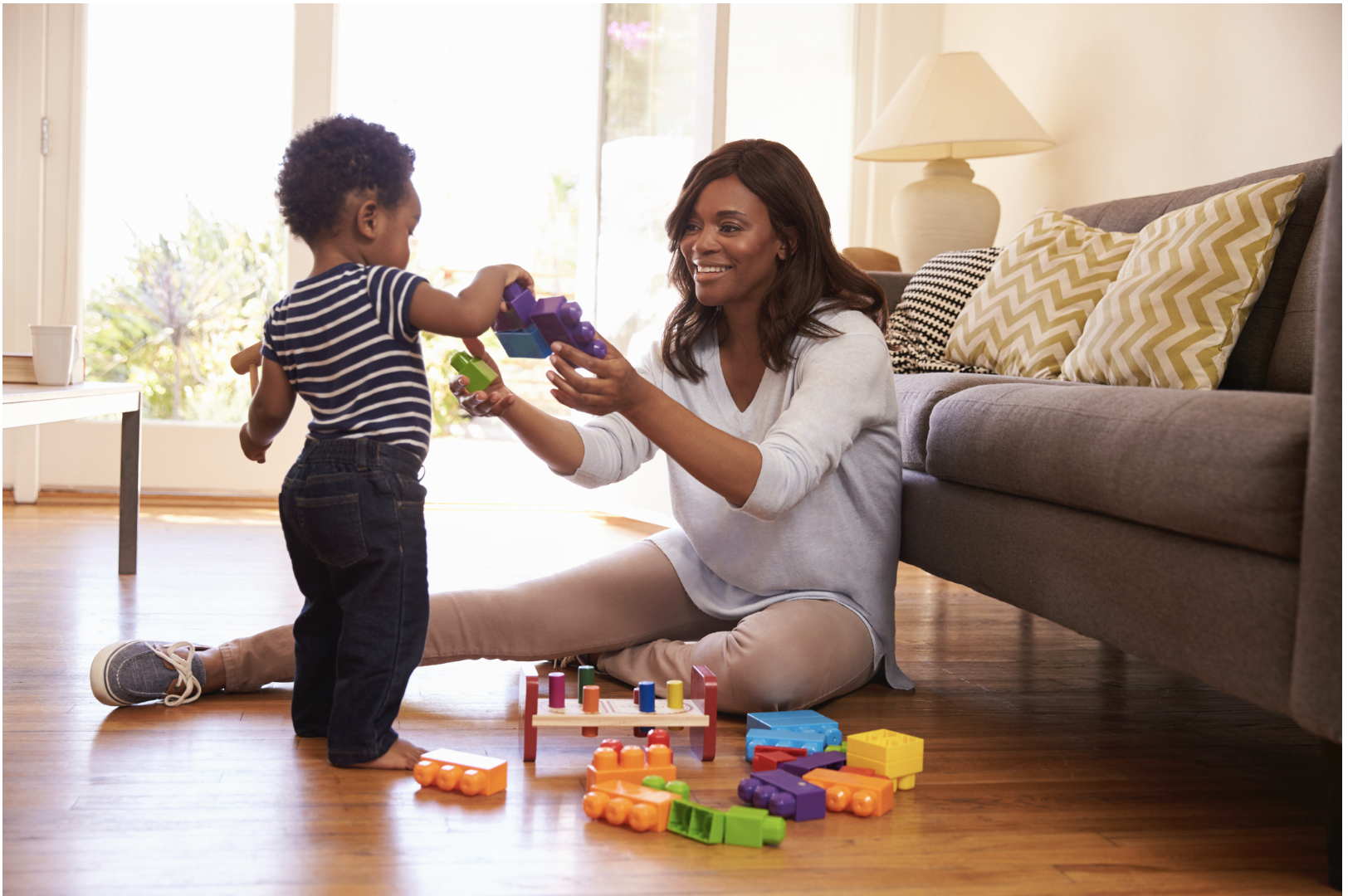
Pause and Problem-solve--A Handy Tool for Helping Children Get Calm and Cope
On a recent visit to a preschool, I was working with the teachers to come up with strategies to help the children learn to become good problem-solvers. The greatest obstacle to this, the teachers noted, was helping the children remain calm when facing a challenge so they can persevere to solve a problem. They find this is especially difficult for the “big reactors” who tend to go from 0-60 in the blink of an eye. Common tactics, such as deep belly breathing, weren't working as well as the teachers would have liked. They couldn’t get the kids calm enough to even use this soothing tool.
Since I have had some success with the use of cues or mantras for children—a phrase you use repeatedly to throw a monkey-wrench into a detrimental dynamic—I decided to try a new one out with a class of four-year-olds. It is designed to help build self-regulation. I call it Pause-and-Problem-Solve, and it has proven to be quite powerful for helping children regroup in a positive way when a breakdown is brewing. In this newsletter, I share how you might use this tool to encourage your children to become good problem-solvers. Here are the key steps:

Fair is NOT Equal
A spate of parents I’ve seen recently have expressed a lot of frustration over the fact that every time they say “no” to their kids, they are accused of being unfair. This is a major trigger for parents, sending them into reactive mode. They either start to defend their decisions to their children or they give in. Both responses validate that their child’s assessment of the situation is accurate or reasonable, when in most cases it is decidedly not. For example: Jonah, 6, who protests that it’s not fair that his older brother, Sam (age 9), gets to stay up later; Stella, 4, who explains that it’s not fair that she has to sleep alone when her parents get to sleep together; and, Lucca, 5, who insists that it’s not fair that he has to share the Magnatiles with his brother who isn’t as serious about building as Lucca.
Just because in our logical minds these protestations can seem irrational doesn’t mean that your child doesn’t actually feel an inequity is taking place. In some cases, it is just a strategy to get you to change your mind and give in to something your child wants. Kids are clever and will use whatever tactics work to reach their goal. But in many cases, on the face of it, the rule does seem unfair to children—that a sibling gets to stay up later or that parents get to sleep together but the child has to sleep alone.
And sometimes there are contextual factors that we need to be sensitive to. For example, I recently met with parents who have a 6-year-old, Liam, who constantly feels like a victim. As we unpacked how he may have developed this sense of himself, it turns out that when he was a toddler, his older brother was diagnosed with a serious illness and went through three years of intensive treatment. The parents had a large group of friends and family to help. But Liam likely sensed that his parents were distracted (understandably) and consequently started building a narrative that his needs were not as important as those of his older brother. Add to that the fact that Liam now has two younger siblings, including a new baby, amplifying his worry about whether he will get the attention he wants.
It is important to be sensitive to the underlying forces that influence your children’s behavior and the lens through which they filter their experiences. Even if your kids have not gone through a family trauma like this, many experience tough periods when they are trying to make sense of their place in the family. Temperament is also a factor: children who are inflexible by nature tend to develop very fixed ideas about how things should be and thus have a very hard time when things don’t go according to their desire or plan. This often results in the refrain: “IT’S NOT FAIR!”
The goal is to help children see that not getting everything they want is about healthy and developmentally appropriate limits, not about love or favoritism. Liam’s parents want him to create a new narrative that is not one of “I am a victim, always being deprived”, but one that sounds more like, “When I can’t have everything the way I want it, and my parents set limits, it doesn’t mean I am not loved or valued.” Mature as this outlook may seem, over time, children can and do internalize this very important concept.
Below is a roadmap for responding to protestations of "it’s unfair!" that enables you to be empathetic while maintaining the limits that you feel are important for your child:

Securing Sleep: Key Principles for Helping Your Child Become a Good Sleeper
Nine-month-old Lilah, previously a great sleeper, has started to protest when her mom puts her down to sleep. She wakes up multiple times at night. She won’t fall back to sleep unless she gets a bottle that she scarfs down.
Three-year-old Amir insists on an endless litany of demands at bedtime—2, then 3, then 4 more books, placing his cars in a specific order on his shelf, getting his blankets on “just right”. Even when his parents acquiesce, it’s never enough. He still flips out when they say they are leaving and it’s time for him to go to sleep. When they finally put a monkey lock on Amir’s door to keep him from leaving his room after lights-out, he gets them in the jugular by shouting things like: “It’s illegal to ignore your child!”
Sleep challenges come in all shapes and sizes. And, like most childrearing challenges, a one-size-fits-all approach to help children become good sleepers does not exist. Every child and family is different. The underlying cause of the trouble can vary significantly from one scenario to another. One child struggles with separation anxiety; another tests limits; another doesn’t know how to fall asleep on his own. That’s why general prescriptions don’t work. In fact, they can lead to more frustration for parents when the suggested plan does not feel comfortable for them or doesn’t work for their child. Instead, what I have found most useful is to provide parents with a set of guiding principles to develop their own path to help their child (and themselves!) get a good night’s sleep. These are not solutions to specific sleep challenges, but rather overarching strategies and mindset shifts that empower you to come up with an approach that meets your child’s and family’s needs.
Guiding Principles

Having Trouble Understanding Your Child’s Challenging Behaviors? His Sensory Processing System May Provide Important Clues
“I always thought Samantha was just more ‘intense’ than other children. Her reactions to nearly everything were incredibly strong. She threw massive tantrums at least 5-10 times per day over things such as having to sit in her car seat or accidentally getting water in her eyes during bath time. People would tell me tantrums were “normal,” but I felt it wasn’t normal to be having such intense tantrums so many times each day. She was incredibly impulsive and constantly reached out to touch interesting things she saw, regardless of the appropriateness (such as clothing on someone’s body) or the danger (such as a burning candle). She also seemed to both seek physical input (for example, by climbing on others) while also protesting intensely to any physical touch that she didn’t like (for example, an adult restraining her from an unsafe situation). She would melt down if someone else did something she wanted to do like flush the toilet, push a button, or turn on the faucet to wash hands, and she often didn’t “recover” for several minutes, even an hour at times. She also had a hard time listening to and following directions, so things like getting her dressed were often very difficult. I felt completely overwhelmed and lost.”
— Samantha's mom
About 10 years ago, I was feeling increasingly frustrated with the limited progress many children I was working with—such as two-year-old, Samantha—were making using the typical tools of my trade. Trained as a clinical social worker, my focus was on helping parents understand their children’s emotions and providing them with strategies to help their children learn to manage their feelings so they could behave in constructive, “pro-social” ways. No matter how tuned in, loving, and empathetic parents were, and how clearly and consistently they were setting limits and boundaries, their children continued to struggle with typical challenging behaviors such as: biting/hitting/kicking, defiance, extreme fearfulness/anxiety, impulsivity, or an overall lack of self-regulation.
Around this time, a friend was telling me about problems she was having with her then 3-year-old, “Ruben”. He was very impulsive, aggressive, defiant, and wasn’t tuning in to others—all behaviors very typical of the kids I was having the hardest time helping. She told me that after trying many different failed behavioral interventions, they were referred to an occupational therapist (OT) who identified underlying sensory processing challenges that were at the root of many of the problematic behaviors Ruben was exhibiting. Further, she explained how the therapy Ruben was doing with the OT was yielding very positive results for the first time. I am embarrassed to admit that at that time I was mostly ignorant about OT for kids. I thought of it as an intervention for adults with carpal tunnel syndrome or who had been injured on the job. What could the “occupation” of a child possibly be? So, I asked my friend for permission to observe a few sessions of her son’s OT.
That experience proved to be a watershed moment: I saw first-hand how many challenging behaviors children exhibit are rooted in problems in their sensory processing systems and that this was a critical piece of the puzzle that I was missing as I tried to make sense of the meaning of children’s behaviors. For example, some of Ruben’s challenges were the result of a low threshold for tactile input. When people got too close to him, he pushed them away—by biting, hitting, kicking—to protect himself. Through targeted activities, the OT incrementally exposed Ruben to tactile experiences to help his system better detect, regulate, and interpret these sensations and respond to them more appropriately. In effect, OTs help children do their most important “jobs”, which include the ability to: manage their bodies and feelings, learn, play, get along with others, and work well in groups—pretty much everything that enables children to function effectively in the world!

Go With The Flow, Part 2: How to Address the Typical Challenges That Arise in the Potty-Learning Process
NOTE: This blog, which addresses how to manage potty learning challenges, is a follow-up to a previous post that focused on guiding principles for how to take a positive approach to helping children learn to use the toilet. I strongly recommend you read Go With the Flow, Part 1 before digging in to this piece as all the guidance below is based on the principles that are outlined in Part 1.
__________________________________________________________________________________________________
When it comes to challenges in the potty-learning process, it is important to keep in mind that children are not a monolithic group. They have different temperaments, developmental paths, and life experiences that impact all aspects of their functioning, including learning to use the potty. There is not a one-size-fits-all approach that works for every child and family. When I collaborate with parents to address these challenges, we look at all the factors that might be influencing the process to come up with the best solution for their unique child. For example, in one family in which the child was withholding bowel movements, there was a lot of conflict between the parents that was affecting the child. Once we developed ways to help the parents reduce the tension in the household and combined that with some of the strategies described below, their child stopped holding in his poop.
Problem-Solving Potty Challenges

“When Is He Going Back in Your Belly?” How to Help Older Siblings Adjust to the New Baby
Aside from the expected challenges parents face in figuring out how to manage multiple children while trying to maintain their own relationship, the reaction of the first-born is often top-of-mind for parents. The good news: There is a lot you can do to help your older child adapt to a new baby in ways that maximize the chance that she will ultimately develop a close, loving relationship with her sibling.

Struggling With a Child Who is Inflexible and Makes Unreasonable, Irrational Demands?
One of the chief concerns (and complaints) from parents I work with is that their children are super rigid and irrational. Typical examples include:
Henry threw a huge fit because I picked him up from childcare instead of Grandma, who usually gets him at the end of the day.
Chelsea refused to take a bath because I turned on the water when she wanted to do it herself.
Andrew's teachers report that his peers don't want to play with him because he is bossy and needs to dictate everything. Yesterday, he knocked down the block structure he was building with friends because he insisted it be a home for their action figures when his playmates had already decided it was going to be a restaurant.
If any of these scenarios sound familiar, you are not alone.

Go with the Flow: Preventing the Perils of Potty Training
The prospect of potty training is terrifying for many parents. They have heard horror stories of catastrophic boot camps, kids refusing to poop on the potty, and preschools rejecting children for not being trained. Through my work with families facing these challenges, I have developed an approach to potty-learning that takes into consideration what the process feels like from the child’s perspective, which is often overlooked, and that addresses some key factors that can have a significant impact on whether this process is positive or perilous. A follow-up piece will address how to deal with specific challenges that may arise in the potty-learning process.
Look at the pottying process from a developmental perspective:
You have no control over your child. You can’t make him do anything, including pee and poop in the potty. Children are the only ones in control of their bodies. It is their job to master these skills, with adult support. It is not your job to do it for them.
Learning to manage bodily functions, such as, elimination, eating, and sleeping, is essential for children’s sense of agency and self-esteem. It builds confidence that they can be in control of and take care of themselves.
The ability to use the potty is all about control—the ability to “hold it in” and get to a potty to let it go. It just so happens that the age at which most children have the skills to learn to use the potty (2 to 3 years) coincides with an upsurge in their desire to exert control over their world. Therefore, some amount of defiance and opposition is developmentally appropriate and normal for children at this stage, and it is often triggered by others’ attempts to control them. When it comes to potty learning, this means that the more you try to control your child’s elimination, the more likely she is to dig in her heels and refuse. This is how your child maintains her integrity and reminds you that she is the only one who has the power to control her body.
Further, between 18 months to 2 years, children are becoming increasingly aware that they are separate beings and that their body belongs to them. They begin to feel greater ownership over their bodies which makes them even more sensitive to people trying to control their bodily functions (diapering, feeding, dressing, etc.)
Temperament plays a big role in potty learning. For children who, by nature, tend to be more controlling and have a harder time being flexible and adapting to change, the potty learning process can be more challenging. With these children it is especially important not to cross the line into trying to control them as the chances are that it will backfire.
Guiding Principles for How to Approach the Pottying Process

Public Displays of Disaster: What to do when your child loses it outside the home
At the end of the day, my work with families boils down to helping parents set limits with love; to maintain a loving, close connection with their children while sticking to clear boundaries that parents know are essential for building their children's self-regulation and resilience, but that are hard to maintain in the heat of the moment when heartstrings are pulled or you just can't bear another meltdown.
Sticking to limits is even harder when children are pushing the envelope and melting down outside the home. Most parents of young children live in terror of their little one losing it in public. It’s hard to avoid feeling judged and embarrassed by out-of-control behavior, as if it is evidence of your total incompetence as a parent—surely a result of your indulgence which has inevitably created a spoiled child. This naturally puts most parents in an emotionally charged place, feeling mortified and often angry at their child for putting them in this deeply uncomfortable and stressful situation.
How To Deal With Public Displays of Disaster

Dinner, Bath, Books, and Goodnight: A positive, effective approach to helping your child get through daily routines
I have rarely met a family that hasn't struggled in some way with getting their children through daily routines. Common complaints include: “Ethan whines and protests every single step", or, “Talia’s refusal to cooperate is forcing us to nag and bribe her which is driving us crazy and we know is messed up. We’re all miserable by the time we walk out the door.” Families with young children face these types of struggles because most toddlers have some degree of difficulty with transitions.
There are several reasons children have a hard time moving from one task to another during morning and bedtime routines, including:
Young children are quite zealous about asserting some control over their world. This means that whenever there is a demand to follow someone else’s agenda, such as yours, there is a natural tendency to defy it.
It is hard for many children to move from one activity to another. They become absorbed in what they are doing and making a transition takes a lot of effort.
Sometimes children have not actually tuned in to the direction you are giving them. They haven’t processed all of the information being communicated to them, so they can’t effectively act on it.
Some children are very distractible. They start to follow a direction, but something catches their attention and they lose track of what they are supposed to be focused on.
Morning and nighttime routines are associated with separations, such as going to child care/school, saying goodnight, etc. This can be emotionally challenging for young children.
The following strategies address these underlying issues and can help children better cope with daily routines.

Cracking the Cooperation Code
If you're like most parents, not being able to get your children to cooperate is one of your most vexing challenges. It’s especially maddening when a child’s lack of compliance seems totally irrational; for example, 3-year-old Sadie, who loves to eat but refuses to come to the dinner table and draws her parents into a power struggle, making everyone miserable. This naturally catapults her parents into revved-up mode. They get increasingly annoyed and resort to all kinds of rewards or threats to motivate Sadie to tow the line. Unfortunately, this typical, reactive kind of response usually makes it less likely that a child will change her tune and is more likely to result in an intensified tussle between parent and child.
As with all child-rearing challenges, the key is to figure out the root cause of the problem; what the driving forces are that result in the unacceptable behaviors. My colleague, occupational therapist, Teri Kozlowski of Teekoz Kids, has helped me crack the code on getting kids to cooperate by pointing out two key factors that influence the chance that children will follow directions: (1) whether children are even attending to and processing the information parents are trying to deliver to them; and (2) the tone and approach parents use to communicate directions to their children.
Factor #1:

Goodnight, Sleep Tight: How to help young children cope with nighttime fears
My 3 1/2 -year-old has started to get up in the middle of the night after saying he had a bad dream. He comes into our room and wants to sleep with us. We’ve been able to get him back into his bed, but he won’t let us leave until he falls back to sleep. Some nights that can take over an hour, and he often gets up multiple times in a night. No one is getting enough sleep and we are all very cranky. We want to be sensitive to his fears but at the same time help everyone get more sleep.
This is a very common phenomenon starting at around 3 years, as this is the age at which children’s imaginations really start to take off. At the same time, they don’t have a very firm grasp on the difference between fantasy and reality. This translates into the development of fears: the monster from the book may appear in their bedroom; the snake in the TV show about animals might climb through their window. Naturally, these fears are more likely to emerge at night when the lights are off and children are alone. Understandably, most parents feel it would be harmful to leave a child when she is frightened.
But this is one of those parenting moments when what is best for the child is not necessarily consistent with our impulses; when the most effective strategy, in this case, for helping a child learn to cope with her fears, is counter-intuitive. We think that staying with children until they fall back to sleep is the best and most loving thing to do. But in fact, allowing a child to sleep in your bed or staying with her until she falls back to sleep after having a bad dream, inadvertently confirms your child’s belief that there is really something to be afraid of and that she is only okay if you are with her; that she is not safe on her own.
The only way children (or any of us) get over their fears is by living through them and experiencing that the fears are unfounded. For example, when a child finally goes down the big slide he was terrified of and sees that he survived; or, when a child makes it through and thrives by the end of the first week of preschool after screaming for dear life not to be left in this strange, scary place. At nighttime the same rules apply: your child needs to experience that the fears in his head are not real and that he is okay on his own. He doesn’t need you to be with him to be safe. We don’t want to set kids up to think that they can’t handle these feelings and that they can only cope if you are with them, which will not always be the case. We want to empower them with the tools and confidence to master these fears. This is very important to keep in mind, because if you think that you are hurting your child by not physically being with him as he works through his fears, it will be very difficult to follow through with any plan that entails setting some limits and boundaries around sleep. Note that research shows that allowing children to learn to sleep on their own is growth-promoting (“positive stress”) and not harmful. (Here is a good piece on myths/facts about sleep training.)
The other factor to keep in mind is that young children are very clever. They quickly put two and two together: saying they had a bad dream results in a lot of attention in the middle of night and often lands them a spot in their parents’ bed. This can take on a life of its own and lead to major sleep deprivation for parent and child which has its own set of negative consequences.
The following strategies can be helpful in making a plan for how to deal with middle-of-the-night wakings:

Parenting Without Power Struggles: Avoiding bribery, rewards and negotiation in favor of helping young children make good choices
Pow·er strug·gle (noun): An unpleasant or violent competition for power; refers to people in a relationship fighting about who is in control, with both trying to dominate the relationship in one way or another.
This unpleasant dynamic is not what most of us had in mind when we dreamed about having children, but it’s one almost all of us have fallen prey to with varying frequency and intensity. Power struggles are hard to avoid. Children are experts at drawing us into them. But it’s worth the effort to try to avoid this tug-of-war as it results in endless frustration and is detrimental to both parent and child. When a power struggle ensues, nobody wins.
Guiding principles for avoiding power struggles:

"Go Away Daddy! Mommy Reads to Me!" How to Deal with Parental Preferences
“No—Daddy reads to me!” Tamisa exclaims when her mom, Audra, plops down beside her, eager to start the bedtime book. Audra, hurt, pleads: “But it’s mommy’s turn and I love reading books with you.” Tamisa responds: “I want daddy!!” Audra slams the book on the floor as she says, “You’re making mommy very sad.” She promptly exits the room as she is shouting to dad that Tamisa is all his.
Playing parental favorites, while very painful for the parent who is experiencing the rejection, is actually quite common. It’s almost always situational, not personal. Some children forge a fierce attachment to the parent who is acting as the primary caregiver—the one doing most of the diapering, feeding, bathing, and comforting. It doesn’t happen solely in families with a stay-at-home parent, but usually occurs when one parent shoulders the bulk of the caregiving responsibility. Children may make a strong association about who they feel safe with and trust and glom on to that person exclusively, even if the other parent is very loving and involved.
Then sometimes, the parent who is less available becomes special in the child’s mind and so the child demands to have that parent to herself. It is also common for a child to favor one parent over the other after the birth of a new baby. In some cases, the older child comes to rely more heavily on the parent who hasn’t given birth, whom they perceive as more available. Other times it’s the converse, the child clings to the parent who gave birth as a result of the jealousy she feels about the attention the new baby is getting. And sometimes the genesis of the preference is unclear, but it is usually a way to cope with a complex or challenging experience the child is trying to manage.
In one family I recently worked with, a fierce preference for dad evolved when mom went on her first post-Covid work trip. This was a fierce little guy who has very big reactions to his experiences in the world. To adapt to this event which loomed large for him, he decides that dad—the present parent in that moment— is his person and he is sticking with that. He is also angry with mom when she returns for having left him.
Regardless of the reason for the preference, it is important for your child’s healthy development (and for a healthy marriage or partnership!) that she develop a close, trusting relationship with both parents. (For single parents, this same favoritism dynamic can occur with other trusted caregivers.) It is also important that she not be in a position to decide who does what when it comes to parenting. So, what can you do?

9 Guiding Principles For More Positive Parenting
1. Be sure your expectations for your child match her age and stage of development. Recognize that young children are driven by emotions, not logic, so irrational behavior is totally normal. The part of the brain that enables us to think about and manage our feelings and impulses is not well-developed until five to six years of age. Expecting more from children than they are capable of can lead to lots of frustration for both parents and children. Having appropriate expectations is critical because the meaning you assign to your child’s behavior influences how you react. If you think your child is purposefully breaking rules, you are much more likely to react in harsh ways that further distress your child instead of calming her. If you see these behaviors in the context of normal development, you are more likely to approach your child with empathy and appreciate these moments as opportunities to teach good coping skills.
2. Tune in to the meaning of your child’s behavior. Getting to the root cause of your child’s actions can help you to respond in ways that are sensitive and effective. A tantrum in the grocery store might be caused by sensory overload, fatigue, or disappointment about not getting a cookie from the bakery. Biting might be a self-soothing strategy, a way to keep others at a distance, or an expression of anger. Understanding the root cause of a behavior can help you come up with discipline strategies that address the underlying issue and help your child build strong coping skills. This means considering some factors that impact behavior: What’s going on in your child’s world—has she experienced a recent move? A new caregiver? A recent loss? Parental stress? It’s also important to think about your child’s temperament. Is she a big reactor or a go-with-the-flow kind of kid? Is he persistent or does he get frustrated easily? How does she react to new people and experiences—does she jump right in or need time to feel comfortable? All of these factors influence children’s ability to cope with life’s natural stressors, such as adapting to new experiences, learning to wait, and managing daily transitions.

7 Common Parenting Strategies That Backfire with Toddlers and How to Avoid Them
Almost every parent who reaches out to me for help starts with a description that goes something like this: "Henry can be the most delightful child. He is curious, extremely clever, and very funny. But he won't listen to anything we say. He argues and negotiates about everything and throws tantrums when he doesn't get his way. We feel like all we are doing is yelling and getting into power struggles with him. Help!"
The bottom line: toddlers are marvelous, and also maddening.
But they don't have to be...maddening that is. The frustration and powerlessness many parents experience often stems from a crucial expectation gap: they approach their young children using reason ("Why won't Serena just cooperate with getting dressed and avoid all the yelling and threats of having stuff taken away? It would make everything so much easier. She's just hurting herself.") The problem is that young children are not driven by logic but by their impulses and emotions. Their desire to get what they want when they want it and to exert some power and control over their world rules the day. That's why so many of the strategies parents typically use to try to coax cooperation from their children backfire; they rely on reasoning or on the faulty premise that you can control your child when you can't actually make her do anything--eat, pee on the potty, cooperate with getting dressed, etc. The fact is that the more you try to control your child the more likely it is that he will resist complying with your expectations. The approach and strategies that ultimately help children make good choices and behave in ways that help them thrive are often counter-intuitive.
Below are 7 common parenting pitfalls and a description of how to avoid them:

Tips for Helping Your Child Start School With Confidence
Four-year-old Harris is starting at a new school next week. He is a sensitive little guy who has a hard time with transitions. When he first went to preschool at age 2 he was frantic at separations. It took him several weeks to feel calm and fully engaged in the program. His parents were on the verge of pulling him out and mom was considering quitting her job; but they stayed the course and Harris ultimately adapted and thrived. His parents are naturally worried about this upcoming change for Harris and how to best prepare him.
It's that time of year, when many young children are starting school or changing schools, which can be stressful. But it’s what we think of as a “positive stressor”--a challenge that is not detrimental to kids but that leads to growth. It is an opportunity for children to develop close, trusting relationships with other adults and peers. It builds confidence and helps children adapt to future separations. And high-quality programs provide endless opportunities for developing the skills—intellectual, social and emotional—that set children up for success far into the future. Below are some ideas for how to help your child cope with this transition.